
An aluminium vane belongs in a defined engine zone, not wherever a purchasing document uses the word “turbine.” By separating fan and compressor hardware from high- and low-pressure turbine vanes, then checking temperature, material data, geometry, manufacturing route and inspection evidence, you can decide whether a proposed vane is technically suitable and replaceable.
Key takeaways
- Use aluminium vanes in fan and compressor sections, not turbine gas paths.
- Compare alloy strength, temperature capability, corrosion resistance and weight before choosing a material.
- Match vane geometry, mounting features, tolerances and revision data to the engine record.
- Request material traceability, dimensional reports, non-destructive test results and process records.
Where aluminium vanes actually belong in an aero engine
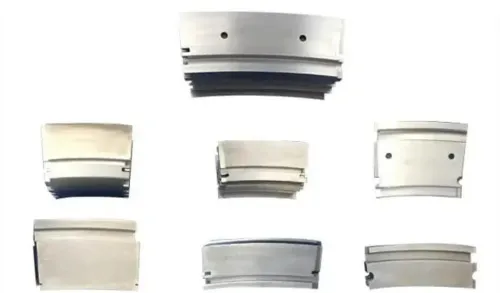
Aluminium aero engine vanes belong primarily in fan and compressor service, not turbine gas paths. The term usually means fan guide vanes, inlet guide vanes, compressor stator vanes or variable stator vanes, where gas-path temperatures remain below the useful strength range of the selected aluminium alloy.
1. Ask gas turbine blade and vane manufacturers to identify the module: fan, compressor or turbine.
2. Require the stage number and state whether the vane is stationary or variable.
3. Record the gas-path temperature range, pressure ratio, alloy and coating system before approving the material.
4. Reject “aluminium turbine vane” as a complete description. An aluminium compressor vane and an aluminium turbine vane are different engineering decisions.
Aluminium melts at about 660 °C, but melting is not the design limit. Strength, creep resistance and fatigue capability fall well before that temperature, while turbine gas paths are far hotter. High pressure aeroengine vanes and low pressure aeroengine vanes are ambiguous labels because either can mean compressor or turbine hardware.
A low-pressure turbine vane remains a hot-section component and is not automatically suitable for aluminium. Identify the module, stage and operating data instead of inferring suitability from “low pressure” alone.
How aluminium compares with titanium, stainless steel and nickel alloys
Aluminium wins when low mass, easy CNC machining and lower material cost matter more than hot-section capability. It suits fan and compressor guide hardware, but aluminium alloy turbine vanes are usually ruled out by temperature, creep, oxidation and thermal fatigue.
| Material | Main advantage | Limitation |
|---|---|---|
| Aluminium | Lowest density, easy machining, lower material cost | Lower strength retention, temperature capability and damage tolerance |
| Titanium | Higher temperature capability and excellent strength-to-weight performance | Higher material and machining cost |
| Stainless steel | Durability, toughness and broad corrosion-protection options | Heavier than aluminium and titanium |
| Nickel alloys such as Inconel | Hot-section strength, creep resistance and oxidation resistance | High density, cost and machining difficulty |
Do not approve a quotation from “high pressure aeroengine vanes” or “low pressure aeroengine vanes” alone. Those labels can describe compressor or turbine parts; state the module, stage, temperature range and pressure ratio.
Request these records for any aluminium compressor vane:
- Exact alloy designation, temper and heat-treatment condition
- Room- and elevated-temperature tensile values, fatigue data and design allowables
- Allowable continuous and transient temperature range
- Corrosion-protection system and coating inspection results
Check foreign-object damage, fretting at pivots, actuator or trunnion fatigue, corrosion and distortion of thin airfoils. Anodising or chemical conversion coating is different from nickel-vane aluminide, MCrAlY or thermal-barrier-coating systems used on hot nickel vanes. Put coating thickness, masking and dimensional build-up at bores, platforms and mating faces on the drawing.
How to specify a replacement vane that actually fits
A replacement vane fits only when the RFQ identifies its aerodynamic, mounting and material definition—not just its length. State the engine and module model, stage number, compressor or turbine location, and whether the configuration is stationary or variable. The label “high pressure aeroengine vanes” is incomplete without those details.
- Provide the part number and revision; airfoil profile; span; chord; maximum thickness; leading-edge radius; trailing-edge thickness; camber; stagger angle; throat area; platform geometry; root or mounting features; handedness; pivot or trunnion details; hole pattern; datum scheme; dimensional tolerances; and surface-finish limits.
- Request the approved material and temper, heat-treatment record, coating or anodising condition, inspection method, profile bands, and acceptance criteria. For a turbine vane, identify cooling cavities, impingement features, film-cooling holes, and ceramic-core passages, including their locations and allowable blockage.
Matching chord and span alone is inadequate. Local profile deviation changes incidence; platform geometry and throat area alter flow capacity, efficiency and stage matching.
| Feature | Why it matters |
|---|---|
| Chord and span | Define size, but not the intended flow path |
| Profile bands and leading edge | Control incidence, separation and local loading |
| Platform and throat area | Control leakage, flow capacity and stage matching |
| Root, pivot and hole pattern | Determine whether the vane mounts, rotates and seals correctly |
Require a drawing-based inspection report, not a generic dimensional certificate. For aluminium alloy turbine vanes, confirm that the proposed design belongs in the stated temperature zone; a turbine location does not make an aluminium part suitable.
What manufacturing and inspection reveal about vane quality
A credible aluminium compressor vane starts with forged or billet stock, stress relief and staged roughing before five-axis airfoil machining. Use rigid or compliant fixturing according to the section’s flexibility, then apply specified heat treatment, edge finishing, anodising or chemical conversion coating.
Unequal material removal can release residual stress and bow a thin airfoil; inspect it again after unclamping.
A turbine nozzle guide vane requires investment casting around ceramic cores, not ordinary external CNC machining. The control plan must address core movement, wall-thickness variation, blocked or undersized cooling holes, shrinkage, inclusions, hot tears and surface-connected cracks.
This distinction applies even to low pressure aeroengine vanes: an aluminium alloy turbine vane is not proved sound by its external profile alone.
Require these inspection records before acceptance:
- Dimensional inspection covering datums, platforms, mounting features, wall thickness and hole size; include airfoil profile measurement against the approved profile bands.
- Balance results and surface-finish readings for the airfoil, platforms and mating faces.
- Fluorescent penetrant inspection for surface-breaking cracks in aluminium or nickel alloys. It cannot validate internal passages.
- Radiography or computed tomography for ceramic-core position, cooling cavities and internal holes; add metallurgical checks for casting structure when specified.
- The report must name the inspection standard, sensitivity level, acceptance criteria, operator qualification and whether each inspection occurred before or after coating.
How to qualify the manufacturer before placing the order
A certificate does not prove that a supplier can make your vane. When comparing gas turbine blade and vane manufacturers for aluminium aero engine vanes, verify the exact process scope behind the claim, including five-axis machining, heat treatment, anodising or chemical conversion, coating, casting and non-destructive testing.
| Evidence | What it demonstrates | What it does not demonstrate |
|---|---|---|
| AS9100 registration | A certified aerospace quality-management system | Approval of a vane design or release of an aircraft-engine part |
| NADCAP accreditation | Control of a named special process within its stated scope | Approval of every process, alloy, part or customer drawing |
| Aviation production or design approval | Authority defined by that approval and its limitations | Capability beyond the approved product, facility or process |
Ask the proposed turbine vane manufacturer in Singapore for:
- Material certificates, lot and heat traceability, furnace charts and calibration records.
- First-article inspection, configuration-control records and release evidence against the approved drawing revision.
- Thin-airfoil machining controls, including stress-relieved stock, staged roughing, fixturing and inspection after unclamping.
- Dimensional and profile inspection results, plus coating or NDT procedures, sensitivity levels and qualified personnel.
- Casting controls if applicable, including ceramic-core position, wall thickness, cooling-hole inspection and radiography or computed tomography.
Assess BVPL Turbine Parts by this same evidence, not by its company description. Choose the supplier that demonstrates experience with your exact compressor or turbine module, controlled five-axis machining, traceability and documented coating or NDT capability. A company that merely calls itself a gas-turbine parts manufacturer has not yet qualified itself.
Related items
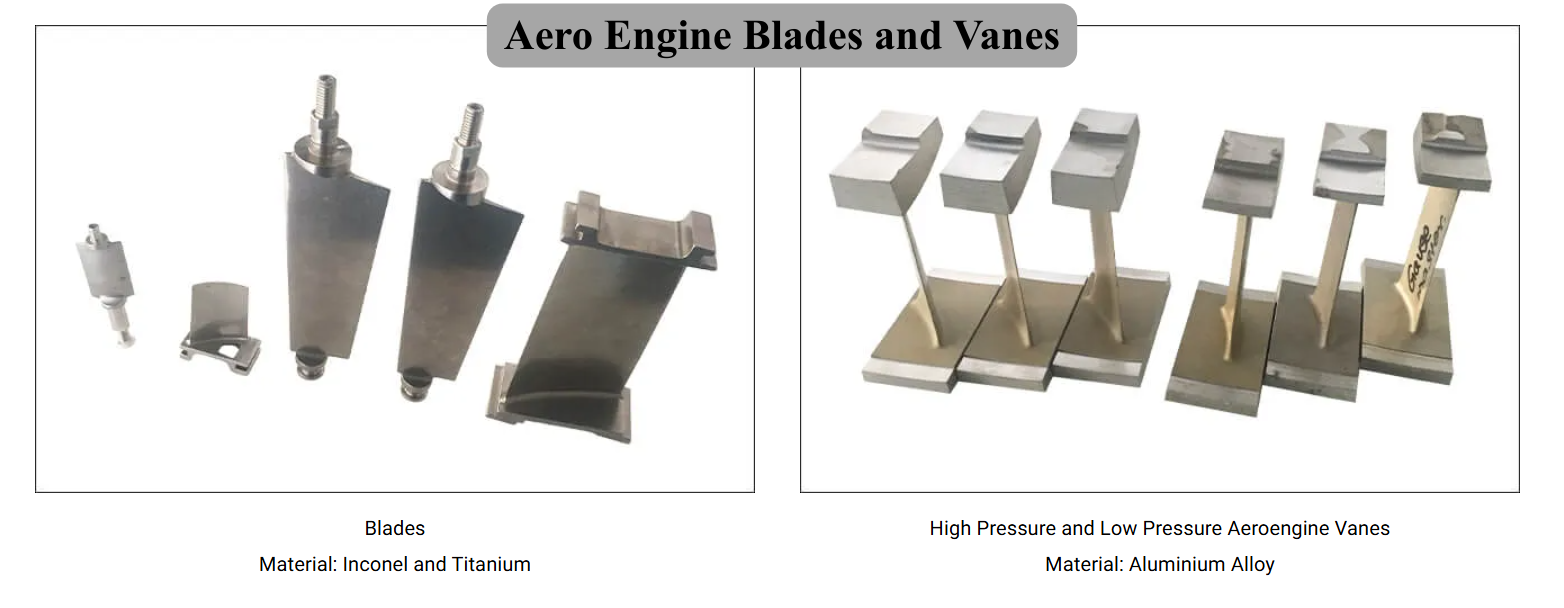
Aero Engine Blades and Vanes High Pressure and Low Pressure Aeroengine Vanes Material: Aluminium Alloy High Pressure and Low Pressure Aeroengine Vanes Material: Aluminium Alloy |
 | Precision Components Manufacturer BVPL manufactures precision aero engine blades and vanes used in compressor and turbine stages of gas turbine engines. View product → |
Frequently asked questions
Where do aluminium aero-engine vanes belong?
They belong primarily in fan and compressor service, including fan guide vanes, inlet guide vanes, compressor stator vanes and variable stator vanes. They are not suitable for turbine gas paths where temperatures exceed aluminium’s useful strength range.
How does aluminium compare with titanium, stainless steel and nickel alloys for vanes?
Aluminium offers low weight and useful machinability, while titanium provides higher strength at elevated temperature. Stainless steel supplies durability and corrosion resistance, and nickel alloys retain strength at the highest gas-path temperatures. Select the alloy against the vane’s temperature, load, environment and weight limits.
What information specifies a replacement aero-engine vane correctly?
Provide the engine and module, vane position, part number, drawing revision, material and heat-treatment condition. Confirm airfoil geometry, mounting features, datum references, tolerances, surface finish and any coating or balancing requirements.
What records should you request from a turbine vane manufacturer?
Request material certificates with heat or lot traceability, manufacturing records, dimensional inspection results, non-destructive testing reports, heat-treatment records and a certificate of conformity. Review the manufacturer’s quality system, inspection equipment and experience with the required alloy and vane geometry.