
A shroud, shoe tile and diaphragm sit in different load paths, so a part that matches the outside diameter can still fail through leakage, rub damage, distortion or incorrect stage aerodynamics. By the end, you will know how to identify the component, define its operating conditions, specify the fit and coating, and qualify a supplier before issuing a purchase order.
Key takeaways
- Confirm whether you need a blade-tip shroud, shroud shoe, or stationary diaphragm.
- Match material and hardface choices to temperature, speed, growth, and clearance limits.
- Require controlled drawings, dimensional reports, material records, and inspection results.
- Qualify suppliers against rubbing, cracking, oxidation, erosion, and distortion risks.
Identify the component and its job at each turbine stage
A shroud controls clearance and leakage around blade tips; a diaphragm guides gas through stationary vanes. They are not interchangeable procurement terms. At each stage, gas moves from inlet to nozzle, through the rotor, and across the interstage seal while loads pass from blades and vanes into their carriers and casing.
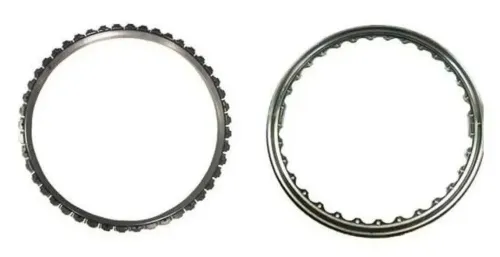
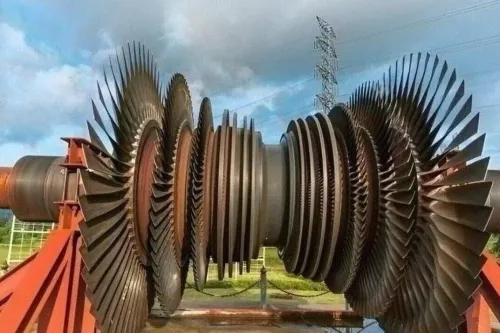
1. Identify the rotating and stationary parts. A rotating blade shroud travels with the rotor and can join blade tips into a continuous band. A stationary outer shroud or inner shroud surrounds the gas path and supports sealing surfaces.
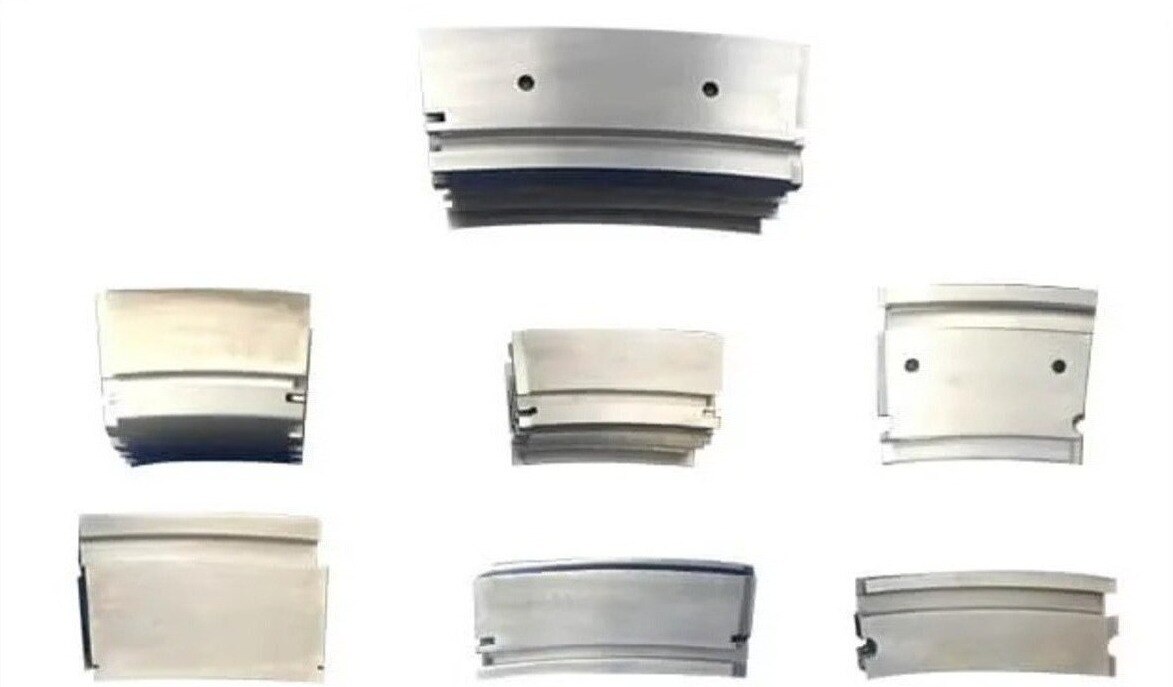
A replaceable shroud shoe tile is a segmented wear part, often containing abradable material, honeycomb or a sacrificial rub strip; it is not the casing itself.
2. Identify the diaphragm’s flow function. A diaphragm assembly normally contains stationary nozzle vanes between inner and outer rings, plus its carrier and seals. Record effective throat area, vane count, pitch, stagger, exit angle, trailing-edge thickness, seal geometry, leakage paths and allowable distortion.
A part can fit the casing yet change stage reaction, mass flow, efficiency or downstream temperature distribution.
3. Build the quotation identity before comparing suppliers. Provide the OEM part number, turbine frame, stage and stationary carrier, then state whether you need a shoe tile, shroud or complete diaphragm.
This discipline matters when searching “gas turbine blade and vane manufacturers shroud diaphragm selection in Singapore”; a shroud diaphragm selection in Singapore must follow the load path and drawing, not catalogue wording.
Match the design to temperature, speed, growth and clearance strategy
Select the configuration by firing temperature, pressure ratio, rotational speed, blade-tip geometry and casing arrangement—not by cold clearance alone. Rotor, blade, shroud and carrier growth must remain controlled through starts, trips and load changes.
| Option | Best fit | Reject or review when |
|---|---|---|
| Integral shroud | Retention and structural continuity outweigh field replacement | Attachment features are weak or repair access is essential |
| Replaceable shroud shoe tile | Controlled wear, segmented replacement and repair access | Tip speed, oxidation or rub energy exceeds the tile system |
| Abradable lining | A defined blade-tip rub system with matched materials and temperature limits | Rotor material, rub history or operating envelope is unknown |
| Honeycomb seal | Low-leakage stationary sealing with predictable contact behaviour | Cell collapse, severe oxidation or excessive transient rub is expected |
| Sacrificial rub strip | Localised, replaceable protection against an anticipated rub | Fragment release, inadequate retention or repeated heavy rubbing is possible |
A smaller cold clearance is not automatically better: insufficient transient allowance causes seizure or blade damage, while excessive clearance increases leakage. Require the supplier’s hot-clearance assumptions, rotor and casing growth calculations, expected tip speed, cooling-air conditions, transient rub allowance and acceptance method.
For segmented parts, inspect the installed leakage path, not isolated pieces. Request segment end gaps, hooks, rails, keys, seals, anti-rotation features, assembly stack-up and installed clocking. A shroud shoe tile supplier must also identify the wear material, substrate, attachment method and allowable post-rub condition; severe oxidation or an unknown rub history disqualifies any unverified system.
Build a fit package from controlled drawings and inspection records
Confirm fit from a revision-controlled drawing and traceable inspection record, not from nominal diameter alone. Machining accuracy cannot rescue a wrong stage, clocking position, hook profile or post-coating runout.
| Component | Dimensional fit data | Additional functional data |
|---|---|---|
| Shroud or shoe tile | Outer and inner diameters, axial width, segment angle, stage location, platform height, mounting features, bolt-hole pattern, hook or slot profile | Concentricity to the engine centreline, seal-tooth geometry, vane or seal angular position and post-coating runout |
| Diaphragm | Nozzle or vane-carrier geometry, inner and outer ring dimensions, axial width and mounting features | Interstage seal clearances, throat area, vane angular position, effective flow area and assembly distortion limits |
Request these documents before manufacture:
- OEM part number, turbine frame and stage
- Revision-controlled drawing with material and coating specifications
- Operating history, including rubs, overheating, erosion and previous outages
- Latest inspection report, showing actual values against drawing tolerances
A coordinate-measurement report must identify the drawing datums and measurement alignment. A list of isolated diameters can pass while the part is eccentric to the engine centreline, incorrectly clocked or axially misplaced.
For a diaphragm, a mechanically fitting replacement can still change throat area, stage reaction, mass flow and downstream temperature distribution. Require the report to distinguish vane, platform, ring and seal measurements.
Put prior blend repairs, weld build-up, braze work, coating stripping and reduced wall thickness in the manufacturing record. These changes can reduce local stiffness and alter thermal response even when final dimensions pass; state maximum repair limits, permitted processes, blend geometry, heat treatment and remaining-life disposition.
Select the alloy and hardface system as one operating package
An alloy name does not define a serviceable shroud or diaphragm. Compare the substrate with its heat treatment, grain structure, casting or forging route, tensile and creep capability, weldability, repair history and coating compatibility.
| Alloy | Useful tendency | Decision limits |
|---|---|---|
| SS310 | Strong oxidation resistance at elevated temperature | Check creep strength, distortion and weld repair response |
| SS410 | Harder, heat-treatable stainless steel with useful erosion resistance | Lower oxidation and corrosion margin than SS310; control heat treatment |
| SS304 | Good fabrication and weldability | Limited hot-section temperature and erosion capability |
| SS316 | Better aqueous and contaminant-corrosion resistance than SS304 | Molybdenum does not make it a high-temperature shroud alloy; verify creep and oxidation life |
| HR120 | High-temperature strength and oxidation capability | Confirm specification, weld procedure, expansion behaviour and coating bond data |
Select the package against fuel contaminants, hot-corrosion exposure, gas temperature, cooling-air conditions, pressure, erosion severity and planned repair cycles. Thermal expansion mismatch can close a clearance, distort a segment or crack a coating even when strength remains adequate.
Write the hardface specification as a controlled set of values:
- Coating type and application area
- Bond preparation and surface finish
- Coating thickness and hardness range
- Allowable clearance and post-rub condition
- Compatibility with the blade-tip or seal material
The OEM repair specification, owner purchase specification, or cited ASTM or AMS requirement controls those values. Inspect coating thickness, bond condition, cracks, delamination, hardness and final clearance. Coupon erosion data alone does not prove full-engine rub suitability; repeated weld build-up, brazing or stripping also requires documented remaining-life and distortion limits.
Qualify the supplier against the failure modes you must control
Qualify the source against the failure you need to prevent, not the label in its search result. An industrial gas turbine shroud supplier may own the design, manufacture to your drawing, subcontract heat treatment and coating, or broker a finished part. Ask the RFQ to identify which role applies and name every in-house operation.
| Supplier type | Evidence to require | Disqualifying gap |
|---|---|---|
| Shroud shoe tile supplier | Attachment control, retention features, controlled-rub behaviour, coating records and post-rub acceptance | No allowable rub condition or liberated-fragment assessment |
| Gas turbine diaphragm manufacturer in Singapore | Airfoil geometry, throat area, ring distortion, concentricity, assembly inspection and repair NDT | No drawing-datum CMM report or ring distortion limit |
| Broker | Full traceability to the actual manufacturer and inspection records | Cannot identify the manufacturing and inspection source |
Interpret “shroud shoe tile supplier” as a replaceable wear-part source, not automatically a diaphragm assembler. A tile must control attachment, coating loss and rotor-contact damage; a diaphragm must control aerodynamic geometry, leakage and assembly distortion.
Request these records before approval:
- Material certificates and heat-treatment charts
- Coating thickness, bond and hardness records
- Coordinate-measurement results tied to drawing datums
- Penetrant, magnetic-particle, radiographic or ultrasonic testing required by the repair specification
- Repair limits, retention inspection and liberated-fragment risk assessment
BVPL Turbine Parts can be considered when a Singapore buyer needs review of drawing-defined turbine components; accept the source only against documented evidence and agreed criteria, not location or catalogue terminology.
Related items
Industrial Gas Turbine Shrouds Industrial Gas Turbine Shrouds Examples of GE Gas Turbine Shrouds for Frames 5, 6, 7 and 9. We regularly manufacture these for the European, USA and Middle Eastern markets. View service → |
 | Gas turbine components manufacturer Industrial Gas Turbine Shrouds, Shroud Shoe Tiles, Nozzles and Diaphragms BVPL Turbine Parts manufactures precision industrial gas turbine shrouds, shroud shoe tiles, nozzles and diaphragms designed to improve turbine... View product → |
Frequently asked questions
What is the difference between a gas turbine shroud and diaphragm?
A shroud controls blade-tip clearance and leakage around rotating blades. A diaphragm guides gas through stationary vanes and supports the flow path between stages.
How do you match a shroud or diaphragm to turbine operating conditions?
Compare stage temperature, rotor speed, thermal growth, pressure loading, expected rubs, and the turbine’s clearance-control strategy before selecting the design.
What documents should you request when buying a turbine shroud or diaphragm?
Request the controlled drawing revision, material specification, dimensional inspection report, surface-finish results, heat-treatment records, hardface details, and traceability records.
Why must alloy and hardface selection be made together?
The base alloy carries temperature and mechanical loads, while the hardface controls wear and rubbing. Their compatibility affects cracking, adhesion, oxidation, and service life.
How should you qualify an industrial gas turbine shroud or diaphragm supplier?
Assess the supplier’s control of machining, heat treatment, hardface application, dimensional inspection, traceability, and failure modes such as rub damage, erosion, cracking, and distortion.