
A scanned blade is only a starting point: the replacement must also match the engine configuration, material system, manufacturing route, inspection evidence, and airworthiness basis. You will be able to identify suitable applications, test interchangeability claims, request the right records, and recognise when a reverse-engineered part is too risky to use.
Key takeaways
- Reconstruct airfoil geometry, load paths, locating features, and thermal behaviour.
- Match the blade to its exact engine stage, configuration, and operating environment.
- Demand dimensional, material, heat-treatment, inspection, and traceability records.
- Choose an approved replacement when certification data or original design information is unavailable.
What must be reconstructed from a replacement blade
A scanned airfoil is only the starting surface. A replacement must reproduce the blade’s load path, locating features, thermal behaviour, and manufacturing controls so it fits the correct engine stage and survives its operating environment.
A usable reverse-engineering package normally reconstructs:
- Dimensional inspection and surface scanning, including datums, tolerances, runout, balance data, and surface finish
- Section profiles at defined span stations, plus platform, root, tip, fillet, and shroud geometry
- Internal cooling passages, wall thickness, and film-cooling hole size, angle, and position where applicable
- A controlled engineering drawing with material specification, heat treatment, coating system, inspection points, and acceptance limits
- CNC process development, including fixturing, tool access, machining allowances, and inspection strategy
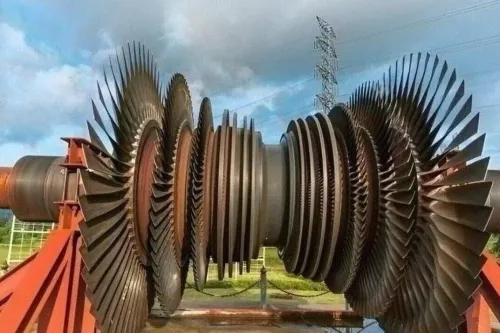
For gas turbine blade and vane manufacturers, reverse engineered blade applications begin with identifying the engine module, stage, original part number, temperature exposure, and alloy. Hot-section turbine blades and vanes commonly require nickel-based superalloys, including directionally solidified or single-crystal structures; titanium blades usually belong to fan or compressor applications, not the hottest turbine stages.
Treat an aluminium turbine blade as credible only after confirming that exact low-temperature application.
The first scanned part proves neither material equivalence nor airworthiness. Measurements create design data; testing, traceable material records, controlled production, and the applicable approval basis establish whether the replacement is interchangeable and usable.
Which engine applications justify reverse-engineered blades
A discontinued or unavailable blade justifies reverse engineering when the aircraft or engine still has useful service life, the installed fleet is small, and OEM supply is closed, slow, or economically disproportionate. The opportunity is sustainment, not a general right to duplicate an OEM design.
After market aero engine parts manufacturers reverse engineered blades still need an approved design basis, traceability, conformity evidence, and acceptance for the intended installation.
| Application | Why reverse engineering may be practical | Main constraint |
|---|---|---|
| Discontinued compressor or fan blade | Existing engines need maintenance spares and the original part is unavailable | Prove alloy, heat treatment, vibratory fatigue, balance, and foreign-object-damage resistance |
| Obsolete turbine-stage blade | A legacy engine has no economical replacement route | Reproduce casting quality, cooling features, coatings, creep resistance, and temperature capability |
| Low-volume legacy engine or development hardware | Tooling and minimum order quantities make OEM production uneconomic | Establish configuration control, inspection limits, and installation approval |
Reverse engineered titanium aero engine blades suit fan and low- or intermediate-temperature compressor stages because titanium saves weight. Titanium is not a default substitute for a hot turbine blade: oxidation, temperature capability, and impact damage set hard limits.
Likewise, treat “reverse engineered aluminium turbine blades in Singapore” as a warning to verify the exact module, stage, alloy, and temperature exposure; conventional high-temperature turbine blades are not normally aluminium.
A scan alone does not establish flight eligibility. For a United States type-certificated installation, FAA Parts Manufacturer Approval may be required; measurements do not equal PMA. Choose reverse engineering when the part is genuinely obsolete and qualification costs fit the fleet value.
How manufacturers prove that a copied blade is usable
An accurate scan proves only that the replacement resembles the sample. It does not prove that the alloy survives service, that cooling air follows the intended path, or that the part qualifies for flight.
For gas turbine blade and vane manufacturers, reverse engineered blade applications require a controlled evidence chain:
- Dimensional proof: compare section profiles, root and platform geometry, tip clearances, fillets, shrouds, datum references, balance, and surface finish against approved drawings or inspection data.
- Material proof: verify alloy chemistry, grain structure, heat treatment, coating system, and mechanical properties. A machined titanium blade is not equivalent to an investment-cast nickel blade, and neither substitutes automatically for a directionally solidified or single-crystal part.
- Performance proof: inspect cooling holes, serpentine passages, ribs, impingement features, and trailing-edge slots. A small passage error can raise metal temperature, alter stress, and shorten creep or fatigue life.
- Production proof: qualify the casting, forging, machining, coating, and inspection processes, then retain material certificates, batch records, non-destructive test results, and dimensional reports for every lot.
Airworthiness is a separate approval question. Under FAA Parts Manufacturer Approval, the applicant must substantiate the design and demonstrate a controlled production system; a one-off copy has neither approval dimension automatically. Compare approved test data, stress analysis, vibration and balance results, thermal evidence, and configuration records before treating the blade as interchangeable.
A scan is evidence—not authorization.
How to verify fit, configuration, and supplier records
Accept interchangeability only after comparing the candidate blade with the approved configuration and preserving evidence for every comparison. A blade that enters the slot can still have the wrong mass, moment, coating, or stage effectivity.
- Confirm the engine model, module, stage, original part number, serial-number effectivity, service bulletins, and approved installation data.
- Measure root attachment geometry, platform, airfoil sections, tip clearance features, twist, chord, and datum locations against the controlled drawing or inspection report.
- Compare material specification, forging or casting route, grain structure, heat treatment, coatings, allowable defects, and non-destructive inspection results.
- Record blade mass, centre of gravity or moment, balance grade, batch number, heat number, inspection dates, deviations, and release documentation.
- Obtain the supplier’s quality approval, manufacturing route, calibration records, certificate of conformity, and traceability from raw material through final inspection.
| Comparison | Evidence to retain | Acceptance risk |
|---|---|---|
| Part-number configuration | Effectivity list, drawing revision, approved installation instruction | A visually identical blade belongs to another engine variant |
| Attachment and balance | Root report, mass and moment results, rotor balancing record | Correct fit creates vibration or exceeds rotor limits |
| Material and process | Material certificate, heat-treatment chart, casting or forging records | CNC-machined stock is not equivalent to a cast or single-crystal blade |
| Regulatory release | CAAS, state-of-registry, and approved maintenance-system requirements | Singapore manufacture alone does not authorise installation |
Treat reverse engineered aluminium turbine blades in Singapore as a claim requiring proof of the exact module, alloy, and temperature exposure; aluminium is not a default hot-turbine material. Reverse engineered titanium aero engine blades usually target fan or compressor stages, where temperature, oxidation, and foreign-object-damage limits still govern acceptance.
Keep the complete record with the aircraft or engine file.
When reverse engineering is the wrong choice in Singapore
A one-off scan is the wrong answer when the part has current OEM support, a licensed approval route, or a serviceable alternative with traceable records.
Reverse engineering also fails as a shortcut to airworthiness: in the United States, measurements do not constitute FAA Parts Manufacturer Approval (PMA), which requires both approved design data and controlled production. In Singapore, CAAS, the state of registry, the engine type-certificate holder, and the operator’s approved maintenance system determine whether installation and release are acceptable.
| Option | Choose it when | What you avoid |
|---|---|---|
| OEM part | The engine is supported, the part is safety-critical, or approved data is unavailable outside the type-certificate holder | Design-substantiation and acceptance uncertainty |
| Licensed PMA part | A PMA covers the exact engine model, part number, configuration, and installation | Treating a dimensional copy as an approved replacement |
| Repairable used part | The component is within repair limits and has an authorised release, life history, and traceability | New-part lead time, provided remaining life is proven |
| Newly manufactured replacement | Approved drawings and process specifications exist, but the OEM part is unavailable or uneconomic | Reconstructing geometry and material equivalence from one sample |
The phrase “reverse engineered aluminium turbine blades in Singapore” needs technical scrutiny. Identify the module, stage, alloy, temperature exposure, and original part number first; conventional hot turbine blades are not normally aluminium.
After market aero engine parts manufacturers reverse engineered blades should use that assessment to define a defensible design basis, not merely offer a copied shape.
A Singapore manufacturer such as BVPL Turbine Parts can compare records, inspect the reference part, develop controlled CNC production, and document dimensional and material verification; the approving authority still decides installation eligibility.
Related services
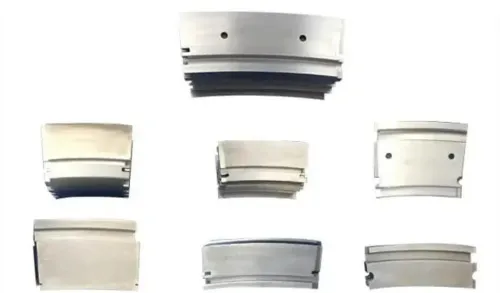
Reverse Engineered Aero Engine Blades and Blisks Reverse Engineered Blades by BVPL Material : Aluminium, Stainless Steel and Titanium Reverse Engineered Blades by BVPL Material : Aluminium, Stainless Steel and Titanium |
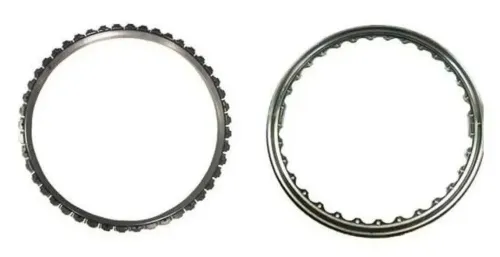
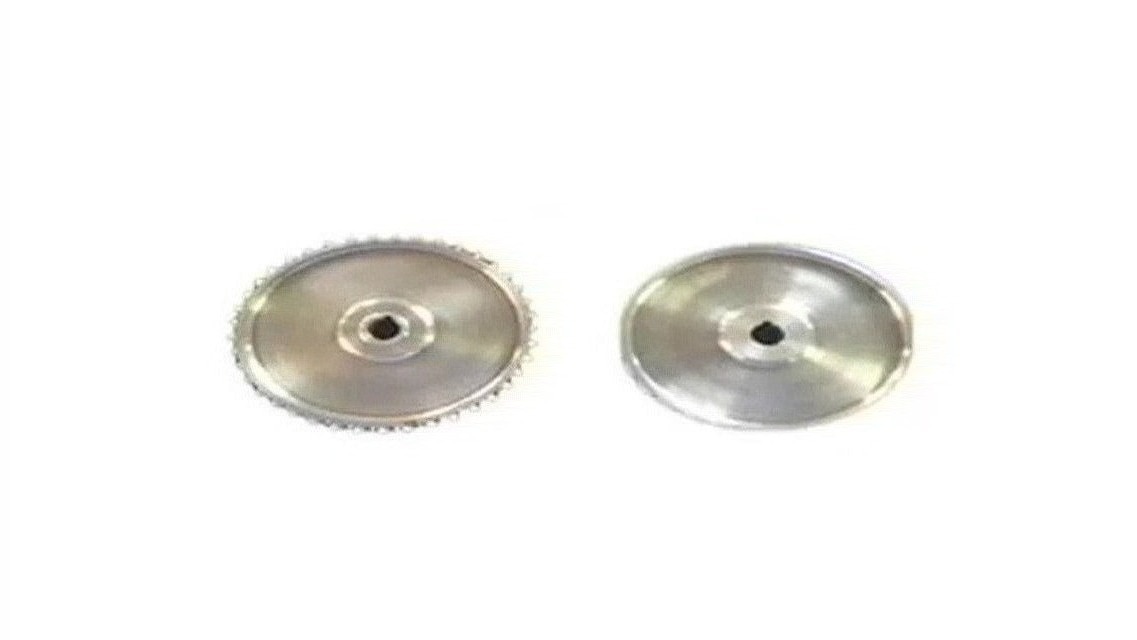
Reverse Engineered Aero Engine Blades and Blisks Blisks for Aero Engines Material : Stainless Steel Blisks for Aero Engines Material : Stainless Steel |
Frequently asked questions
What must manufacturers reconstruct from a replacement turbine blade?
They must reconstruct the airfoil, load path, locating features, cooling details, material specification, thermal behaviour, and manufacturing controls.
Which engine applications justify reverse-engineered blades?
Reverse engineering suits applications with an identifiable part, repeatable demand, recoverable design information, and a qualified inspection and manufacturing route.
How do manufacturers prove that a copied blade is usable?
They compare dimensions and configuration, verify material and heat treatment, inspect critical features, and retain records linking the part to its production batch.
When is reverse engineering the wrong choice in Singapore?
It is the wrong choice when certification requirements, damage history, missing design data, low demand, or an available approved replacement make the risk and effort unjustified.