
Nimonic 115 is not selected for every turbine blade simply because the part operates in a hot section. You will be able to identify plausible HPT and IPT duties, compare the alloy’s properties and product form, specify the manufacturing route, and verify whether a Singapore-supplied replacement has the correct pedigree.
Key takeaways
- Use Nimonic 115 only within its qualified temperature, stress and life envelope.
- Match airfoil geometry, fir-tree root, platform, cooling holes and coating system.
- Request material heat-treatment, dimensional inspection and traceability records before acceptance.
- Compare Singapore suppliers on process control, documentation and replacement-part compatibility.
Which turbine stages and duties suit Nimonic 115 blades?
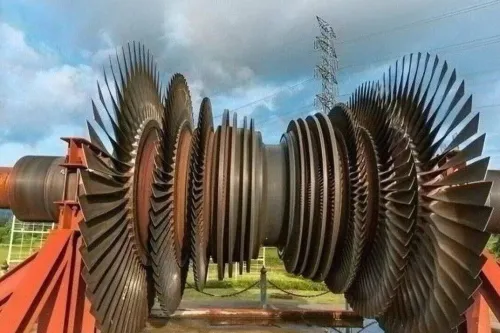
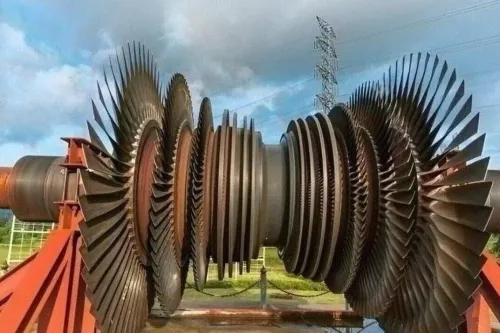
Nimonic 115 fits hot-section blade rows where local metal temperature, stress, cooling airflow, coating system and required life remain within its qualified design envelope. First-stage and other high-pressure turbine rows face the highest gas temperatures, centrifugal stress and thermal gradients, so creep and oxidation resistance control the design.
An HPT label alone does not prove Nimonic 115 is the approved alloy.
| Stage or duty | Why Nimonic 115 may fit | What must be verified |
|---|---|---|
| High-pressure turbine | Plausible for aero-engine hot sections operating through sustained cruise, take-off and repeated thermal cycles | Metal temperature, stress, cooling, coating and qualified life |
| Intermediate-pressure turbine | Downstream conditions may reduce temperature but introduce different pressure, speed, vibration and cooling demands | Engine specification and row-specific material approval |
| Industrial gas turbine | Suitable for specified continuous power-generation service or hot-section overhaul work | OEM design basis, operating profile and repair limits |
| Steam turbine | Not a default substitute for turbine steels or other nickel alloys | Separate temperature, corrosion, stress and life justification |
Nimonic 115 high-pressure turbine blade uses remain design-specific; directionally solidified or single-crystal alloys may be required where creep capability or grain-boundary weakness governs. An intermediate-pressure turbine blade in Singapore describes a module and supply location, not a Singapore-specific material grade. Geography does not establish the alloy.
Rotating blades need strong attachments, vibration resistance and controlled thermal gradients under centrifugal load. Stationary vanes have different attachment, vibration, cooling and thermal-gradient requirements, so they may require another alloy even in the same module. A gas-turbine approval does not transfer automatically to a steam-turbine part.
Which Nimonic 115 properties control the blade design?
A row earns Nimonic 115 only when its local metal temperature, stress and life requirements fit the alloy’s qualified envelope. It is a nickel-base, precipitation-strengthened superalloy; aluminium and titanium form its principal gamma-prime strengthening phase, while chromium supports oxidation and hot-corrosion resistance. Cobalt and molybdenum contribute to high-temperature strength.
Published reference chemistry is about 14–16% chromium, 14–18% cobalt, 3.5–5% molybdenum, 3.5–4.5% titanium and 4.5–5.5% aluminium, with nickel as the balance. Controlled carbon, boron and zirconium additions influence grain-boundary strength and creep behaviour. Treat these figures as orientation only: acceptance requires the governing material specification.
Nimonic 115 applications are associated with sustained creep and rupture strength around 850–870 °C, a service-design range rather than a universal temperature limit. Aero engine parts manufacturers must obtain tensile strength, fatigue behaviour, density and oxidation data from the applicable datasheet or specification, not an unsupported catalogue.
Design choice changes with the following conditions:
| Design condition | Controlling issue | Likely consequence |
|---|---|---|
| High centrifugal load or thermal cycling | Creep, rupture and thermal-fatigue life | Confirm stress, temperature and cycle limits |
| Cooling passages or damaged coating | Local metal temperature and oxidation | Recalculate life before approval |
| Fine-grained or equiaxed structure | Grain-boundary weakness | Consider directionally solidified or single-crystal alloy |
| Stationary vane rather than rotating blade | Different vibration, attachment and thermal gradients | Do not assume the same material choice |
A suitable alloy in one row can fail in another when grain structure, cooling design or coating condition changes.
How is a Nimonic 115 blade made, heat-treated and protected?
The purchase specification must state whether the blade is cast, wrought or forged: grain size, grain flow, creep life, machining allowance and inspection access change with each form. For gas turbine blade and vane manufacturers, Nimonic 115 blade applications therefore require an approved process route, not an alloy name alone.
- Approved melting and billet or casting production
- Solution treatment and precipitation-aging heat treatment
- Forging or investment casting where specified
- Root-form manufacture, followed by CNC machining of the platform and airfoil
- Cooling-hole drilling or laser production
- Surface finishing, coating, balance correction, and final dimensional, visual and non-destructive inspection
Nimonic 115 retains strength during cutting, work-hardens readily and conducts heat poorly. Use rigid fixturing, sharp tooling, controlled cutting parameters, abundant coolant and tool paths that prevent rubbing; excess heat or repeated engagement can damage near-surface material.
| Option | What it provides | Approval issue |
|---|---|---|
| Uncoated blade | Simpler surface and inspection | Oxidation and hot-corrosion exposure remain unprotected |
| Oxidation-resistant coating | Protection in oxidising or corrosive gas | Match chemistry and thickness to the engine system |
| Thermal-barrier coating | Lower metal temperature under high gas temperature | Confirm cooling design, adhesion and thermal-cycle capability |
Coating thickness changes airfoil and root dimensions. Put masking, machining allowance, adhesion checks, stripping limits and post-coating inspection in the drawing and repair plan.
Treat welding or weld repair as controlled work: heat-affected-zone cracking, liquation cracking and altered precipitation require an approved procedure defining filler, heat input, inspection and any post-weld heat treatment.
What must you match before ordering a replacement blade?
A dimensionally similar blade is not an approved replacement. Match the engine model and variant, part number, drawing revision, blade row or stage, airfoil geometry, root attachment, platform length and thickness, rotation direction, cooling-hole count and location, coating system, balance condition, and every dimensional and geometric tolerance.
Pressure stage, rotational speed, gas temperature and cooling architecture can make two visually similar Nimonic 115 blades unsuitable for interchange. Nimonic 115 applications selected by aero engine parts manufacturers depend on the complete design envelope, not the alloy name; that applies equally to an intermediate pressure turbine blade in Singapore.
Require the supplier to identify and provide:
- Governing OEM drawing, material specification or customer-controlled document
- Product form: cast, wrought or forged; heat or cast/forging identity; heat-treatment condition
- Mill or material certificate, chemical-composition report and required mechanical or creep-test evidence
- Heat-treatment records, prescribed radiographic, fluorescent penetrant or other NDT records, and certificate of conformity
| Evidence | Practical check | What it establishes |
|---|---|---|
| Heat identity | Compare heat numbers with all part paperwork | Traceability |
| Chemistry | Compare reported elements with specified limits | Material compliance |
| NDT | Confirm the drawing’s named method and acceptance criteria | Inspection compliance |
| Coating and cooling | Inspect thickness, system, hole count and location against the drawing | Configuration compliance |
“Nimonic 115” printed on a quotation proves nothing by itself. Set acceptance criteria from the applicable OEM, regulator, purchase order, quality plan and maintenance-release process; BVPL Turbine Parts must work to those controlled documents, not an alloy label.
Related service
Aero Engine Blade High Pressure Turbine and Intermediate Pressure Turbine Blades Material: Nimonic 115 High Pressure & Intermediate Pressure Turbine Blades Material: Nimonic 115 Nimonic 115 is a high-performance nickel-chromium-cobalt alloy engineered... |
How should Singapore buyers evaluate the manufacturer and delivery package?
Treat Singapore as the supply location, not the alloy grade: an intermediate-pressure turbine blade in Singapore still needs the engine program’s approved material and process basis. Nimonic 115 blade applications must be confirmed against the controlled part number, drawing revision and customer specification, not inferred from geography or a quotation.
Preserve identity from incoming billet, forging or casting through machining, heat treatment, coating and dispatch. Link the heat or batch number to the chemical certificate, heat-treatment record, NDT report, dimensional inspection and certificate of conformity, then explain every nonconformance before shipment.
Separate the work scope before comparing suppliers:
- New manufacture: require the approved product form, process route and acceptance criteria.
- Approved repair: require a repair plan defining weld-filler compatibility, heat input, post-repair heat treatment, blend limits, NDT and dimensional restoration.
- Reverse-engineered replacement: reject it when it merely uses a similar nickel alloy, unless the governing authority or customer specification expressly permits that basis.
A technical review should compare these capabilities:
| Area | Evidence to request | Failure prevented |
|---|---|---|
| Airfoil and root | CMM reports and root-form inspection | Incorrect fit or airflow |
| Cooling features | Hole count, location and diameter records | Cooling imbalance |
| Coating and balance | Thickness map and balance report | Rubs, vibration or overheating |
| Final release | Conformity statement and linked records | Untraceable acceptance |
Gas turbine blade and vane manufacturers should deliver a traceable package whose geometry, metallurgy, processing and records correspond to the intended HPT or IPT row.
Frequently asked questions
Which turbine stages and duties suit Nimonic 115 blades?
Nimonic 115 suits hot-section blade rows when metal temperature, centrifugal stress, thermal gradients, cooling airflow, coating system and required life fit its qualified design envelope. First-stage and other high-pressure rows demand particular attention to creep and oxidation resistance.
Which Nimonic 115 properties control the blade design?
The design must account for high-temperature strength, creep resistance, oxidation resistance, thermal fatigue, density, thermal expansion and fatigue behaviour. These properties affect airfoil thickness, cooling passages, root geometry, clearances and service-life calculations.
How is a Nimonic 115 blade made, heat-treated and protected?
A replacement blade requires controlled alloy processing, precision machining or forming, specified solution and ageing treatment, dimensional inspection and surface protection. Confirm the approved heat-treatment cycle, coating or aluminide system, cooling-hole inspection and traceability records.
What must you match before ordering a replacement blade?
Match the engine and module, stage and blade position, part number and revision, airfoil profile, platform, root or fir-tree geometry, shroud features, cooling-hole layout, material condition, coating system, balance requirements and inspection limits.
How should Singapore buyers evaluate the manufacturer and delivery package?
Check the manufacturer’s relevant aerospace or turbine process capability, inspection equipment, traceability system and experience with the required alloy and geometry. Request the certificate of conformity, material certificate, heat-treatment records, dimensional report, non-destructive testing results, coating records and packing details.