
A blade shipment is not complete when the metal part arrives: its drawing revision, material history, inspection evidence, release status, and preservation details determine whether you can accept and install it. By the end, you will know which records to request, how to compare them with the approved configuration, and how documentation changes between new, repaired, reverse-engineered, and aftermarket blades.
Key takeaways
- Match every test result to the blade serial number or manufacturing lot.
- Check the drawing revision, material grade, coating, dimensions, and acceptance criteria.
- Separate visual, dimensional, chemical, metallurgical, and NDT evidence.
- Define extra records for new production, replacement, repair, or qualification orders.
The core document package that should accompany every blade
Expect aero engine parts manufacturers to deliver a traceable record set, not a certificate bearing only a drawing number. The aero engine blade documentation should identify the blade serial number or manufacturing lot and link each result to the supplied part.
- Certificate of conformity against the purchase order, applicable OEM drawing, revision, and customer quality clauses
- Material certificate stating alloy, melt or heat number, material standard, and condition
- Heat-treatment record showing furnace cycle, temperature, time, and batch linkage
- Dimensional inspection report covering airfoil, root, platform, edge radius, and permitted tolerances
- Surface-treatment or coating record naming the system, thickness limits, and inspection result
- Applicable NDT reports, such as fluorescent penetrant, magnetic-particle, radiographic, ultrasonic, eddy-current, or visual inspection, with the procedure, acceptance standard, equipment calibration status, and inspector qualification
- Packing list, preservation details, and installation or handling instructions
A clean certificate of conformity does not reveal an approved concession or repair. Ask for the nonconformance record whenever one exists, including the affected characteristic, permitted limit, approving authority, and disposition reference.
| Delivery condition | Additional evidence to expect | Why it matters |
|---|---|---|
| New production | Full manufacturing and inspection records | Establishes first-article traceability |
| Repaired or overhauled | Repair-station approval, repair process reference, repair limits, and prior-life history where required | Proves the released condition |
| Reverse-engineered or aftermarket | Approved configuration basis, material equivalence, validation results, and release status | Drawing-number matching alone cannot prove interchangeability |
How to read aero engine blade specifications before acceptance
The supplied blade matches your order only when its part number, revision, engine or module applicability, stage, and configuration status agree with the purchase order. A certificate naming the drawing number but omitting its revision can describe a technically correct blade that does not fit your engine.
| Check | Match on the supplied blade | Reject or query |
|---|---|---|
| Identity | Part number, drawing revision, engine model, module, stage, and serial or lot number | Generic part description or no revision |
| Attachment | Root form, root dimensions, platform geometry, datum scheme, and clocking | Span or overall length only |
| Airfoil | Profile or coordinate definition, chord, twist, leading- and trailing-edge limits, tip or shroud features, and drawing tolerances | “Per sample” with no controlled geometry |
| Condition | Material grade, heat-treatment condition, mass or balance limit, surface finish, edge radius, and coating system | Material named without condition or coating specification |
| Status | New, serviceable, overhauled, repaired, or surplus condition, plus approved deviation or repair references | Clean conformity statement that hides a concession |
Aero engine blade specifications should let you trace every critical value to the applicable OEM drawing, customer requirement, material standard, heat-treatment specification, coating specification, or approved repair limit.
Match the serial number or lot across the dimensional report, material certificate, and test records; generic documents do not prove that the supplied blade is the one inspected. Ask for the concession authority, affected characteristic, limit, and approval reference before acceptance.
What inspection, NDT, and process records actually prove
A dimensional report proves fit only when it lists the actual readings, drawing tolerances, datum scheme, inspection method, and calibrated equipment used. A statement that the blade “meets specification” proves far less.
1. Match every record to the blade serial number or manufacturing lot, part number, revision, and engine or module applicability. A generic certificate cannot establish which physical blade was inspected.
2. Compare recorded values with the aero engine blade specifications: root form and critical fit dimensions, platform geometry, airfoil coordinates, leading- and trailing-edge limits, tip features, clocking, mass, balance, and surface finish. Span and overall length alone cannot prove interchangeability.
3. Read the NDT report for the method, procedure, inspected zones, acceptance criteria, equipment, indications, and final disposition. Fluorescent penetrant, magnetic-particle, eddy-current, ultrasonic, or radiographic results should identify whether cracks, laps, voids, or other relevant indications were found—not merely state “NDT passed.”
4. Trace the material certificate to its heat or melt number, chemistry, mechanical properties, and material standard. Match the heat-treatment record to that same material and confirm the specified cycle, temperature, time, atmosphere, and hardness or metallurgical results.
5. Check coating and finishing records for the named system, surface preparation, thickness or coverage results, curing or diffusion cycle, and final visual inspection. These records prove process completion, not automatic service suitability.
Finally, inspect the aero engine blade documentation for concessions, deviations, repairs, or nonconformances. Each must state the affected characteristic, limits, approving authority, and reference; a clean certificate of conformity does not reveal an undisclosed concession.
Why the required evidence changes by blade order type
A new-production blade is documented against the approved drawing and current revision; other order types need evidence of how their condition was established. Ask aero engine parts manufacturers to identify the delivery condition as new, reverse-engineered, repaired, overhauled, serviceable, or surplus before reviewing certificates.
1. New blade: request the certificate of conformity, material certificate stating alloy, heat or melt number and condition, heat-treatment record, dimensional report, coating or surface-treatment record, applicable NDT results, and lot or serial traceability. EN 10204 type 3.1 or 3.2 evidence applies when the contract requires certified or purchaser-witnessed material verification.
2. Reverse-engineered blade: require the measurement or inspection report used to recreate the part, the engineering drawing and revision created for manufacture, material-identification and heat-treatment evidence, and documented approval of any deviation from the OEM design. A dimensional match alone does not prove design authority, fatigue capability, or interchangeability.
3. Repaired or overhauled blade: require the approved repair-station release, repair procedure reference, repair limits, pre- and post-repair NDT, and repair history. Include prior-life, serial-number, operating-hour, or cycle traceability where the engine programme requires it; a new-part certificate cannot replace this record.
4. Aftermarket replacement blade: request the supplier’s conformity statement, stated engine and stage applicability, release status, manufacturing authority, inspection package, and interchangeability basis. Confirm whether it is approved for a certified aircraft engine or supplied only for industrial or test use.
Any concession, deviation, or repair disposition must name the affected characteristic, limit, approving authority, and reference number. A clean certificate of conformity does not erase that trail.
How to define an aero engine blade procurement scope in Munich
A technically conforming blade can still be unusable if the quotation request names only a drawing number. Define the aero engine blade for scope in munich with its regulated end use and configuration before asking for price or lead time.
1. State the installation: a certified aircraft engine, an industrial gas turbine, or a steam-turbine application. This choice affects material standards, quality clauses, release documents, export-control checks, and acceptance tests.
2. Specify the part number and revision, engine or module, stage, serial or lot requirement, material and heat-treatment condition, coating system, and any approved repair or deviation. Identify root form, platform, airfoil profile or coordinate definition, edge limits, tip or shroud features, datums, clocking, and critical fit tolerances.
3. Name the required delivery status: new production, overhauled, repaired, serviceable, or surplus. For repaired or overhauled parts, request repair-station approval, process references, repair limits, prior-life data, and concession or deviation records—not only a new-part certificate of conformity.
4. For aero engine blade supply in munich, define packaging: protective caps or separators, compatible corrosion protection, clean handling, humidity controls, preservation period, shelf life, shock indicators, and serial- or lot-linked labels.
5. Ask the supplier to prove capability in the required material, heat treatment, coating, dimensional inspection, NDT, traceability, and configuration control. BVPL Turbine Parts can be assessed against those exact requirements rather than a generic blade description.
Related products
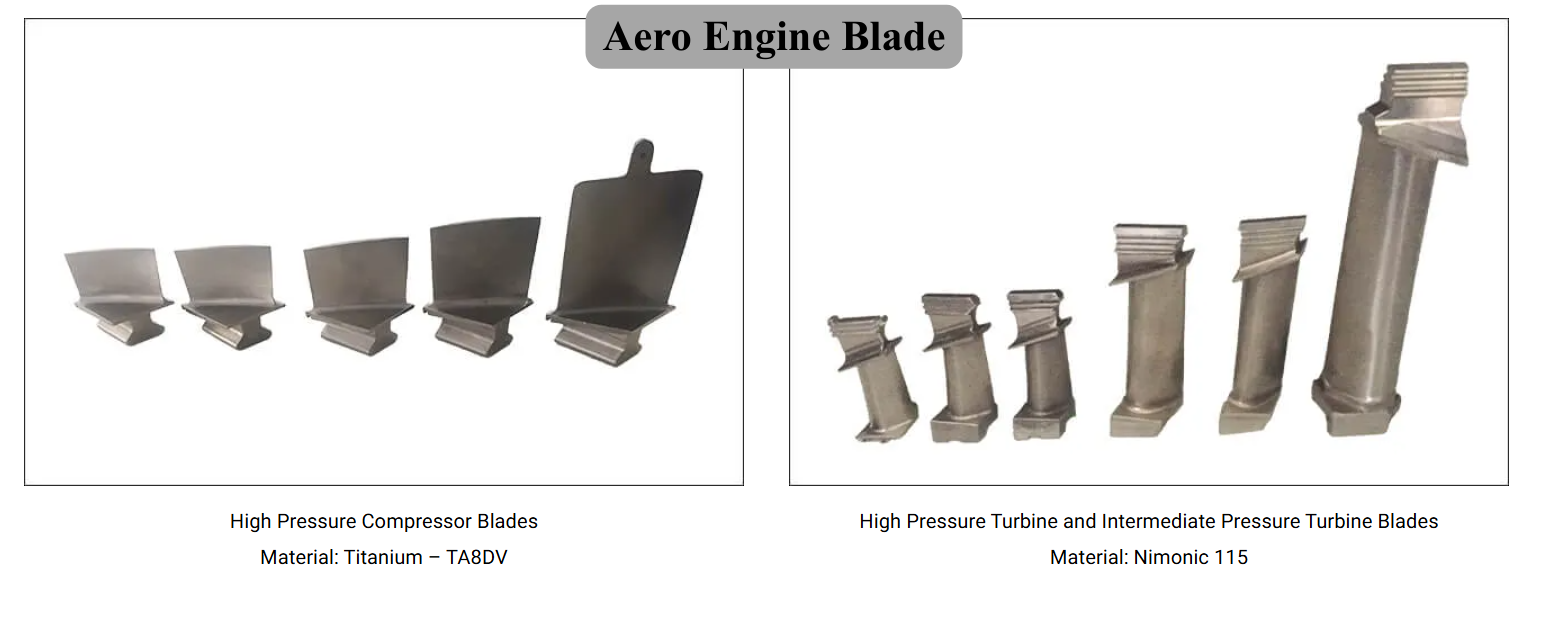 | Precision Components Manufacturer Aero Engine Blade View product → |
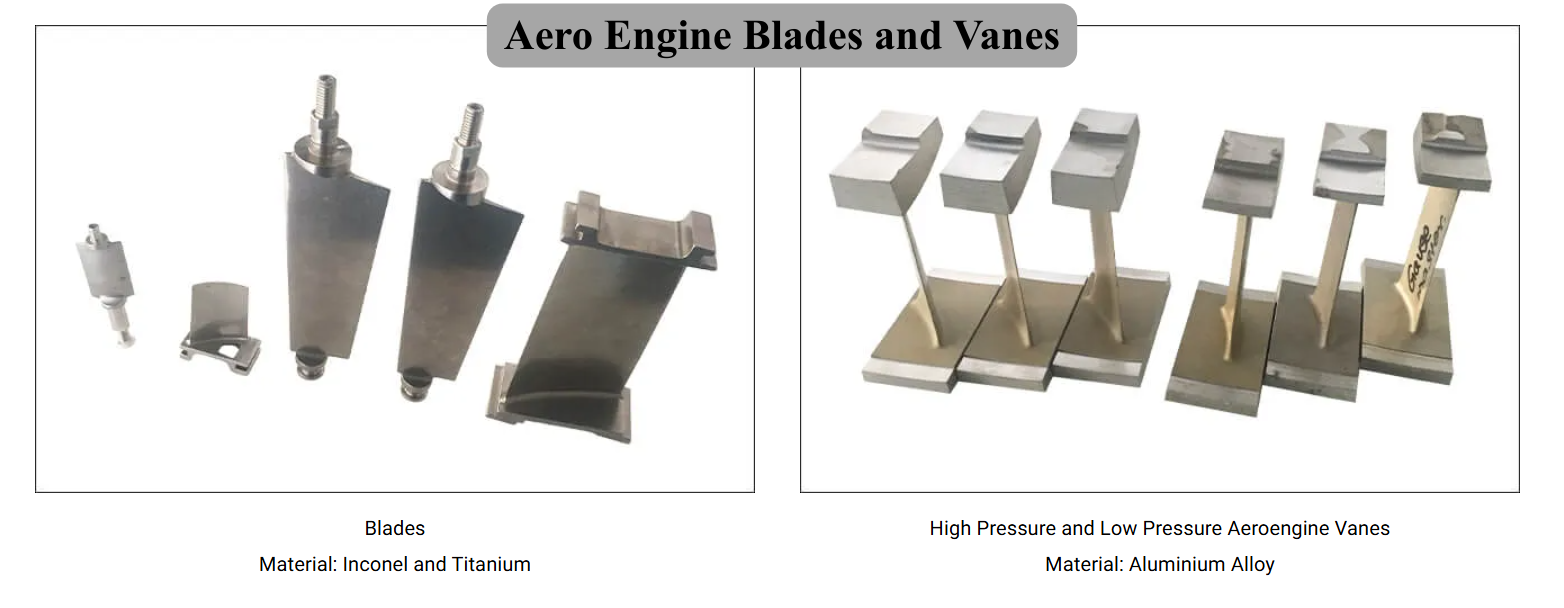 | Precision Components Manufacturer BVPL manufactures precision aero engine blades and vanes used in compressor and turbine stages of gas turbine engines. View product → |
Frequently asked questions
What documents should accompany every aero engine blade?
Request a traceability record identifying the blade serial number or manufacturing lot, drawing number and revision, material, inspection results, NDT reports, and release documentation.
How do you check aero engine blade specifications before acceptance?
Compare the supplied blade and records with the drawing revision, material grade, dimensions, tolerances, surface finish, coatings, heat treatment, and stated acceptance criteria.
What do inspection and NDT records prove?
Dimensional records show measured conformity, while NDT reports show which method, areas, indications, equipment, and acceptance criteria were used. Neither replaces material or process evidence.
Why does evidence change by aero engine blade order type?
New production, replacement, repair, and qualification orders create different risks and approval needs, so they require different combinations of traceability, process, inspection, and validation records.
Related services
Reverse Engineered Aero Engine Blades and Blisks Blisks for Aero Engines Material : Stainless Steel Blisks for Aero Engines Material : Stainless Steel |
Aero Engine Blades and Vanes Blades Material: Inconel and Titanium Blades Material: Inconel and Titanium |
Reverse Engineered Aero Engine Blades and Blisks Reverse Engineered Blades by BVPL Material : Aluminium, Stainless Steel and Titanium Reverse Engineered Blades by BVPL Material : Aluminium, Stainless Steel and Titanium |