
A titanium compressor blade cannot be sourced safely from an “HPC blade” label alone: stage temperature, rotational speed, attachment geometry, material specification, and release status determine whether a part is suitable. Use the comparison and verification steps below to identify a Munich-area manufacturer that can prove the required engineering, machining, inspection, and airworthiness controls.
Key takeaways
- Separate rotating compressor blades from stationary vanes before requesting quotes.
- Ask suppliers to define TA8DV and provide its material and heat-treatment specification.
- Match every replacement blade to the engine, stage, row, and part number.
- Require traceability, inspection records, and dimensional evidence before shipment.
What high-pressure compressor blades do—and why blades are not vanes
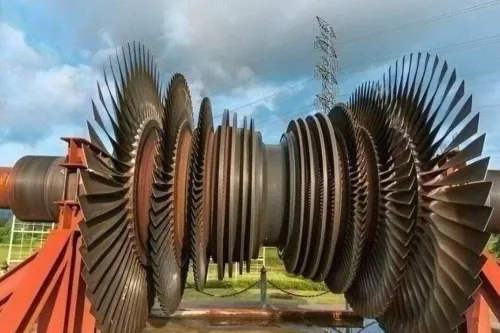
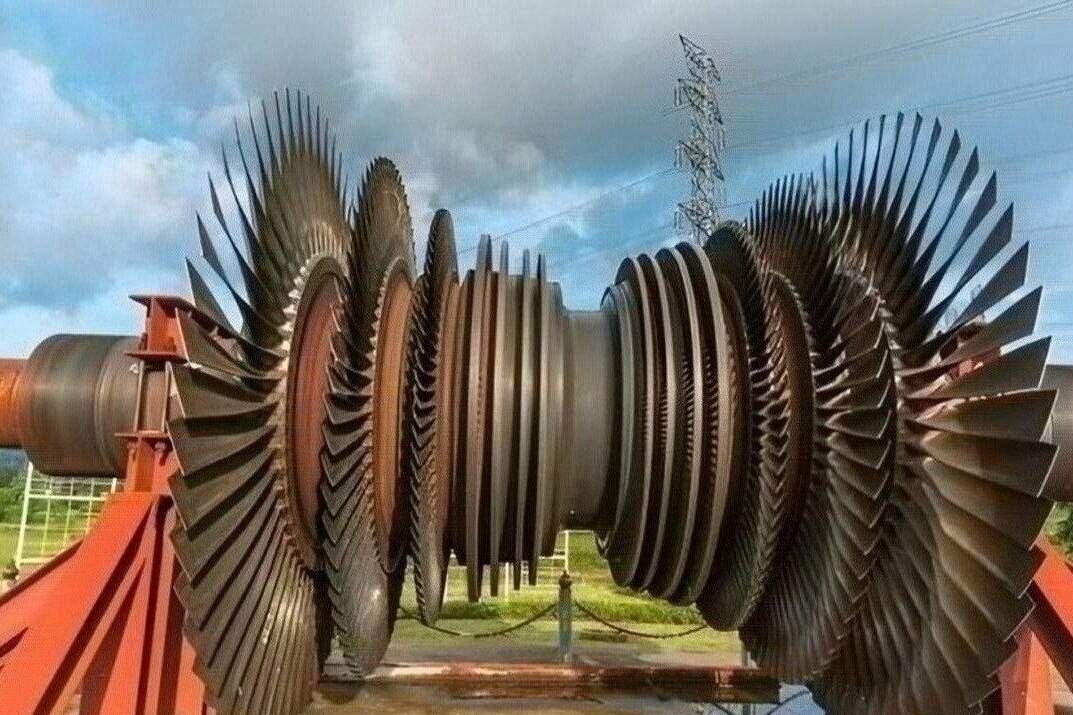
A high-pressure compressor blade raises air pressure before combustion by adding velocity to the airflow as the rotor spins. Downstream stationary vanes turn and slow that airflow, converting velocity into pressure and setting the angle for the next rotor row. Blade-tip clearance matters: excessive clearance leaks pressure, while contact can destroy the airfoil.
Blade and vane are not interchangeable.
| Part | Motion | Primary job | Main design concern |
|---|---|---|---|
| Compressor blade | Rotates with the disk | Adds energy to the airflow | Centrifugal load, fatigue, clearance, FOD |
| Compressor vane | Remains stationary | Diffuses and redirects airflow | Pressure loading, vibration, erosion, attachment |
| Turbine blade | Rotates in hot gas | Extracts energy after combustion | Creep, oxidation, thermal fatigue |
For high pressure compressor blade applications, a manufacturer needs the exact stage, pressure ratio, rotational speed, airfoil family, attachment geometry, and operating temperature. The same module can contain titanium, nickel-base alloy, or different titanium grades; “HPC blade” is not a sufficient specification.
Titanium suits fan, booster, and front or intermediate HPC stages when temperature, dwell time, and oxidation exposure remain within the alloy’s capability. It reduces centrifugal loading through low density, but poor thermal conductivity makes machining prone to heat concentration, tool wear, burrs, and profile movement.
Surface damage, fretting, galling, vibration, erosion, foreign-object impact, and high-cycle fatigue all require control. Titanium compressor blades in Munich should therefore be judged by thin-airfoil metrology, forging-to-machining datum control, controlled deburring, and stage-specific material evidence—not location alone.
Where titanium fits in a compressor, and what TA8DV must mean
Titanium belongs mainly in the fan, booster, and front or intermediate high-pressure-compressor stages, where temperatures remain within the alloy’s capability. Its low density reduces centrifugal loading on rotating blades, but the benefit comes with risks: surface damage, oxygen pickup, fretting, galling, and fatigue.
That is why titanium compressor blades in Munich require controlled finishing and attachment inspection, not chemistry alone.
Titanium becomes a poor choice when stage temperature, dwell time, oxidation exposure, or strength requirements exceed its limits. Rear high-pressure-compressor stages may require a nickel alloy, while steel or another titanium grade may suit a different loading or wear condition. Do not treat Ti-6Al-4V as a universal substitute.
Before accepting a TA8DV callout for ta8dv compressor blades, complete this sequence:
- Obtain the originating engine drawing and the material standard; TA8DV alone is not an unambiguous international alloy designation.
- Confirm the full chemical composition, product form, heat-treatment condition, cleanliness limits, ultrasonic requirements, and permitted equivalency rules.
- Match the supplied certificate to the actual heat or lot, then review heat-treatment records and nondestructive-inspection results.
- Request airfoil-profile scans, surface-finish measurements, attachment inspection, and—where specified—low-cycle-fatigue, vibratory-response, or overspeed evidence.
A generic commercial Ti-6Al-4V certificate does not prove engine suitability. Accept the material only when the drawing, specification, process condition, traceability, and blade qualification evidence agree.
How to compare Munich-area manufacturers by evidence, not location
A Munich address does not prove that a company makes titanium compressor hardware. Start with MTU Aero Engines: its Munich base and engine-component activities make it a credible local comparator, but ask which Munich site performs the work and which operation sits elsewhere.
Treat BVPL Turbine Parts the same way: its stated Munich location identifies a supplier to investigate, not proof of in-house forging, machining, or release authority.
| Supplier or claim | Evidence of local manufacturing | Evidence of sales, engineering, or subcontracting |
|---|---|---|
| MTU Aero Engines | Site-specific process list, machine records, part-family approvals, and sample certificates naming the Munich facility | Munich contact address without a manufacturing scope, or purchase orders naming another plant |
| BVPL Turbine Parts | Facility address, five-axis machining capability, inspection reports, and traceability records tied to the delivered blade | Product page alone, or certificates issued by an unnamed outside processor |
| Any other candidate | Customer approval for the engine part and records for forging, finish machining, inspection, and final release | EN 9100 certificate alone, or Nadcap accreditation covering a different process |
Ask for the manufacturing address, process owner, and subcontractor list before comparing gas turbine blade and vane manufacturers for titanium compressor applications in Munich. Request separate evidence for rotating blades and stationary vanes; they have different retention, balance, platform, and casing requirements.
Check Nadcap by process, not by logo. Verify heat treatment, chemical processing, nondestructive testing, and shot peening individually, then confirm customer approval, calibrated equipment, personnel competence, and part-specific quality clauses. An aerospace compressor blade supplier in Munich that cannot identify who accepts nonconformances is not offering transparent local manufacture.
Related services
High Pressure Compressor Blades Material: Titanium – TA8DV With decades of experience and a legacy of excellence, we take pride in our role as a trusted partner for governments, defense organizations, and... View service → |
Aero Engine Blade High Pressure Compressor Blades Material: Titanium – TA8DV High Pressure Compressor Blades Material: Titanium – TA8DV |
How to confirm that a replacement blade matches the engine
Confirm a replacement against the engine’s exact part number, configuration, material specification, and release authority—not the description “HPC blade.” High pressure compressor blade applications can include different stages, airfoil families, attachments, platforms, and balance requirements.
| Part category | Configuration and material evidence | Release documents |
|---|---|---|
| OEM replacement | Exact OEM part number, dash or modification status, engine model, stage, attachment geometry, and approved material callout, including product form and heat-treatment condition | OEM certificate of conformity, authorized release certificate such as EASA Form 1 or FAA 8130-3, and traceable material and inspection records |
| Approved aftermarket part | Alternative part number cross-referenced to the engine’s approved configuration; design approval identifies the permitted material, geometry, limits, and interchangeable status | FAA PMA or equivalent authority approval where applicable, approved production-release documents, and certificate of conformity |
| Repair | The original identifiable part remains the basis; repair zone, damage limit, repair instruction, and post-repair dimensions must match approved data | Authorized repair order, approved repair scheme, inspection results, and release certificate stating the repair status |
| Reverse-engineered component | Supplier drawing and measured geometry replace OEM design data; material such as Ti-6Al-4V or ta8dv compressor blades must be tied to an engine-approved specification, not a generic mill certificate | Independent conformity records alone do not establish approval; require design approval, customer acceptance, and an authorized release document |
Ask for the stage, rotational speed, airfoil drawing revision, balance criteria, and material specification before comparing quotes. An AS9102 first-article report confirms a configuration was inspected; it does not authorize an unapproved design or replace production-lot traceability.
What a capable titanium blade supplier must prove before shipment
Before placing an order, require records tied to the exact part number, revision, material batch, and manufacturing site. A Munich address proves neither production nor process control: confirm who performs forging, five-axis machining, heat treatment, finishing, inspection, and final release.
- Forging or casting records: approved route, die or pattern revision, heat-treatment chart, material certificate, grain-flow evidence, and concession history.
- Machining records: controlled program revision, datum-transfer plan, tool-control record, in-process dimensional report, airfoil profile scan, and deburring sign-off.
- Inspection records: calibrated CMM results, surface-finish readings, visual and fluorescent penetrant or other specified NDT reports, plus inspector qualification.
- Finishing records: chemical-processing or shot-peening parameters, bath or media controls, masking record, and coating or surface-treatment certificate.
- Balance records: mass properties, rotating balance method, correction limits, fixture identification, and signed results for blades; request vane platform and mounting-interface checks instead.
- Traceability records: serial number, heat and lot numbers, subcontractor identity, nonconformance dispositions, certificate of conformity, and authorized release signature.
| Capability claim | Evidence to demand | Warning sign |
|---|---|---|
| Near-net forming | Approved supplier and route for the specified grade | Generic “forging available” |
| Five-axis machining | Part-specific program and thin-airfoil report | Only machine-list capacity |
| Special process | Process-specific approval, such as Nadcap, and customer approval | EN 9100 alone |
| Final release | Part-specific quality clauses and independent inspection status | Sales-office certificate |
Among gas turbine blade and vane manufacturers for titanium compressor applications in Munich, and any aerospace compressor blade supplier in Munich, insist that each subcontracted handoff appears in the quality file. A process approval covers that process, not every operation or engine part.
Frequently asked questions
What is the difference between a high-pressure compressor blade and a vane?
A rotating blade adds velocity to the airflow, while a stationary vane turns and slows it to increase pressure and set the angle for the next rotor row.
Where does titanium fit in a gas-turbine compressor?
Titanium suits compressor applications where low density, adequate strength, and corrosion resistance support weight and performance targets; confirm the alloy, temperature limit, and manufacturing specification for the specific stage.
What should TA8DV mean on a titanium compressor blade specification?
Do not treat TA8DV as a complete material definition. Ask the supplier to identify the standard, chemical composition, heat treatment, mechanical requirements, and relationship to the engine drawing.
How do you verify that a replacement compressor blade matches the engine?
Check the engine model, compressor stage, rotor row, blade part number, drawing revision, airfoil geometry, root configuration, handedness, and fit or balance requirements against approved records.