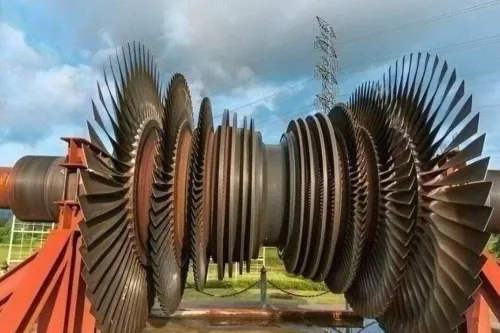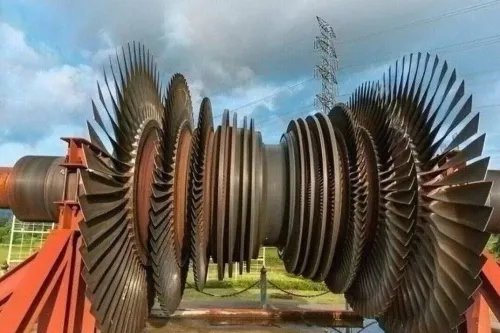

An acceptable blade or vane specification must connect the engine stage, load environment, geometry, material condition, manufacturing process, inspection evidence, and release documents. By the end, you will be able to define the information a supplier needs, distinguish a rotating blade from a stationary vane, and screen a replacement part before it reaches quotation or production.
Key takeaways
- Define the engine station, duty, airflow direction, and fixed or rotating function.
- Send complete geometry, tolerances, interfaces, and inspection data before requesting a quote.
- Prove material identity, heat treatment, coating, and traceability against the approved specification.
- Accept replacements only after dimensional, material, surface, and documentation checks pass.
What must a stage-by-stage blade and vane specification contain?
Define the station and duty before choosing geometry or material. Record compressor or turbine location, pressure ratio, operating temperature, rotational speed, aerodynamic loading, airflow direction, and whether the component is fixed or rotating. Aero engine blade vane specifications are an operating and configuration package, not a list of alloy and nominal dimensions.
| Component | Defining duty | Configuration consequence |
|---|---|---|
| High-pressure compressor blade | High pressure ratio, high rotational speed, and rotating aerodynamic load | Control root fit, mass or moment matching, rotor balance, and tip clearance |
| Low-pressure turbine blade | Hot gas, centrifugal load, and long-cycle thermal exposure | Specify cooling, creep life, coating, and tip-clearance performance |
| Nozzle-guide vane | Fixed hot-gas turning and pressure loss | Control throat area, attachment, sealing, segment alignment, and casing interface |
| Variable stator vane | Fixed airfoil with commanded angular movement | Define actuation interfaces, travel, clearances, and position accuracy |
| Inlet-guide vane | Inlet flow conditioning at the engine entrance | Define airflow direction, incidence limits, orientation, and adjustment features |
State the exact assembly level: bare airfoil, complete vane, segmented nozzle assembly, vane platform or shroud, or repair exchange. For cooled parts, specify hole count, diameter, location, angle, compound-angle orientation, metering features, internal passage connectivity, and measured airflow or pressure-loss limits by circuit; seeing a hole does not prove flow acceptance.
Gas turbine blade and vane manufacturers specifications must separate industrial and aircraft use. Industrial gas turbines may prioritise long-duration creep, oxidation, corrosion, repairability, and installed-clearance performance, while aero engines add airworthiness, configuration, release, and life-limited-part controls.
Which dimensional data must you send before a supplier can quote?
Send a controlled drawing or approved 3D CAD model before requesting a price. It must define airfoil chord and span, profile sections, leading-edge radius, trailing-edge thickness, platform dimensions, throat area, root or dovetail geometry, tip-clearance features, shroud details, mounting features, sealing lands, and every cooling passage or hole.
A rotating blade transfers aerodynamic and centrifugal loads through its root, so provide root fit, platform fit, mass- or moment-matching limits, and rotor-balance effects. A stationary vane needs different controls:
- State the configuration revision, drawing datums, coordinate system, profile and positional tolerances, surface-finish limits, and allowable geometric variation.
- Identify the engine station, handedness, assembly level, attachment geometry, segment alignment, casing interface, sealing surfaces, and throat-area limits.
- Include cooling-hole locations, diameters, angles, internal connectivity, and airflow limits where applicable.
- Tie each inspection characteristic to the drawing revision and datum scheme. “CMM inspected” alone is not a conformity result.
A generic CAD file is not production authority without configuration control and customer approval. A search for aero engine parts manufacturers blade and vane supply specifications in Munich still cannot replace that controlled package.
| Part type | Quote-critical controls | Why it matters |
|---|---|---|
| Rotating blade | Root fit, dovetail, platform, mass or moment match, tip clearance | Carries centrifugal load and affects rotor balance |
| Stationary vane | Attachment, sealing, segment alignment, throat area, casing interface | Controls gas-path area, leakage, and installation fit |
| Cooled part | Passage geometry, hole pattern, angle, airflow limit | Changes cooling performance and acceptance criteria |
How should you choose and prove the blade or vane material?
A material name does not define an acceptable replacement. “Titanium” could identify different grades, heat treatments, and strength levels, while gas turbine blade and vane manufacturers specifications may impose grain, coating, and defect limits that a nominally similar alloy cannot meet.
| Option | Main advantage | Principal concern |
|---|---|---|
| Aluminium alloy | Low density for lower-temperature, weight-sensitive applications | Limited temperature capability and surface durability |
| Titanium | Compressor strength, low density, fatigue performance, and corrosion resistance | Check galvanic contact with adjacent metals and coating compatibility |
| Nickel-based Inconel alloy | High-temperature turbine strength and oxidation resistance | Creep, casting, grain, and coating controls are process-specific |
| Stainless steel | Selected reverse-engineered or repair applications | Confirm temperature, fatigue, corrosion, and approved-design suitability |
Specify the exact alloy grade, aerospace material specification, heat-treatment cycle, grain condition, required mechanical properties, and heat or mill certificate. For turbine castings, define equiaxed, directionally solidified, or single-crystal material; grain orientation; stray-grain or freckle limits; recrystallization limits; and casting-defect acceptance.
Treat the coating as part of the material system. Aero engine blade vane specifications should identify:
- Thermal-barrier or oxidation-resistant coating, bond coat, thickness range, surface preparation, masking, stripping allowance, cooling-hole protection, and post-coat inspection.
- Heat-treatment records showing AMS 2750 furnace classification, instrumentation, system accuracy testing, and temperature-uniformity survey data where specified.
- Nadcap approval for a special process where required, without treating it as a substitute for part-specific qualification or customer approval.
A generic furnace certificate or “Inconel equivalent” statement is not proof of conformity.
What does a replacement aero-engine vane scope actually include?
A “replacement aero-engine vane” is not a complete purchasing definition. It must state whether you want new manufacture to an approved design, a direct replacement, a repairable used-part replacement, reverse engineering, redesign, or a repair exchange.
Identify the assembly level: fixed nozzle-guide or stator vane, segmented nozzle assembly, variable stator vane, inlet-guide vane, platform, shroud, bare airfoil, complete vane, or another assembly.
Use this fit-check sequence before requesting a quotation:
- Confirm the OEM part number and dash number, engine model, stage number, and serial or batch traceability.
- Confirm left/right orientation, drawing revision, root profile, and interchangeability status.
- State whether the part is a bare airfoil, complete vane, segment, or repair exchange.
- Request the controlled drawing, approved repair data where relevant, 3D model, configuration revision, inspection plan, material and heat-treatment specification, special-process requirements, coating instructions, and AS9102 first-article requirements when applicable.
FAA Form 8130-3, or the applicable EASA release framework, documents conformity or airworthiness status; it does not prove compatibility with every engine variant. A release document cannot replace part-number applicability and configuration control.
Stop reverse engineering at geometry. Do not treat reconstructed dimensions as an approved interchangeable design until the design authority and regulatory acceptance route are established. An aero engine blade supplier in Munich must meet that same boundary: location does not convert an unapproved design into an airworthy replacement.
How do you qualify a Munich supplier and accept the delivered part?
Treat location and airworthiness eligibility as separate questions. A Munich address does not prove approval.
1. Compare an aero engine blade supplier in Munich against the controlled procurement file, not its catalogue. Verify EN 9100 or AS9100 certification, customer-specific approval, approved sources for heat treatment, coating and NDT, export-control classification, EU dual-use status, customs documents, and the release route separately.
Nadcap accreditation supports special-process control but does not replace customer approval or part-specific qualification.
2. Before ordering, confirm the approved design or repair data, part number, dash number, engine and stage, serial or batch traceability, drawing revision, and regulatory acceptance route. State whether the supply is new manufacture, approved replacement, repair exchange or reverse-engineered hardware; geometry alone does not establish interchangeability.
- Require an acceptance file containing:
- Part number, dash number, serial or batch identity, and drawing revision.
- Material certificate, heat-treatment record, coating record, and authorized deviations.
- NDT method and acceptance standard, not merely “NDT complete.”
- Dimensional results tied to drawing datums, with calibrated CMM or gauge identification and traceability.
- Release documentation matching the agreed authority and shipment.
4. Read the NDT method against the defect risk. Fluorescent penetrant testing finds suitable surface-breaking indications in nonporous material; radiography or computed tomography addresses different internal defect populations and access limitations. Then confirm blade mass or moment matching, root and platform fit, tip clearance, vane sealing, and cooling-flow results where specified.
For aero engine parts manufacturers blade and vane supply specifications in Munich, BVPL Turbine Parts is relevant only when these documents, process controls and approval boundaries are verified before acceptance.
Related products
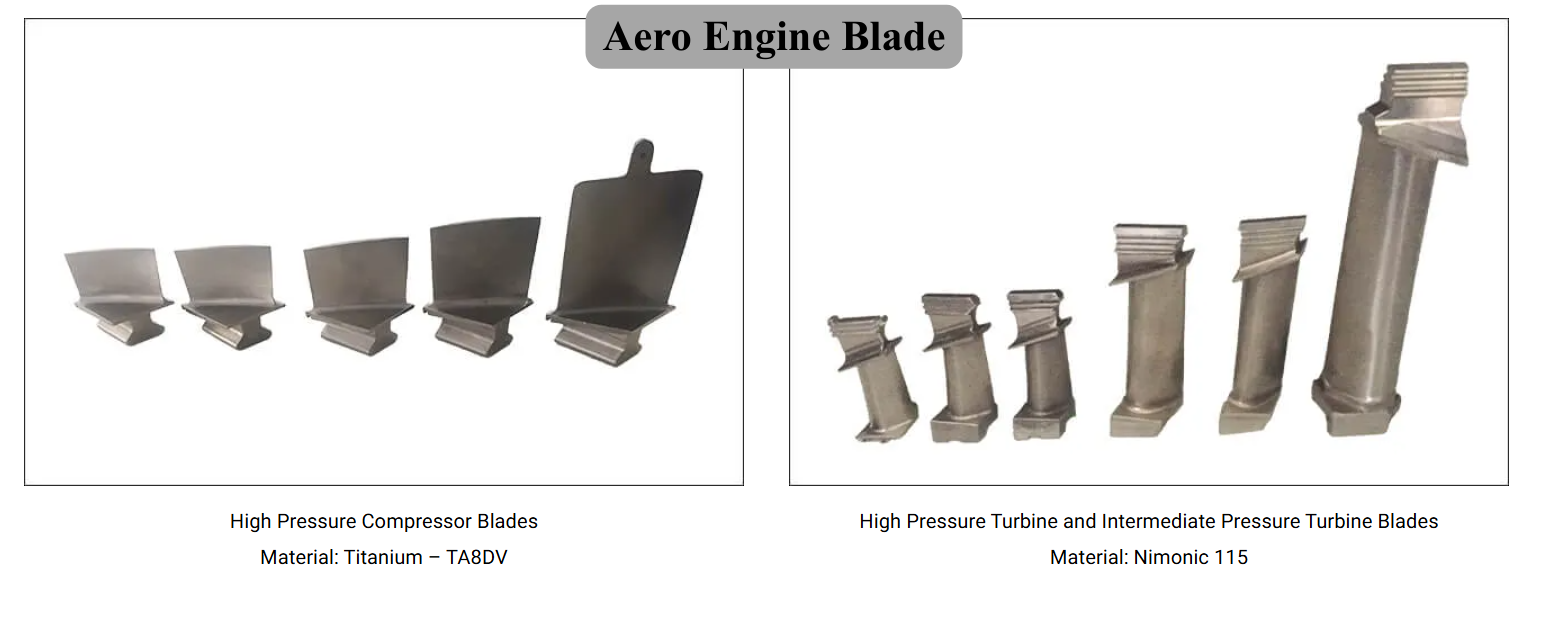 | Precision Components Manufacturer Aero Engine Blade View product → |
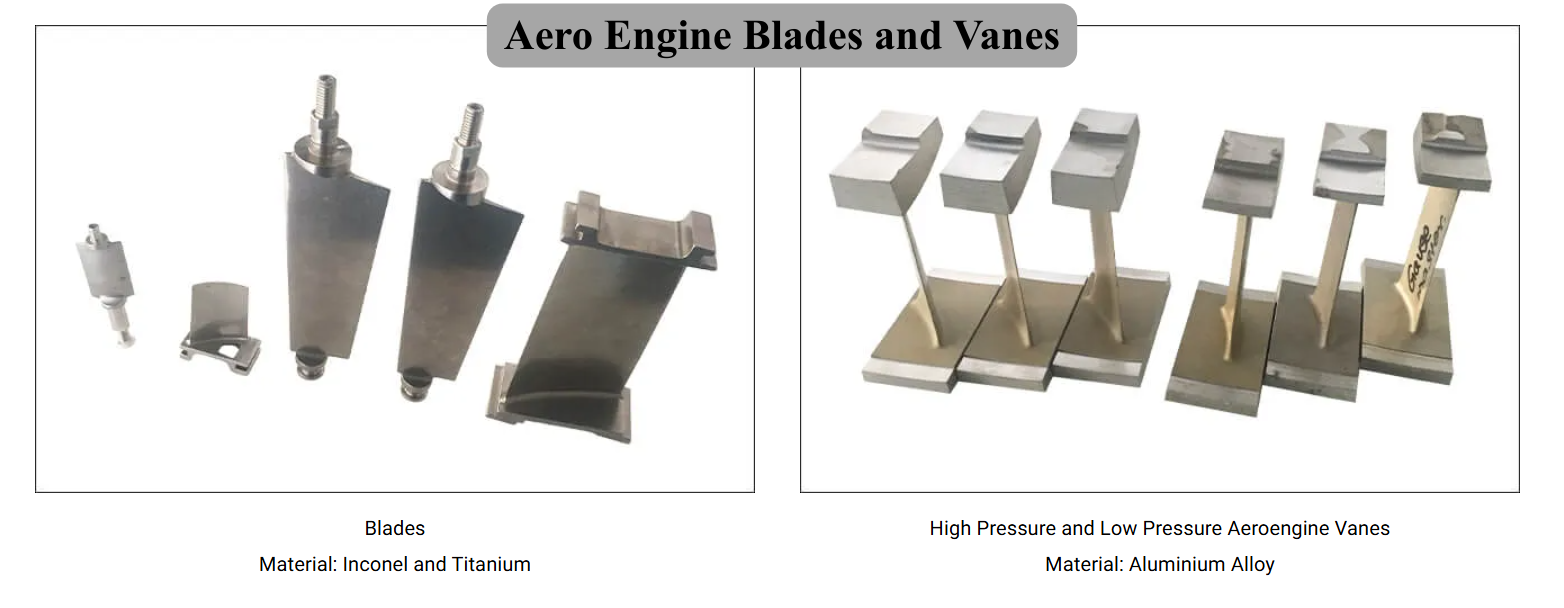 | Precision Components Manufacturer BVPL manufactures precision aero engine blades and vanes used in compressor and turbine stages of gas turbine engines. View product → |
Frequently asked questions
What must a stage-by-stage blade and vane specification contain?
Record the compressor or turbine station, pressure ratio, operating temperature, rotational speed, aerodynamic loading, airflow direction, and whether the part is fixed or rotating. Include geometry, interfaces, material, coatings, inspection criteria, and traceability requirements.
Which dimensional data must you send before a supplier can quote?
Send the drawing revision, 3D model or coordinate data, airfoil sections, platform and root geometry, datum scheme, critical tolerances, surface-finish limits, balance requirements, and mating-interface dimensions.
How should you choose and prove the blade or vane material?
Specify the alloy grade, product form, heat-treatment condition, mechanical and environmental requirements, coating system, and required certificates. Verify the heat number, chemical analysis, heat-treatment records, and test results against the approved material specification.
What does a replacement aero-engine vane scope actually include?
Define the exact engine and stage, vane configuration, airfoil and platform geometry, attachment features, material and coating, inspection plan, documentation package, packaging, and acceptance criteria. State whether the scope includes reverse engineering, repair, or only new manufacture.
How do you qualify a Munich supplier and accept the delivered part?
Review the supplier’s aerospace quality system, process capability, inspection equipment, traceability controls, and experience with comparable components. At receipt, check identity, dimensions, surface condition, material records, coating records, non-destructive testing, and certificate completeness.
Related services
Aero Engine Blades and Vanes High Pressure and Low Pressure Aeroengine Vanes Material: Aluminium Alloy High Pressure and Low Pressure Aeroengine Vanes Material: Aluminium Alloy |
Aero Engine Blades and Vanes Blades Material: Inconel and Titanium Blades Material: Inconel and Titanium |
Reverse Engineered Aero Engine Blades and Blisks Blisks for Aero Engines Material : Stainless Steel Blisks for Aero Engines Material : Stainless Steel |