
Choosing a stainless steel blisk starts with a material specification, not the word “stainless.” You will be able to compare grades, rotor mass, temperature capability, repair exposure, manufacturing controls and reverse-engineering evidence before selecting a blisk supplier or design route.
Key takeaways
- Match stainless steel grade to compressor temperature, stress, corrosion and speed.
- Compare blisks with titanium, aluminium, nickel alloys and separate blades by duty.
- Inspect airfoil geometry, balance, surface integrity and traceability before approval.
- Reverse engineer from measured geometry, material evidence and documented inspection results.
What a blisk changes in an aero-engine rotor
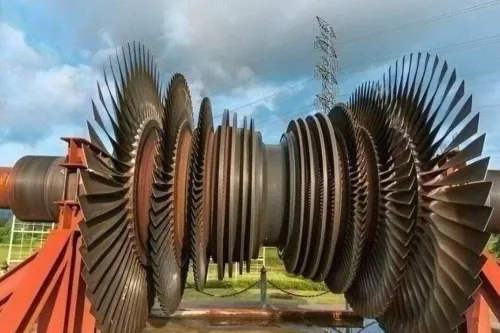
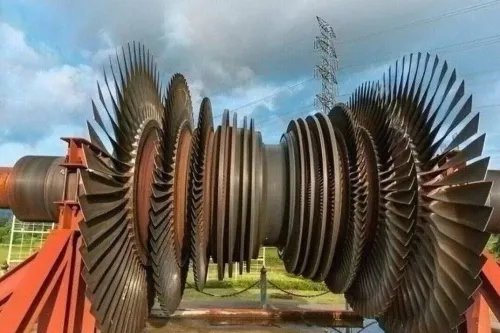
A blisk is an integrally bladed rotor: the disk and airfoils are machined or forged as one component. In compressor stages, stainless steel aero engine blisks suit environments where temperature, centrifugal stress, corrosion exposure, stiffness and rotational speed demand more than a simple weight comparison.
Removing dovetails, blade roots and associated leakage paths reduces part count and can improve airflow and rotor efficiency.
| Feature | Integral blisk | Disc with detachable blades |
|---|---|---|
| Mass and airflow | Fewer root features and leakage paths | Replaceable roots add weight and disturbance |
| Damage response | Airfoil damage affects one integral rotor | Exchange the damaged blade |
| Manufacturing risk | One complex, tightly controlled component | Separate blade and disk processes |
| Maintenance | Requires approved local repair or whole-rotor disposition | Blade replacement is usually simpler |
That maintenance difference changes procurement. A visually acceptable blend does not prove airworthiness; remaining section thickness, stress concentration, fatigue life, balance and approval data determine acceptance. Ask aero-engine parts manufacturers for evidence covering:
- Heat and lot traceability
- Approved material and process specifications
- Calibrated CMM and scanning equipment
- Documented five-axis machining parameters
- Nondestructive inspection and dimensional reports
- Dynamic-balance results and the customer’s design-authority acceptance basis
An ISO 9001 certificate alone does not demonstrate capability to produce an approved blisk. Establish the repair route before production, because a damaged integral rotor cannot receive a routine blade exchange.
Which stainless steel grade fits the compressor duty?
Choose the grade from the compressor’s temperature, centrifugal load and vibratory-fatigue spectrum—not from the label “stainless.” A useful blisk material comparison starts with the exact product form, heat-treatment condition, cleanliness class and aerospace material specification.
| Grade | Main advantage | Main concern in a blisk |
|---|---|---|
| 17-4 PH | High strength, hardness and broad availability | Aging condition controls strength; prolonged heat exposure causes overaging, reduced strength and dimensional change |
| 15-5 PH | Better toughness and transverse ductility than many 17-4 PH products | Still requires tightly controlled aging, cleanliness and stress-corrosion assessment |
| 13-8 Mo | High strength with strong toughness and stress-corrosion resistance when correctly processed | Higher material and processing cost; properties depend heavily on condition and orientation |
| Austenitic 304, 316 or 321 | Ductility, toughness and corrosion resistance; no precipitation-hardening step | Lower yield strength, higher thermal expansion and greater centrifugal mass for an equivalent rotor |
Set limits for maximum metal temperature during continuous operation, starts, shutdowns and overspeed—not merely inlet-air temperature. Obtain allowable tensile, fatigue, crack-growth and stress-corrosion values at those temperatures for the specified heat treatment, then check centrifugal, gas-bending, vibratory and thermal-gradient stresses against them.
Include dwell time: heat can overage precipitation-hardening steel even when a short transient appears acceptable.
For stainless steel aero engine blisks, 17-4 PH suits lower or intermediate-temperature compressor duty only after the design authority confirms its temperature capability. Compare density, rotor inertia and burst consequences with titanium before selecting it; higher modulus reduces blade deflection, but stainless steel’s roughly 7.75 g/cm³ density substantially increases rotational loading.
Stainless steel versus titanium, aluminium, nickel alloys and separate blades
Choose stainless steel when dimensional rigidity, wear resistance, corrosion exposure or material cost outweighs rotor mass. Its 190–200 GPa elastic modulus is far above titanium’s roughly 110 GPa, reducing airfoil deflection, but 17-4 PH density is about 7.75 g/cm³ versus 4.43 g/cm³ for Ti-6Al-4V.
The stainless rotor is therefore about 75% heavier at identical geometry, increasing centrifugal load, bearing demand and containment consequences.
A useful blisk material comparison is:
| Option | Main advantage | When it makes sense |
|---|---|---|
| Stainless steel | High stiffness, hardness and comparatively low material cost | Low- or intermediate-temperature compressor stages facing wear, contamination or aqueous corrosion |
| Titanium alloy | Low density and strong specific strength | High-speed fan and compressor blisks where rotor mass and inertia dominate |
| Aluminium alloy | Lowest mass and easy machining | Low-temperature, lightly loaded compressor hardware; reject it when temperature or fatigue margin is inadequate |
| Nickel alloy, such as Alloy 718 | Retains strength at higher temperature | Hotter compressor or turbine environments where stainless steel overages; accept higher density and machining effort |
| Separate blade-and-disc assembly | Replaceable blades and damage-tolerant maintenance | Engines needing blade replacement, staged repair or design flexibility rather than maximum integral-rotor efficiency |
Do not treat “stainless” as a corrosion guarantee: check chloride exposure, galvanic contact with titanium or carbon composites, and the actual temperature cycle. Conventional construction also makes more sense when one damaged airfoil must be replaced without scrapping an entire blisk.
Tensile strength alone cannot settle the choice; calculate speed, inertia, fatigue, bearing loads and containment requirements.
How to manufacture and inspect a stainless steel blisk
Start with a forged or certified wrought blank, not an unidentified bar. The purchase specification must name the grade—17-4 PH, 15-5 PH or 13-8 Mo—the aerospace material standard, cleanliness, product form and heat-treatment condition.
| Route | Advantage | Main control |
|---|---|---|
| Forged preform | Follows the rotor shape and reduces cutting waste | Record forging reduction, grain flow, heat and lot identity |
| Wrought billet | Supports flexible geometry and prototype production | Verify ultrasonic quality and material certification throughout the blank |
| Solution-treated stock | Easier rough machining with lower distortion risk | Complete aging, stress relief and final dimensional inspection afterward |
Rough-machine the hub and airfoil envelope before final aging when the approved process requires it. Five-axis simultaneous milling must control tool engagement, feed, speed, cutter runout and unsupported blade-wall deflection; probing checks datums, airfoil thickness, leading edges, trailing edges and hub relationships. Small-radius tools and restrained finishing passes reduce chatter, burrs and tool-wear drift.
Finish the airfoils by controlled milling, deburring and permitted blending, then inspect surface condition and edge radii. Balance the rotor on calibrated equipment: correct measured unbalance by an approved blend or machining operation, and record the residual value and correction location.
For aero-engine parts manufacturers, request traceability, calibrated CMM and scanner records, machining parameters, dimensional reports and customer-approved acceptance criteria. Fluorescent penetrant finds surface cracks; eddy-current, ultrasonic, radiographic or computed-tomography inspection requires qualification for the alloy and section. A generic ISO 9001 certificate is not enough.
BVPL Turbine Parts is one supplier a buyer should assess against this complete evidence chain, not a catalogue claim.
For searches such as aero engine for parts manufacturers stainless steel blisks in munich, use the same evidence standard.
Related services
Reverse Engineered Aero Engine Blades and Blisks Blisks for Aero Engines Material : Stainless Steel Blisks for Aero Engines Material : Stainless Steel |
Reverse Engineered Aero Engine Blades and Blisks Reverse Engineered Blades by BVPL Material : Aluminium, Stainless Steel and Titanium Reverse Engineered Blades by BVPL Material : Aluminium, Stainless Steel and Titanium |
What to verify when reverse engineering a blisk
Do not turn a damaged leading-edge radius or scan spike into nominal CAD. A defensible reconstruction starts by preserving the original datums and coordinate system, then measuring airfoil coordinates, hub contours, bore runout, platform fillets, leading-edge radius, trailing-edge thickness and casing clearances. Report measurement uncertainty.
Use repeated scans and CMM probing to separate repeatable geometry from noise. Mark dents, blends, cracks and repairs as observed conditions, not design features. Reconstruct thin airfoil sections parametrically where point-cloud density is inadequate; copying noisy points can create false waviness and incorrect stress concentrations.
Ask a Munich supplier for this evidence:
- Part identity, provenance, photographs and a damage map tied to datum locations.
- CMM and optical-scanner calibration certificates, probe sizes, scan resolution, alignment method and uncertainty budget.
- A dimensional report showing section thickness, fillets, bore/runout, clearances and balance-related datums.
- Material certification naming the alloy, product form, heat-treatment condition, heat or lot number and aerospace material specification.
- Positive material identification, hardness results and any permitted metallurgical examination; geometry cannot reveal residual stress, fatigue life or prior heat treatment.
- Approved process specifications, documented five-axis machining parameters, fluorescent penetrant or other qualified NDT results, and dynamic-balance data.
- The customer design authority’s acceptance criteria and repair approval basis.
For reverse engineered blisks in Munich, an ISO 9001 certificate alone is weak evidence. Compare the control chain across aero-engine parts manufacturers, because a visually similar rotor can still fail through wrong material condition, thin airfoils, excess runout or imbalance.
Frequently asked questions
What changes when a compressor rotor uses a blisk?
A blisk combines the disk and airfoils, removing blade roots and reducing part interfaces while making repair and inspection more demanding.
How do you choose stainless steel for a compressor blisk?
Compare the grade’s temperature capability, tensile strength, fatigue resistance, corrosion resistance, density and machinability with the stage duty.
How does stainless steel compare with titanium and nickel alloys for blisks?
Stainless steel can balance strength, corrosion resistance and manufacturability, while titanium reduces weight and nickel alloys suit higher-temperature service.
What evidence should you request when reverse engineering a blisk?
Request measured airfoil and disk geometry, material identification, inspection records, balance data, surface-finish results and a clear revision history.