
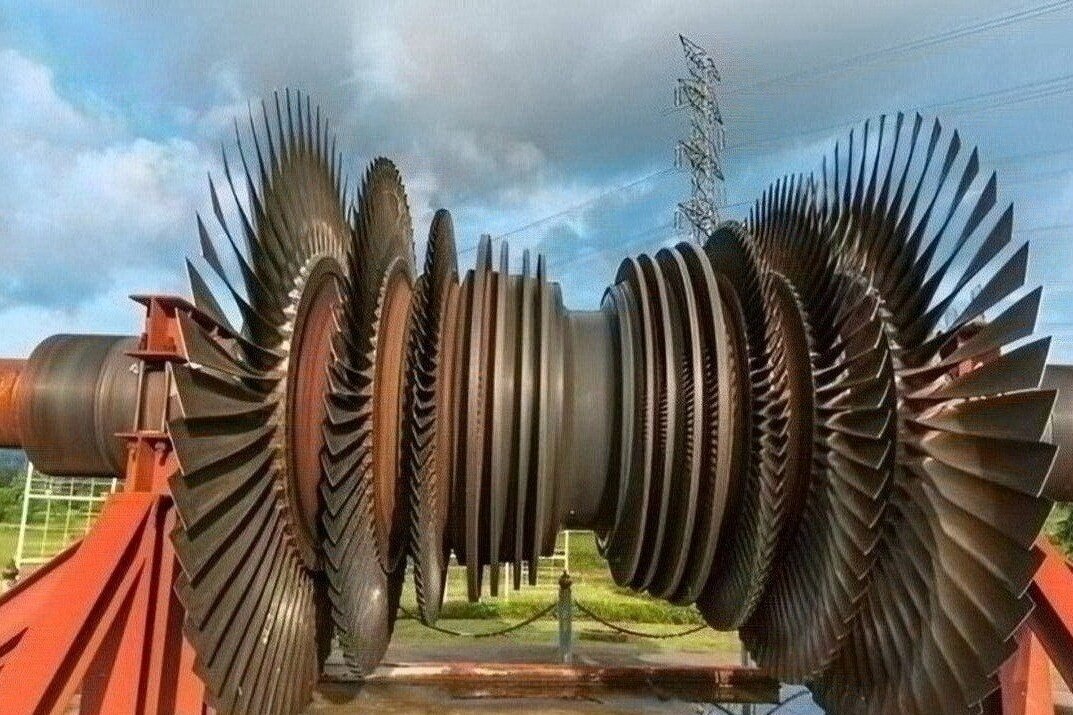
Selecting an aero-engine blade or vane by material, outside dimensions, or supplier location alone can produce an unsafe mismatch. By the end, you will be able to identify the correct engine position, compare materials and manufacturing routes, verify dimensional and approval evidence, and separate a qualified replacement from a merely similar component.
Key takeaways
- Identify the engine stage, position, load case, and duty cycle before requesting parts.
- Match the alloy and manufacturing route to temperature, stress, and repair limits.
- Verify cooling passages, coatings, attachments, balance, and part-specific inspection records.
- Compare suppliers only after confirming approval status and the complete delivered cost.
Start with the engine position, load case, and duty cycle
Before requesting a part, identify the engine model, module, stage, blade or vane position, and the governing load case. Gas turbine blade selection fails when a supplier receives only an envelope drawing: the same shape can have different material, cooling, coating, life limit, or modification status.
Record these details:
- Part number, revision, configuration standard, and approved modification status
- Compressor pressure ratio or turbine gas-path temperature, rotational speed, vibration environment, and transient limits
- Cooling-air source, passage layout, film-cooling hole pattern, and coating system
- Mission profile: take-off cycles, cruise hours, start-stop count, dwell periods, overspeed exposure, and remaining life
- Serial number, batch or heat number, accumulated cycles and hours, repair history, and dimensional limits
- Material or casting designation, heat-treatment specification, and whether the part is cast, forged, machined, or repaired
| Position | Main load case | Specify before quoting |
|---|---|---|
| Compressor blade | Centrifugal stress, vibratory fatigue, foreign-object impact, and erosion | Speed range, pressure ratio, inlet temperature, airfoil twist, root geometry, and balance requirement |
| Turbine blade | Centrifugal stress, creep, oxidation, thermal fatigue, and gas erosion | Gas temperature, cooling flow, hole pattern, coating, life limit, and rotation speed |
| Compressor vane | Aerodynamic pressure, vibration, erosion, and casing distortion | Stage pressure ratio, vane angle, platform seals, attachment, and clearance |
| Turbine vane | Thermal gradients, oxidation, pressure loading, and cooling degradation | Nozzle stage, gas temperature, cooling circuit, coating history, throat area, and attachment |
This information turns a generic enquiry into a defensible request for precision aero engine blades.
Match the alloy and manufacturing route to temperature and stress
Compare the stage’s metal temperature, centrifugal or bending stress, vibration, oxidation exposure, and cooling scheme before comparing suppliers. Gas turbine blade selection starts with the engine model, module, stage, part number, material designation, and casting or forging route; identical envelope dimensions do not make parts interchangeable.
| Option | Best fit | Main constraint |
|---|---|---|
| Aluminium alloy | Cool, low-pressure compressor blades or vanes | Low temperature capability, creep resistance, and erosion margin |
| Titanium alloy, including TA8DV | Compressor stages needing low density and fatigue strength | Oxidation and strength limits exclude turbine hot sections |
| Steel | Attachments, shafts, heavy-load compressor parts, and selected vanes | Higher density raises centrifugal load |
| Nickel or cobalt alloy | Turbine blades and vanes exposed to high gas temperature, creep, and oxidation | Cost, density, difficult machining, and demanding heat treatment |
| Investment casting | Complex hot-section airfoils with internal cooling passages | Tooling, cores, grain control, and qualification cost |
| Forging | Directional strength and fatigue-critical compressor parts | Limited internal geometry and substantial dies |
| Five-axis machining | Low-volume parts, simple passages, prototypes, or approved repairs | Material waste and restricted cooling geometry; machining does not reproduce a cast grain structure |
For hot-section precision aero engine blades, confirm whether the specification requires equiaxed, directionally solidified, or single-crystal structure. Require the governing material and heat-treatment specification, furnace load, atmosphere, calibrated pyrometry, and temperature-uniformity records; “heat treated” proves nothing. Check bond-coat chemistry, thermal-barrier-coating thickness, cooling-hole size, surface preparation, and stripping history before accepting an alternative.
Verify the airfoil, attachment, cooling, coating, and balance
A proposed blade or vane fits only when its measured geometry and functional records match the engine configuration, not merely its outside envelope. Start gas turbine blade selection with a document set tied to the engine model, module, stage, part number, revision, material or casting designation, and modification status.
Request these specific proofs:
- Airfoil: CMM measurements against the approved drawing, including span, chord, thickness, twist, stagger, leading-edge radius, platform dimensions, and throat area.
- Attachment: measured root or shroud geometry, fir-tree or dovetail profile, contact marks, platform location, locking-feature dimensions, and running-clearance limits. A correct airfoil with the wrong root will not seat or retain preload.
- Cooling: hole count, diameter, location, angle, metering features, and flow-test results at the specified pressure drop. Blocked or enlarged holes alter metal temperature.
- Coating: bond-coat chemistry, thermal-barrier-coating thickness, surface preparation, coating map, and stripping history. Coating changes can reduce hole diameter and expose substrate damage.
- Balance: mass, centre of gravity, and moment data against the rotor or vane-sector limit, plus runout and vibration results where specified.
Ask aero engine parts manufacturers to identify the inspection equipment, drawing revision, measurement uncertainty, and acceptance limits. Match serial, batch, repair, and life-consumption records to the part. A supplier’s generic “dimensional inspection passed” statement cannot prove interchangeability.
Check approval status before comparing gas turbine blade and vane manufacturers
Do not treat a certificate logo, CNC capability, or Munich address as proof that a supplier can produce an approved replacement. EASA Part 21 separates design approval, production approval, and component release, so check each link in the chain.
1. An OEM-approved replacement matches the current approved configuration and comes from the OEM or an organisation authorised to manufacture and release it. Verify the part number, revision, modification status, approval basis, and release document, such as an EASA Form 1.
2. An aftermarket part is not automatically unapproved. Ask for its independent design approval, production approval, and evidence that the approval covers your engine model, stage, material, coating, and part number.
3. An approved repair restores a specific damaged part under approved repair data. Confirm the repair scheme, allowable limits, inspection results, life restrictions, and release documentation; a repaired blade is not equivalent to a new replacement.
4. A reverse-engineered component is reproduced from measurements or an existing sample. Treat it as unapproved until the supplier provides an accepted design and production basis, traceability, and release authority.
For aero engine blade manufacturers in Munich, ask to see the exact approval scope rather than a generic AS9100 certificate. The same check applies when comparing gas turbine blade and vane manufacturers for aero engine blades in Munich: a subcontract machine shop may manufacture to customer data without holding Part 21 approval.
BVPL Turbine Parts belongs in your comparison as an aero engine parts manufacturers candidate only after you verify its approval scope, release authority, and part-specific records.
Related items
High Pressure Compressor Blades Material: Titanium – TA8DV With decades of experience and a legacy of excellence, we take pride in our role as a trusted partner for governments, defense organizations, and... View service → |
 | Precision Components Manufacturer BVPL manufactures precision aero engine blades and vanes used in compressor and turbine stages of gas turbine engines. View product → |
Demand part-specific inspection records and price the complete route
Acceptability depends on a traceable evidence pack; commercial viability depends on the complete route, not the quoted unit price. Ask aero engine parts manufacturers for the drawing revision, material certificate, batch traceability, dimensional report, first-article inspection to AS9102, non-destructive testing results, certificate of conformity, and release documentation required for the approved configuration.
For nickel- or cobalt-based parts, require the governing heat-treatment specification plus furnace identification, load record, atmosphere, calibrated pyrometry and temperature-uniformity survey. A statement that a part was “heat treated” proves nothing.
Nadcap accreditation supports control of chemical processing, heat treatment, NDT or welding, but it does not prove design approval or conformity of your precision aero engine blades.
Request these process-specific records:
- Casting: melt and pour records, ceramic-core traceability, radiography or computed tomography, and dimensional results for cooling passages.
- Machining and EDM: tool and electrode control, datum inspection, hole position and diameter results, surface-finish readings, and tool-life records.
- Coating: approved process specification, batch record, thickness mapping, adhesion or bond-coat results, and stripping history.
- Repair: approved repair scheme, material removal limits, weld or blend records, heat treatment, NDT and post-repair dimensions.
Separate price from qualification cost and minimum order quantity.
| Route | Main lead-time and cost driver | Commercial warning |
|---|---|---|
| Cast blade or vane | New die, core tooling, process qualification, FAI and coating approval | Low volume can make tooling dominate |
| Five-axis machined part | Material availability, programming, inspection and capacity | Internal cooling geometry may be impossible |
| Repair route | Shop approval, inspection queue and approved life limits | Cheapest unit price may not equal usable life |
Frequently asked questions
What information should you provide when requesting a gas turbine blade or vane?
Provide the engine model, module, stage, blade or vane position, governing load case, duty cycle, envelope drawing, modification status, and life-limit requirements.
How do you match an aero-engine blade alloy to its operating conditions?
Compare the expected metal temperature, centrifugal and vibratory stress, oxidation exposure, cooling strategy, and repair limits with the alloy and manufacturing route.
Which features must you verify before approving a gas turbine blade or vane?
Check the airfoil profile, attachment geometry, cooling holes and passages, coating system, dimensional tolerances, mass balance, and inspection results.
What approval records should you request from gas turbine blade and vane manufacturers?
Request the applicable approved design or repair data, supplier approval evidence, material traceability, conformity documentation, and release records for the specific part.
What belongs in the total cost of an aero-engine blade?
Include engineering review, tooling, raw material, machining, heat treatment, coatings, non-destructive testing, dimensional inspection, documentation, logistics, and any repair or qualification work.
Related services
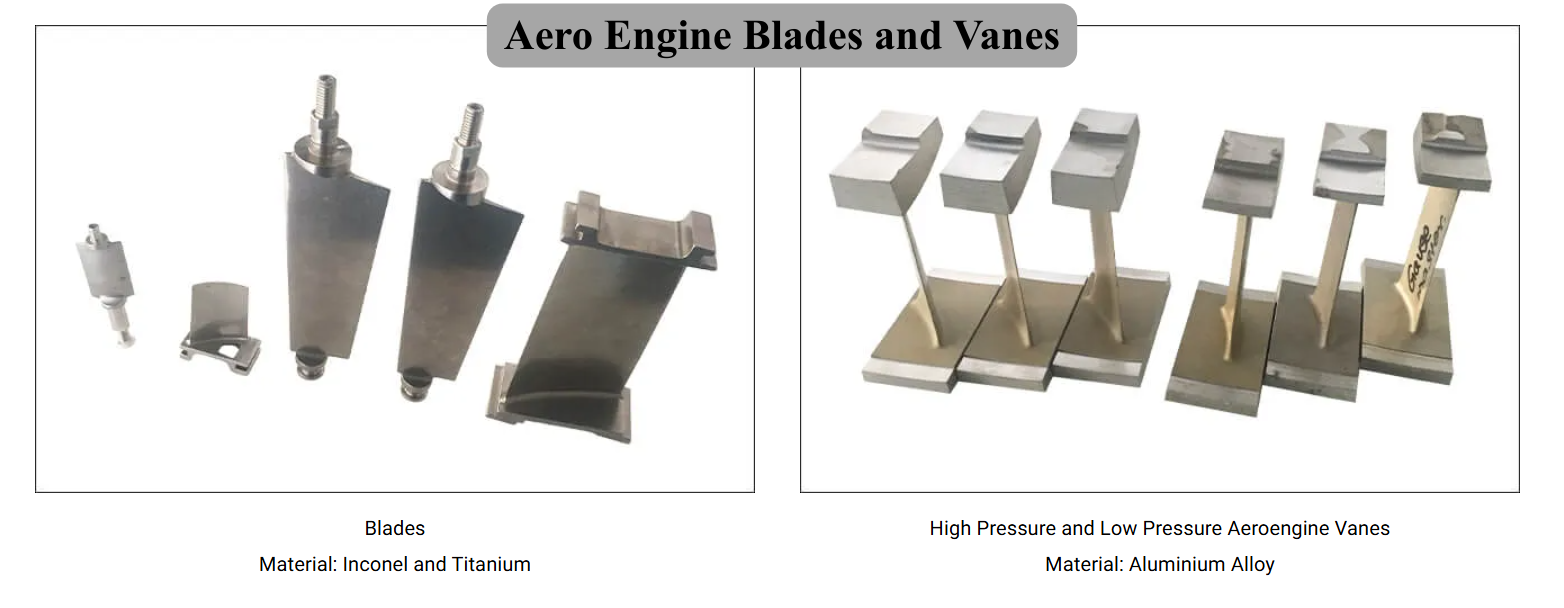
Aero Engine Blades and Vanes Blades Material: Inconel and Titanium Blades Material: Inconel and Titanium |
Aero Engine Blades and Vanes High Pressure and Low Pressure Aeroengine Vanes Material: Aluminium Alloy High Pressure and Low Pressure Aeroengine Vanes Material: Aluminium Alloy |