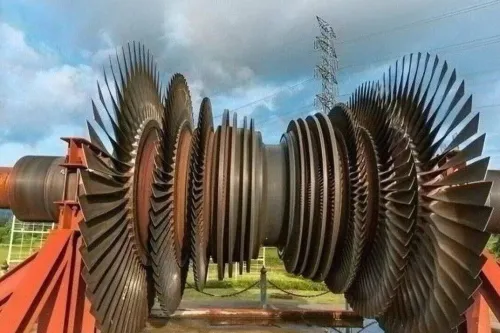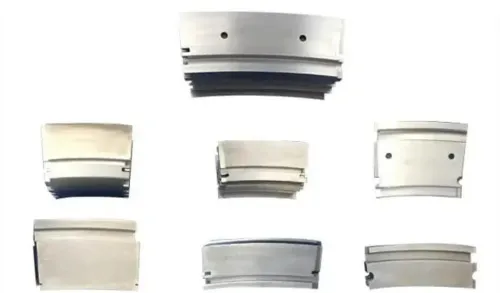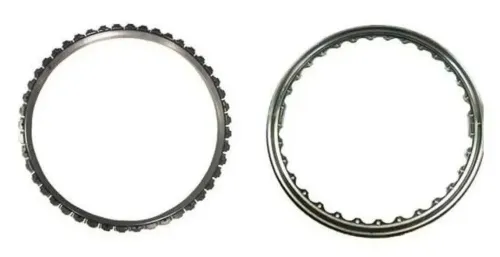

A replacement blade is not suitable because it looks like the removed part or carries a familiar material name. You need to match its approved configuration, prove its traceability and condition, and confirm that the supplier can support the exact engine, stage, part number and operating jurisdiction.
Key takeaways
- Confirm the engine, module, stage, part number, configuration and life status.
- Request inspection records, material certificates and an authorised release document.
- Compare alloy, coating, heat treatment, machining and inspection methods with approved data.
- Qualify suppliers through traceability, process controls, capability evidence and corrective-action records.
What counts as an aftermarket replacement aero engine blade?
“Replacement” describes the blade’s job in the supply chain, not its approval category. Aftermarket aero engine blades replace an installed blade, but a legitimate replacement aero engine blade must be approved for a defined engine, module, stage, part number, configuration and life status.
| Category | What it means | What to request |
|---|---|---|
| New-production OEM blade | Manufactured by the type-certificate holder or its approved production source to the approved design. | OEM part number, dash number, current configuration and release documentation. |
| Aftermarket replacement | A newly manufactured substitute supplied outside the OEM sales channel. | The specific approval basis, not merely a certificate of conformity. |
| Repaired blade | An existing blade restored under approved repair data, with its original identity and repair limits retained. | Repair scheme, revision, repair history and remaining-life records. |
| Serviceable used blade | A previously operated blade inspected and accepted for further service. | Traceability, cycles or hours, life-limit status, inspection results and removal history. |
| PMA part | A non-OEM part with FAA Parts Manufacturer Approval covering both design and production. | PMA number, eligibility or applicability listing and FAA release documentation. |
| Unapproved reverse-engineered part | A copy made without accepted design approval or production authorization. | Do not install it; quarantine mismatched markings or unsupported records. |
Ask whether the basis is FAA PMA, type-certificate-holder data, an approved repair or production arrangement, or another authority’s approval. An ISO 9001 or AS9100 certificate alone does not authorize installation. Confirm the importing authority’s acceptance, especially for life-limited blades whose cycles, hours or starts cannot be established.
How do you prove that a replacement blade fits the engine?
Prove fitment by matching the blade to the engine’s approved configuration and acceptance data, not by comparing photographs or overall dimensions. Use this checklist:
1. Confirm the engine make and exact model, module, stage, engine serial number, and build standard.
2. Match the OEM part number, dash number, drawing number and drawing revision. Check applicable service bulletins, configuration restrictions and approved interchangeability data.
3. Confirm the installation position, including row location, numbered position, left- or right-hand orientation, and any required clocking.
4. Compare the approved airfoil profile, twist, chord, thickness and surface condition. Inspect the root geometry, platform dimensions, shroud or tip features, and every lock, lug, slot or retention feature.
5. Verify the specified material condition, heat treatment and coating system. A blade with the correct alloy but the wrong coating, condition or repair status is not an acceptable substitute.
6. Require dimensional inspection against the controlled drawing, plus identification, balance or moment-weight evidence and applicable non-destructive-inspection results.
7. Obtain engineering approval when the proposed replacement is not explicitly listed as interchangeable. Record the approval against the part number, dash number, drawing revision and engine build standard.
Visual similarity proves very little. Two replacement aero engine blades can share an outline while differing in mass, moment weight, root radii, wall thickness, coating thickness, internal defects or airfoil profile. Those differences affect rotor balance, vibration, clearances and airflow. Precision aero engine components require configuration and inspection evidence before installation.
Which inspection records and release documents should you request?
Ask the aero engine blade supplier for a document pack tied to the exact part number, dash number, serial or batch identity, and installation position. A certificate of conformity alone does not prove material condition, dimensional compliance, remaining life, or approval status.
| Document | What it must establish |
|---|---|
| Certificate of conformity | The blade meets the approved drawing, specification, and purchase order. |
| Material certificate | The alloy, material specification, heat or melt number, and heat-treatment condition. |
| Dimensional report | Recorded airfoil, root, platform, lock features, and critical measurements against drawing limits. |
| Traceability records | A continuous link from the blade to material, manufacturing route, special processes, and subcontractors. |
| NDT results | The method and acceptance standard for fluorescent penetrant, eddy-current, radiographic, or ultrasonic inspection, as applicable. |
| Repair history | Each repair, blend, coating removal or replacement, approval reference, and post-repair inspection. |
| Life records | Cycles, hours, starts, and remaining approved life for a life-limited blade; missing history is a stop signal. |
| Balance or runout checks | Measured balance and runout against the installation limits, not merely a pass statement. |
| Release document | FAA Form 8130-3, when properly issued, or the importing authority’s required release or certificate. |
FAA Form 8130-3 does not prove that aftermarket aero engine blades are new, unlimited-life, unrepaired, or interchangeable. Confirm its release category, identity, status, and supporting installation data; an FAA release may also require validation or acceptance in the aircraft’s registration jurisdiction.
How do material and manufacturing processes affect blade suitability?
Titanium suits cooler compressor environments because its low density reduces rotating mass, while nickel-based superalloys retain strength in hot turbine sections. Alloy choice alone does not establish suitability: a generic temperature limit proves nothing without the engine stage, stress, dwell time, cooling design, coating system, and approved material specification.
Manufacturing route changes the blade’s response to service loads:
- Investment casting enables complex airfoils and internal cooling passages, but porosity, inclusions, or altered passage geometry can reduce creep life, cooling effectiveness, and vibration margin.
- Forging produces directional grain flow and high fatigue strength, but an incorrect reduction schedule or machining process can leave residual stress or damage the grain structure.
- Heat treatment controls precipitates, grain size, hardness, and dimensional stability. A missed solution or aging cycle can shorten creep and fatigue life.
- Coatings resist oxidation and hot corrosion. Changing coating chemistry, thickness, or bond preparation changes metal temperature and service life.
- Shot peening introduces compressive surface stress that delays fatigue cracks; excessive or uneven peening can distort the airfoil.
- Cooling-hole size, angle, spacing, and blockage affect metal temperature and engine performance.
NDT finds defects that a dimensional report cannot: radiography can reveal casting voids, while fluorescent penetrant inspection detects surface cracks. Ultrasonic inspection can expose internal flaws in forged material. Request heat or melt traceability and approved special-process records for precision aero engine components, not only a CMM report.
These records determine whether replacement aero engine blades have the required creep, fatigue, oxidation, vibration, and life performance.
How should you qualify an aftermarket aero engine blade supplier?
Compare after market aero engine parts manufacturers that supply replacement aero engine blades against the exact configuration you operate, not against a catalogue photograph. An aero engine blade supplier should identify supported engine models, modules, stages, part and dash numbers, drawing revisions, materials, coatings, and installation positions.
| Supplier check | Evidence to request | Disqualifier |
|---|---|---|
| Application coverage | Configuration matrix and approved interchangeability data | “Fits similar engines” without a part-number match |
| Approval basis | PMA, approved production or repair data, and release certificate | “Aftermarket” presented as proof of approval |
| Special processes | Qualified procedures and records for heat treatment, coating, shot peening, welding, brazing, chemical processing, and NDT | CMM results without process evidence |
| Subcontractor control | Processor name, approval status, batch traceability, and returned certificates | Unidentified outside processor |
| Counterfeit safeguards | Supplier screening, serial or lot checks, and suspect-part quarantine procedure | Unverified surplus or altered markings |
| Supply terms | Firm lead time, minimum order quantity, and material or tooling constraints | Delivery promise that excludes processing time |
| Regulatory acceptance | FAA Form 8130-3 or equivalent, plus importing authority validation or acceptance | One certificate claimed as universally valid |
| Storage and support | Moisture-resistant packaging, preservation period, storage limits, and engineering contact | No shelf-life or configuration-change advice |
A manufacturer such as BVPL Turbine Parts should demonstrate these controls with traceable records, not rely on machining capability alone. Ask whether its engineers can resolve drawing revisions, service-bulletin restrictions, material substitutions, coating changes, and installation questions before you place an order.
Frequently asked questions
What counts as an aftermarket replacement aero engine blade?
It is a blade intended to replace an installed blade and approved for a defined engine, module, stage, part number, configuration and life status.
How do you prove that a replacement blade fits the engine?
Match the blade to the engine model, module, stage, part number and configuration, then verify dimensions, interfaces, drawing revisions and approved interchangeability data.
Which inspection records and release documents should you request?
Request dimensional inspection results, material and heat-treatment certificates, non-destructive testing records, coating records, traceability details and the applicable authorised release document.
How do material and manufacturing processes affect blade suitability?
Alloy grade, casting or forging route, heat treatment, machining, coatings and inspection controls affect strength, temperature capability, fatigue life and fit.
How should you qualify an aftermarket aero engine blade supplier?
Review the supplier’s traceability system, process capability, inspection equipment, personnel competence, quality approvals, sample records and corrective-action history.