
A blade-production enquiry fails when it names only an engine model and a material. You will be able to define the required drawing data, compare Munich-area manufacturers on meaningful production evidence, and request inspection and release records that match the intended use.
Key takeaways
- Issue the current drawing, CAD model, revision and acceptance limits with every RFQ.
- State geometry, manufacturing route and measurement method as one controlled specification.
- Use separate requirements for compressor blades and heat-exposed turbine blades.
- Compare suppliers using inspection evidence, traceability and release records—not machine counts.
Send a controlled blade definition, not a generic airfoil file
An RFQ must define the blade as a controlled part, not as an airfoil shape copied from a generic file. Aero engine blade specifications in Munich should come from the customer’s current drawing and CAD model, with revision status and acceptance limits fixed before quoting.
Include these items in the request:
- Engine, module, part number, drawing revision, and blade type: rotor blade, stator vane, blisk segment, or integrally machined blade.
- Material grade, starting stock, heat-treatment condition, coating system, coating allowance, and any oxidation or corrosion limits.
- Airfoil coordinate system, inspection sections, nominal profile, chord, span, twist, leading-edge and trailing-edge radii, wall thickness, and allowable profile deviation.
- Datum scheme and tolerances for the root, platform, shroud, tip, platform runout, attachment features, and machining stock.
- Manufacturing route, including five-axis airfoil machining, controlled cutter access at the edges, and separate root and platform operations.
- Surface-finish limits, edge-break rules, balance or moment requirements, NDT method, nonconformance procedure, and required inspection records.
Ask aero engine parts manufacturers near Munich blade production specifications to report airfoil compliance as a deviation map against the nominal CAD surface, including alignment and allowable zones. Require gauge capability or measurement uncertainty for critical dimensions; a few caliper readings cannot validate a freeform airfoil.
State whether the deliverable is a commercial inspection report, an authorized airworthiness release, or a non-flight prototype.
Specify the geometry, process route, and measurement method together
A blade is usable only when its specified geometry, manufacturing route, and measurement method agree; a nominal CAD match alone does not prove fit, airflow, edge strength, or balance.
Write precision blade manufacturing requirements against defined airfoil sections and datums. State profile deviation, twist, chord, span, leading- and trailing-edge radii, platform runout, root dimensions, wall thickness, tip clearance, and balance limits at each section.
Tie the route to the starting form: forging, investment casting, HIP billet, or near-net preform. Record machining allowance, grain orientation, residual-stress controls, heat treatment, and coating. Use simultaneous five-axis machining for airfoil surfaces, with controlled tool access near both edges; machine the root and platform under a separate datum strategy.
A three-axis route can copy the profile while losing edge control or transferring the wrong datum.
| Control | Manufacturing route | Measurement method |
|---|---|---|
| Airfoil profile, twist, chord | Five-axis finishing with section-specific tool paths | CMM or validated optical scan against the drawing datum scheme; report deviation by section |
| Leading/trailing edges and wall thickness | Edge-specific tool access and allowance control | CMM, optical edge measurement, and ultrasonic or computed-tomography checks where access is limited |
| Root, platform, and tip clearance | Separate root/platform operation after datum transfer | CMM for position and runout; functional gauge or assembly check for attachment and clearance |
| Balance and traceability | Final finishing, coating, and controlled rework | Spin or moment-weight measurement; link results to heat, route, machine, program revision, and operator |
Ask for gauge capability or measurement uncertainty for critical tolerances. Specify a full or delta AS9102 FAIR when required; it supplements, rather than replaces, the drawing, material certificate, process approvals, and final acceptance record.
Separate compressor-blade requirements from turbine-blade requirements
Do not issue one material and inspection template for both stages. Compressor blades face rotating stress, vibration, erosion, and foreign-object impact at lower temperatures; turbine blades face higher gas temperature, oxidation, creep, thermal fatigue, and cooling-flow demands.
| Requirement | Compressor blade | Turbine blade |
|---|---|---|
| Material | Name the alloy, heat-treatment condition, grain requirements, and impact or fatigue limits. Titanium alloys suit many cooler stages; nickel alloys may apply at hotter stages. | Specify the nickel-based alloy, casting or wrought route, grain structure, heat treatment, creep strength, and oxidation resistance. |
| Thermal design | State the operating temperature, thermal gradients, and any erosion, corrosion, or protective coating. Do not assume cooling holes. | State metal-temperature limits, thermal cycles, oxidation allowance, coating system, bond coat, and every cooling-hole diameter, position, and flow requirement. |
| Surface and NDT | Control leading-edge damage, roughness, edge radius, residual stress, and fluorescent penetrant or eddy-current inspection. | Control recast, smeared metal, tensile stress, microcracks, coating adhesion, and metallographic or etch verification after EDM, grinding, or abrasive finishing. Add radiography or CT for internal features when required. |
| Records | Require material certificates, dimensional results, NDT reports, and nonconformance disposition. | Require turbine blade quality documentation linking the part to material heat, route, machine or cell, inspection equipment, operator or program revision, special processes, nonconformances, and final acceptance. |
These precision blade manufacturing requirements must identify whether the part is a rotor blade, stator vane, blisk segment, or integrally machined blade. Request AS9100 evidence separately from Nadcap scope, and confirm whether the release is an EASA Part 21 airworthiness or production release rather than commercial inspection paperwork.
Compare Munich-area suppliers by evidence, not machine count
A supplier earns a place on your shortlist through blade-specific evidence, not its number of CNC machines. Treat “aero engine for parts manufacturers near munich blade production specifications” as an evidence brief: request results for the actual rotor blade, stator vane, blisk segment, or integrally machined blade, including profile, datum, balance, and material controls.
| Criterion | Evidence to request | Warning sign |
|---|---|---|
| Capability | Comparable parts, material and heat-treatment experience, controlled work instructions, and a sample dimensional report | Machine list with no blade example |
| Location | Munich-area facility address, subcontracted processes, audit access, and transport route | “Local” sales office but remote production |
| Lead time | Dates for material, machining, heat treatment, coating, inspection, and first-article release | One optimistic total with no assumptions |
| Inspection capacity | CMM report for the actual geometry, measurement uncertainty, gauge-capability evidence, and ISO 10360 acceptance or reverification records | Nominal machine accuracy only |
| Prototype or series fit | Batch size, fixture strategy, programming method, repeatability data, and reserved production capacity | Prototype pricing presented as series capability |
Aero engine blade specifications in Munich should also identify who controls inspection and release. Ask for traceability linking the finished blade to its material heat, route, machine or cell, inspection equipment, program revision, special processes, and nonconformances; ISO/IEC 17025 laboratory accreditation alone does not certify the manufacturer.
For aircraft supply, confirm whether the proposed documentation supports the required EASA Part 21 production or airworthiness release.
BVPL Turbine Parts should be compared by the same evidence: relevant blade reports, inspection uncertainty, delivery assumptions, and prototype-to-series controls—not by its advertised equipment list.
Related products
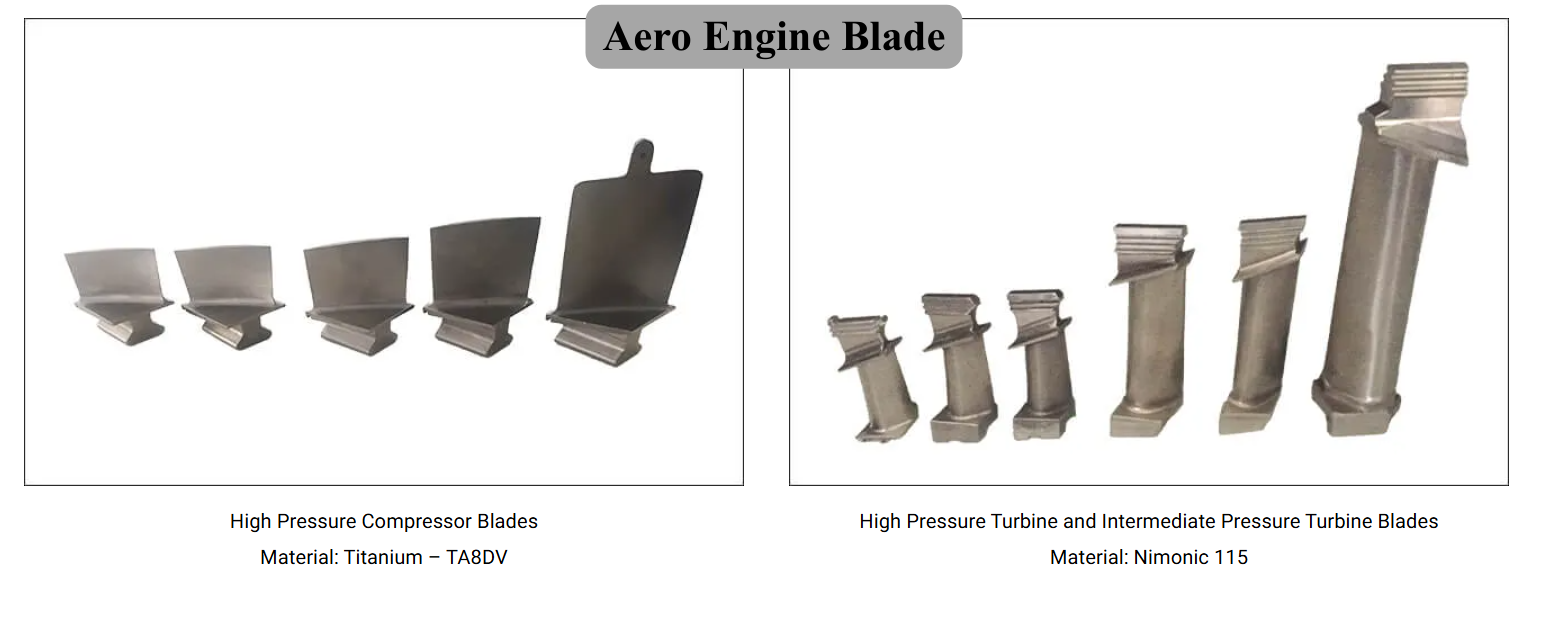 | Precision Components Manufacturer Aero Engine Blade View product → |
 | Precision Components Manufacturer BVPL manufactures precision aero engine blades and vanes used in compressor and turbine stages of gas turbine engines. View product → |
Match the part route to its approval and release records
A material certificate and dimensional inspection report do not prove that a blade is eligible for installation. The decisive record is the controlled design route, the production approval behind it, and the authorized release accepted by the engine supply chain.
| Route | Distinguishing records | Release boundary |
|---|---|---|
| OEM replacement | OEM drawing or model revision, approved process plan, material and special-process certificates, conformity evidence, and an authorized airworthiness or production release under the applicable EASA Part 21 arrangement | Eligible for the specified engine application when the release is accepted |
| Approved aftermarket part | Approved design data, production-approval evidence, configuration control, inspection records, and an authorized release such as EASA Form 1 where applicable | Installable only within the approval’s stated limits |
| Reverse-engineered part | Measurement report, reconstructed CAD, material investigation, and commercial certificate of conformity; no approved design data or authorized airworthiness release | Evaluation or non-flight use unless separately approved |
| Non-flight prototype | Prototype drawing or model, build record, test results, and clear “not for flight” identification | Development, fit, or rig testing only |
For aero engine blade specifications in Munich, identify the blade type and tie every record to the controlled customer definition, not a generic airfoil file. Turbine blade quality documentation should connect the finished part to its material heat, route, machine or cell, inspection equipment, special processes, nonconformances, and final acceptance.
An AS9102 First Article Inspection Report demonstrates conformity to design data; it does not replace approval, material certification, or release documentation.
Frequently asked questions
What should an RFQ include for aero-engine blade production near Munich?
Send the current controlled drawing and CAD model, revision status, dimensional tolerances, material condition, surface requirements, process route and acceptance limits.
Why must geometry, process route and measurement method be specified together?
The manufacturing route affects achievable features and defects, while the measurement method defines how conformity is demonstrated. Quoting these separately creates gaps between design intent and inspection evidence.
How do compressor-blade requirements differ from turbine-blade requirements?
Compressor blades require close control of airfoil geometry, balance, surface finish and erosion-related features. Turbine blades also require heat-resistant materials, thermal coatings or cooling features where specified, and records proving control of heat treatment and high-temperature processes.
How should you compare blade manufacturers near Munich?
Review first-article and in-process inspection reports, material and heat-treatment certificates, traceability records, nonconformance handling and release documentation. Machine count alone does not prove production capability.
Related services
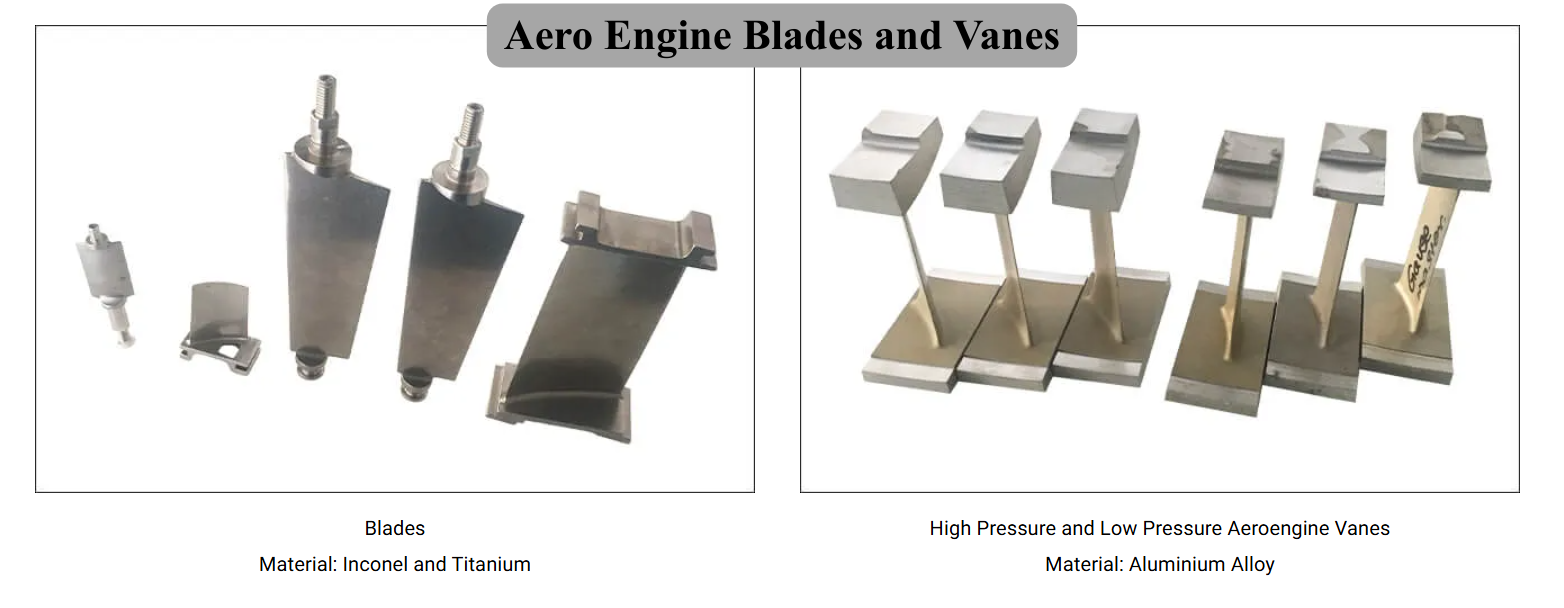
Aero Engine Blades and Vanes Blades Material: Inconel and Titanium Blades Material: Inconel and Titanium |
Reverse Engineered Aero Engine Blades and Blisks Reverse Engineered Blades by BVPL Material : Aluminium, Stainless Steel and Titanium Reverse Engineered Blades by BVPL Material : Aluminium, Stainless Steel and Titanium |
Reverse Engineered Aero Engine Blades and Blisks Blisks for Aero Engines Material : Stainless Steel Blisks for Aero Engines Material : Stainless Steel |