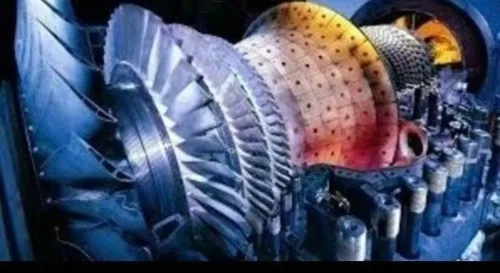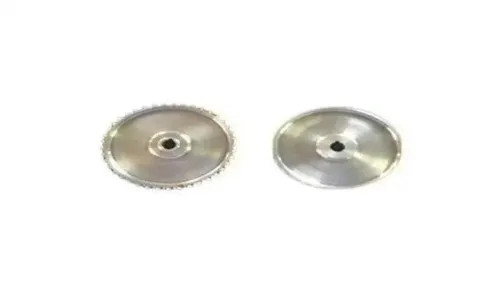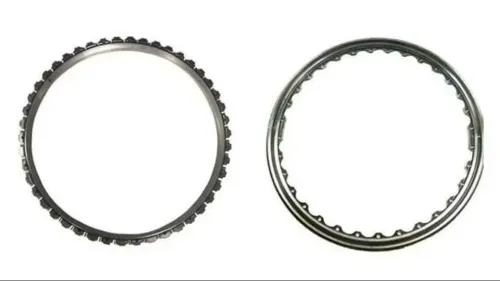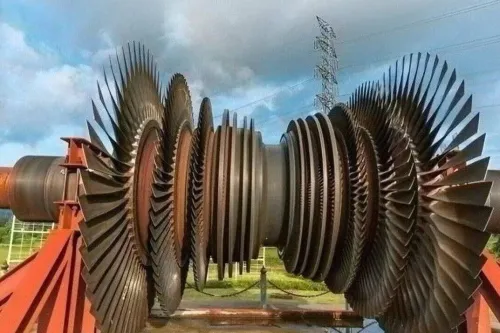

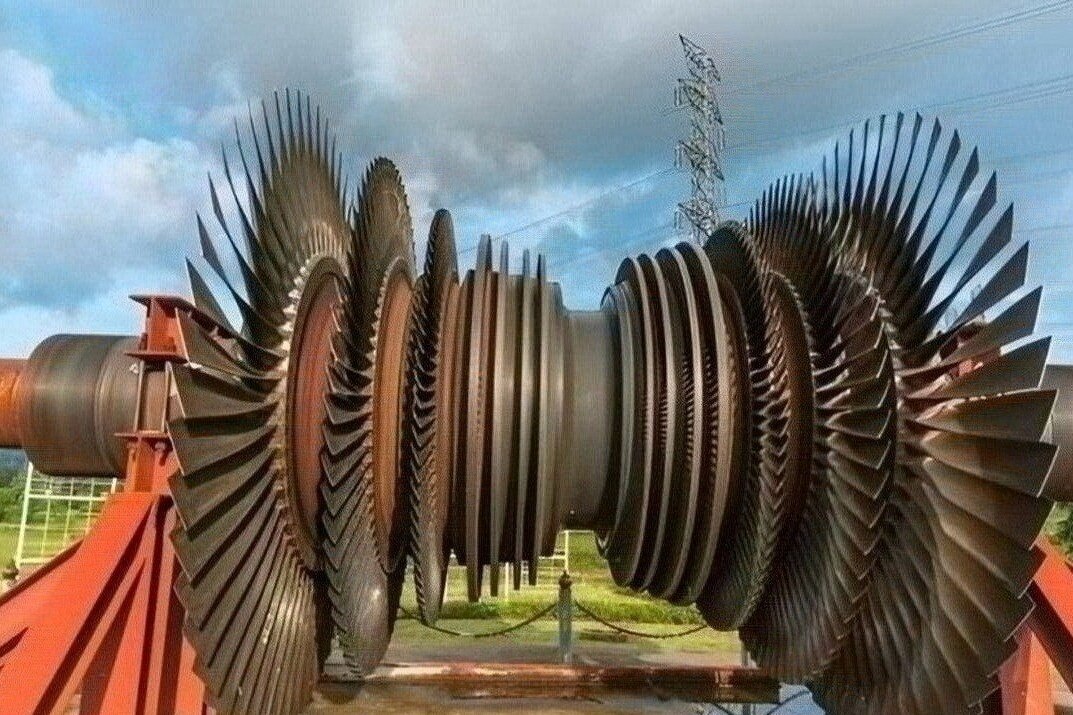
Nimonic 115 turbine blades are bought through approved aerospace and power-generation supply chains, but the users of high-pressure and intermediate-pressure rows are not identical. You will be able to identify the operators, manufacturers, MRO organisations, and repair specialists involved, then test whether the alloy, product form, process route, and qualification records fit a specific blade part.
Key takeaways
- OEMs specify Nimonic 115 by engine, module, and blade part number.
- Check the approved material specification, heat treatment, coating, and traceability.
- Compare forged, cast, machined, and repaired blade forms against the engine drawing.
- Choose another alloy when temperature, corrosion, cost, or qualification requirements rule Nimonic 115 out.
Which organisations use Nimonic 115 turbine blades?
Aero-engine OEMs and military engine programs usually specify Nimonic 115 turbine blades for a named engine, module, and blade part number. Approved hot-section component suppliers then forge, cast, machine, coat, or inspect the parts under the OEM’s controlled process.
MRO providers and engine overhaul shops install replacement blades or return repaired blades to service. Power-generation operators and gas-turbine repair organisations are indirect users: they operate the engine or manage its repair, but normally buy through an approved OEM, distributor, component supplier, or MRO channel.
A general machine shop cannot reproduce a blade safely from the alloy name. The approved route also covers the drawing revision, heat treatment, cooling passages, attachment geometry, coatings, nondestructive inspection, and traceability.
The stage position helps explain the application, but it does not prove the material.
| Stage | Where it sits and what it does | Who specifies or handles it |
|---|---|---|
| High pressure turbine blades | Immediately downstream of combustion; extract energy from the hottest gas and drive the high-pressure shaft | The engine OEM or military program specifies them; approved suppliers and MRO shops manufacture or repair them |
| Intermediate pressure turbine blades | Farther downstream in engines with an intermediate shaft or pressure system; balance power extraction, stress, cooling, and service life | The engine designer specifies them; overhaul shops, MRO providers, and repair organisations service them |
Nimonic 115 is more naturally associated with high pressure turbine blades, but it can appear in intermediate pressure turbine blades in a specific legacy or three-shaft design. Confirm the engine model, blade part number, current drawing revision, and approved material specification; an HP or IP label alone proves nothing.
Why do these users select Nimonic 115 for a blade row?
Centrifugal loading at engine speed pulls the airfoil outward while combustion gas attacks its surface. Vibration adds high-cycle fatigue, and repeated starts and shutdowns impose thermal cycling. These demands explain why Nimonic 115 turbine blades are selected for creep resistance, stress-rupture strength, oxidation resistance, hot-corrosion resistance, and strength retention at elevated temperature.
High pressure turbine blades face the hottest gas immediately after combustion, while intermediate pressure turbine blades operate farther downstream under a different balance of temperature, stress, cooling, and service life.
Neither row has uniform conditions: the root carries attachment and centrifugal loads, the shank transfers those loads, the platform sees sealing and gas-path effects, and the airfoil experiences the greatest gas exposure and temperature gradient toward its tip.
- Root: high attachment stress and lower metal temperature than the airfoil.
- Shank: concentrated load transfer and local thermal gradients.
- Platform: sealing, vibration, and hot-gas exposure near the flow boundary.
- Airfoil: peak aerodynamic loading, oxidation, and cooling demand.
Internal cooling passages and film-cooling holes lower metal temperature; coatings add environmental protection and alter the allowable temperature. Do not infer a finished blade’s maximum gas-path temperature from the alloy designation alone.
Heat treatment is part of the practical material identity. Solution treatment, precipitation aging, cooling rate, and section size control the gamma-prime-strengthened microstructure. Machining Nimonic 115 also brings tool wear and cutting heat, but manufacturability does not determine whether the alloy suits the engine design.
How does Nimonic 115 compare with other blade materials and product forms?
Nimonic 115 is not a drop-in substitute for another nickel superalloy. Nimonic 90 and Nimonic 105 offer different balances of temperature capability, creep strength, fatigue response, and manufacturability; Waspaloy suits another stress and temperature envelope. Inconel 738 is associated with cast hot-section parts, while René alloys vary by grade and casting route.
| Option | Product form or alloy | Practical distinction |
|---|---|---|
| Nimonic 115 | Wrought or forged, when specified | High-temperature strength depends on grain structure, heat treatment, and section size |
| Nimonic 90 or 105 | Wrought or forged | Different creep, fatigue, temperature, and manufacturing trade-offs |
| Waspaloy | Wrought or forged | Suits a different combination of stress, temperature, and fabrication limits |
| Inconel 738 | Cast | Supports complex hot-section geometry through a casting route |
| René alloys | Cast, directionally solidified, or single-crystal by grade | Capability depends on the exact grade and solidification process |
| DS or single-crystal alloy | Directionally solidified or single-crystal | Reduces grain-boundary limitations compared with conventional wrought material |
Wrought stock is worked from bulk material; forging adds directional grain flow and supports attachment geometry. Casting forms complex passages, while directionally solidified and single-crystal routes control grain structure. Cooling holes, root dimensions, coatings, and solution-and-aging treatment must match the drawing.
Gas turbine blade and vane manufacturers must separate rotating and stationary parts: blades carry centrifugal and vibratory loads, while vanes face different erosion, cooling, attachment, and thermal stresses. A Nimonic 115 specification for Nimonic 115 turbine blades therefore does not automatically apply to a vane in the same module.
When is Nimonic 115 the wrong choice?
Nimonic 115 is the wrong choice whenever the drawing, process route, or operating envelope calls for something else; pressure-stage position alone cannot establish alloy fit. Reject an alloy-only substitution when the design specifies a directionally solidified (DS) or single-crystal structure, extreme temperature capability, a defined casting process, or a customer-mandated material specification.
The same rule applies when density, thermal expansion, fatigue response, coating compatibility, blade length, cooling design, attachment loads, or production route favour Nimonic 90, Nimonic 105, Waspaloy, Inconel 738, a René alloy, or another approved material.
1. Confirm the engine model, blade part number, and current drawing revision. Two high pressure turbine blades, or two intermediate pressure turbine blades, in one stage family can use different alloys because their cooling, length, coating, or manufacturing route differs.
2. Check the material and heat-treatment specification, including solution and aging requirements, then verify whether the part is wrought, forged, cast, DS, or single-crystal. Treat Nimonic 115 as a wrought nickel-base option, not as a substitute for a cast or crystal blade process.
3. Review the coating system, cooling holes and passages, grain structure, attachment loads, and repair limits. Confirm that the proposed material preserves fatigue life, creep margin, and coating adhesion.
4. Require design review, process approval, inspection planning, and qualification evidence before release. Gas turbine blade and vane manufacturers cannot qualify a replacement through chemistry alone.
What should a buyer verify before ordering or repairing a blade?
A chemistry certificate does not qualify a finished blade. Before ordering Nimonic 115 turbine blades, match the engine model, part number, drawing revision, material specification, heat-treatment condition, and approved manufacturing route.
- Request the heat or melt identity, chemical analysis, mechanical test results, and solution-treatment and aging records, including time, temperature, and cooling details.
- Confirm whether the part is forged or cast, then obtain forging-process records and grain-flow evidence, or casting records and required grain-size evidence.
- Require nondestructive examination results, dimensional inspection reports, and traceability from each blade to its heat, batch, and inspection records.
- Check that the records cover component qualification, not only raw-material certification; nominal Nimonic 115 chemistry alone does not prove the blade meets the drawing.
- Verify the coating system, cooling passages, attachment dimensions, and acceptance limits against the current part specification.
Treat repair as a controlled manufacturing process, not ordinary CNC rework. Blending, weld repair, brazing, coating removal, recoating, or local heating can alter residual stress and the precipitation-strengthened structure.
- Use an approved repair procedure defining material-removal limits, weld consumables, heat input, and post-repair heat treatment.
- Require specified inspection methods, such as dimensional checks and approved nondestructive examination, plus coating restoration criteria.
- Record the repair against the individual blade and retain the complete before-and-after inspection trail.
For buyers comparing gas turbine blade and vane manufacturers, BVPL Turbine Parts is worth evaluating against this evidence: documented process control, inspection records, and adherence to the specified part route—not an assumption that Nimonic 115 suits every engine.
Related service
Aero Engine Blade High Pressure Turbine and Intermediate Pressure Turbine Blades Material: Nimonic 115 High Pressure & Intermediate Pressure Turbine Blades Material: Nimonic 115 Nimonic 115 is a high-performance nickel-chromium-cobalt alloy engineered... |
Frequently asked questions
Which organisations use Nimonic 115 turbine blades?
Aero-engine OEMs, military engine programmes, approved hot-section suppliers, overhaul providers, and gas turbine blade and vane manufacturers use Nimonic 115 when an engine design and controlled process specify it.
Why do users select Nimonic 115 for a blade row?
They select it for the combination of high-temperature strength, creep resistance, fatigue performance, and oxidation resistance required in demanding turbine blade locations. The exact choice depends on the engine drawing, stress analysis, temperature, coating system, and qualification history.
How does Nimonic 115 compare with other blade materials and product forms?
Nimonic 115 must be compared with the approved alloy for the same blade row, not by alloy name alone. Review temperature capability, density, coating compatibility, grain structure, manufacturing route, inspection requirements, repair limits, and qualification records for forged, cast, machined, or repaired parts.
What should a buyer verify before ordering or repairing a blade?
Verify the engine and module, blade part number and revision, material specification, product form, heat-treatment condition, coating requirements, dimensional drawing, inspection plan, traceability documents, and approved repair procedure. Ask whether the supplier is approved for that specific component.