
A blade shipment is not complete because it contains a part and a generic “certificate.” You need to match each blade to its release status, material heat, inspection results, special processes, and the exact engine configuration; this guide gives you the order details and document index to request before approving delivery.
Key takeaways
- State the blade part number, serial or lot number, and release condition.
- Request dimensional, visual, and material inspection records for every blade.
- Trace each blade to heat treatment, coating, welding, and other special processes.
- Compare complete document packs before selecting an aftermarket blade manufacturer.
Start with the blade’s release condition and shipment documents
Reject a quotation that says only “with certificate.” Your aftermarket aero blade order should identify the blade or vane, use protective packing, and state the part number, serial number or lot number, and release condition.
| Condition | What it means | When it applies |
|---|---|---|
| Newly manufactured replacement | Newly made to the approved drawing and specification | A replacement produced for the order |
| PMA part | Produced under an FAA Parts Manufacturer Approval design and approval basis | When the buyer accepts the applicable PMA part |
| Approved repair or overhaul | An existing blade restored under approved repair data or overhaul limits | When repair history and return-to-service approval are required |
| Used serviceable part | Previously operated, inspected, and accepted for further service | When records prove identity, condition, and serviceability |
The aero engine blade documentation pack should distinguish these records:
- Certificate of Conformity: states that the supplied part meets the purchase order.
- Material test certificate: identifies alloy, heat or lot, chemistry, mechanical results, and heat-treatment condition.
- Dimensional inspection report: records measured features against drawing limits.
- Inspection release note: authorizes internal or customer release.
FAA Form 8130-3 and EASA Form 1 are regulatory release documents in applicable cases. They do not replace the supplier’s conformity, material, or inspection records.
Ask for the exact release document and condition label, plus a document index tied to each serial or lot number. That index should identify every supplied record, not merely promise “aero engine blade documentation.” These aftermarket aero blade order details prevent a complete-looking PDF bundle from becoming impossible to trace.
Give the manufacturer enough data to identify the correct blade
A part number alone cannot identify the correct replacement blade. Provide these aftermarket aero blade order details before production or sourcing begins:
- Engine manufacturer and model; engine serial number; stage number; blade or vane part number; drawing number and revision; left- or right-hand orientation; quantity; and required delivery date.
- State whether each item is new, repaired, overhauled, or used serviceable, plus service condition, material specification, coating system, airfoil geometry, root or attachment design, shroud or platform requirements, and cooling-hole and passage requirements.
- Identify whether the blade belongs to a matched pair or rotor set, and specify individual mass, center of gravity, moment-weight, pair matching, balance grade, rotor-set matching, and any corrective material-removal limit required.
A revision change can alter the airfoil profile, fir-tree or dovetail root, platform, coating, cooling features, or acceptance limits. The gas turbine blade and vane manufacturers aftermarket aero blade order contents must therefore follow the approved drawing and engine configuration, not a catalogue description.
Use the condition table to remove ambiguity:
| Condition | Information to confirm | Consequence if omitted |
|---|---|---|
| New | Production standard and approved configuration | A replacement can be sourced to the wrong revision |
| Repaired or overhauled | Repair manual, permitted restoration, and final acceptance basis | An unapproved repair may enter service |
| Used serviceable | Removal history, inspection status, and remaining service limits | Hidden wear can invalidate the quoted condition |
Cooling passages and film-cooling holes need explicit flow, blockage, count, diameter, and location requirements. A visually acceptable airfoil can still fail functional inspection.
Request the inspection records that prove geometry and condition
Ask for measured values, not a statement that the blade “meets drawing.” These replacement blade inspection records form the core of reliable aero engine blade documentation.
1. Require records showing leading- and trailing-edge thickness, chord, twist, span, airfoil profile or coordinate deviation, platform dimensions, root and attachment dimensions, shroud and tip features, datum-based runout, surface roughness, hardness, mass, and balance. Where applicable, include cooling-hole count, diameter, location, and flow.
2. Every dimensional report must identify the approved drawing revision, datum scheme, equipment used, calibration status, acceptance limits, measured values or a controlled ballooned drawing, inspector name or sign-off, inspection date, and report identifier. Confirm whether mass, centre of gravity, moment-weight, pair matching, or rotor-set balance is required.
3. Match each applicable inspection to an actual result: visual, dimensional, fluorescent dye-penetrant, eddy-current, ultrasonic, radiographic, or computed-tomography inspection. Each NDT report must name the procedure revision, operator qualification, equipment and calibration status, acceptance standard, findings, and disposition; “NDT passed” is not sufficient.
4. If coating belongs to the approved configuration, request substrate preparation, bond-coat and topcoat identity, process specification, coating thickness, adhesion or metallographic checks, repair or stripping history, and surface condition. A “coated” label does not prove the correct system or thickness.
Build traceability from each delivered blade to every special process
Tie every blade to one identifier before it leaves the supplier. Use a serial number for individually controlled blades or a batch/lot number for identical production, and require a document index carrying the part number, drawing revision, manufacturing date, and identifier.
1. Link the identifier to the material heat or melt number, raw-material certificate, manufacturing batch, machine or process record, heat-treatment record, NDT reports, coating or special-process certificates, functional tests, nonconformance concessions, and final inspection. This is the core of reliable aero engine blade documentation; a generic alloy statement cannot prove which material entered your blade.
2. Demand a separate heat-treatment record, not just the material certificate. It should show furnace identification, cycle date, temperatures, hold times, atmosphere or vacuum, loading, and furnace-chart or electronic-record reference. Add casting-process evidence, grain-structure or single-crystal orientation results when the design controls them, plus cooling-passage flow tests and blockage checks when specified.
3. Identify every outside processor and obtain its certificate for casting, machining, welding, laser cladding, heat treatment, coating, NDT, or balancing. For a repaired or overhauled blade, add incoming-condition findings, blend limits, weld or laser-repair procedure, filler material, operator qualification, restoration records, final NDT, repair-manual reference, and engineering approval. “Reconditioned” alone is inadequate.
State in the purchase order whether the file arrives as signed originals, scanned PDFs, or a searchable data pack. Set a retention period, file format, naming convention, response time, and retrieval by serial or lot number; replacement blade inspection records are useless if they cannot be found and matched to the delivered part.
Use the document pack to compare manufacturers before placing the order
Compare gas turbine blade and vane manufacturers by their aftermarket aero blade order contents, not by a broad catalogue. Before purchase, ask for a redacted sample data index showing how every record links to the exact blade serial number or batch/lot number.
- Require entries for the release certificate, Certificate of Conformity, material certificate, heat-treatment record, dimensional report, NDT report, coating record, functional test, concession, and approved repair data.
- Ask which operations are performed in-house and which are subcontracted. For outsourced casting, machining, heat treatment, coating, welding, NDT, laser cladding, or balancing, require the subcontractor identity, process certificate, approval or qualification evidence, and traceability back to the blade.
- Confirm support for the specified airfoil, fir-tree or dovetail root, cooling holes or passages, coating system, balance or moment-weight requirement, inspection method, and release authority for your exact engine model and configuration.
Use this comparison to expose the difference between a usable file and a generic PDF bundle:
| Check | Acceptable evidence | Warning sign |
|---|---|---|
| Scope | Quoted process route and inspection method match the drawing revision | “Precision blades” with no configuration detail |
| Traceability | Serial or lot number connects every certificate and report | Generic material or NDT statement |
| Release | Named authority and document match the purchase order | “With certificate” only |
BVPL Turbine Parts can be compared with other suppliers on this basis: assess its quoted scope, process route, inspection capability, traceability, and records against your drawing, purchase order, and airworthiness requirements.
Related products
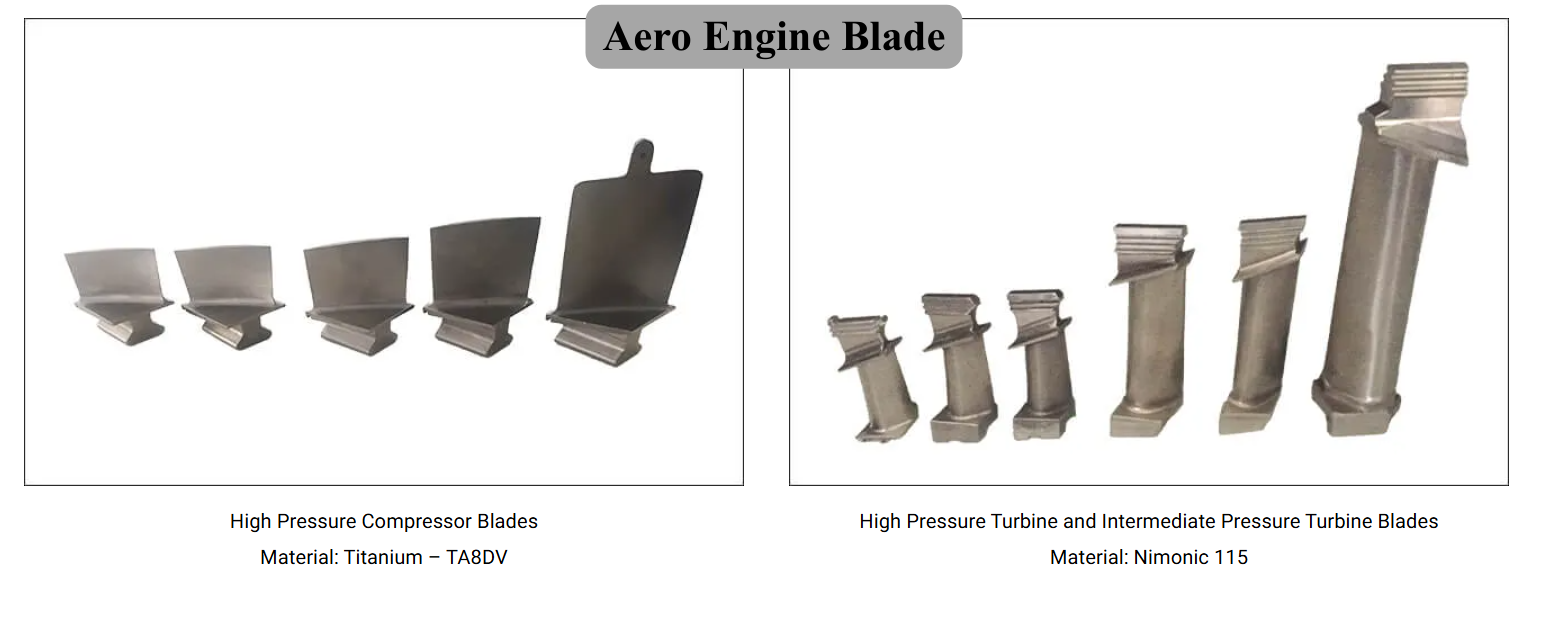 | Precision Components Manufacturer Aero Engine Blade View product → |
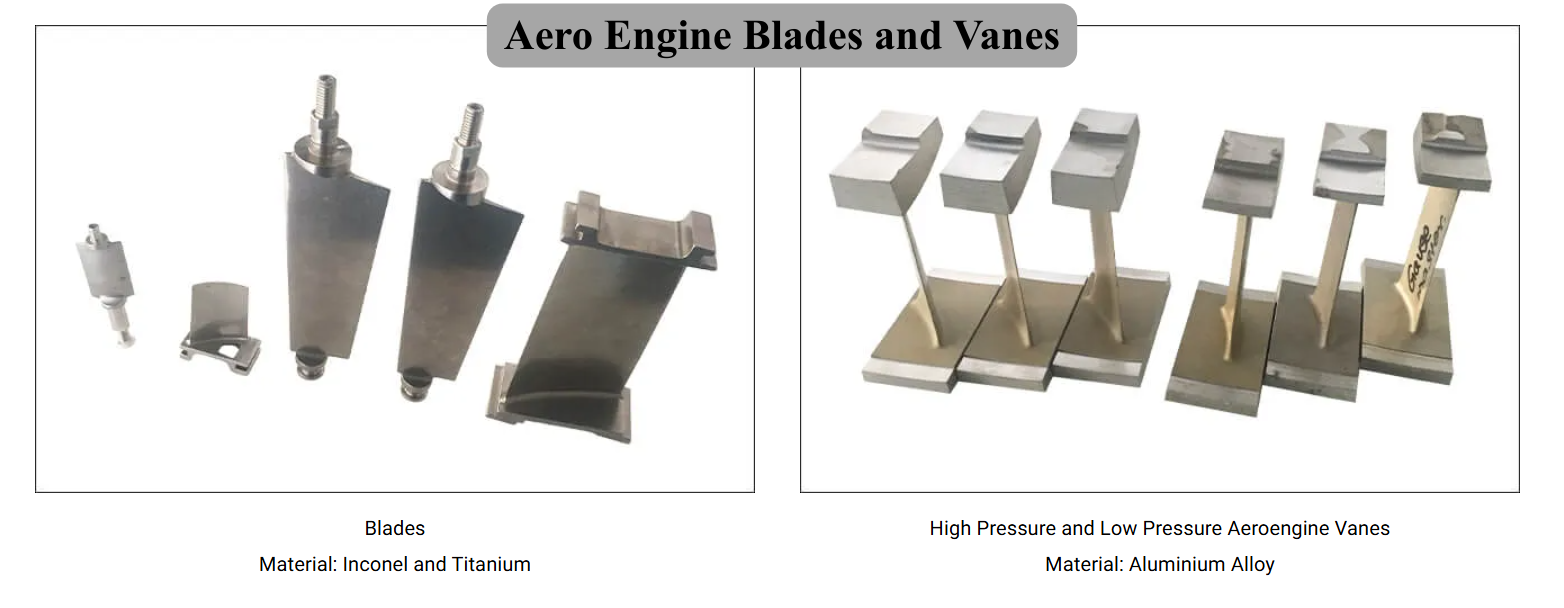 | Precision Components Manufacturer BVPL manufactures precision aero engine blades and vanes used in compressor and turbine stages of gas turbine engines. View product → |
Frequently asked questions
What details should an aftermarket aero blade order include?
Include the blade or vane description, part number, serial number or lot number, release condition, quantity, and required protective packing.
Which inspection records should you request for replacement blades?
Request records covering dimensional checks, visual inspection, material verification, surface condition, and any acceptance tests specified for the part.
How do you build traceability for aftermarket aero blades?
Match each delivered blade to its serial or lot number, material record, process batch, heat treatment, coating, weld repair, and final release record.
How can document packs help compare aero blade manufacturers?
Compare whether each manufacturer provides complete identification, inspection evidence, special-process traceability, release documentation, and shipment protection.
Related services
Reverse Engineered Aero Engine Blades and Blisks Reverse Engineered Blades by BVPL Material : Aluminium, Stainless Steel and Titanium Reverse Engineered Blades by BVPL Material : Aluminium, Stainless Steel and Titanium |
Aero Engine Blades and Vanes Blades Material: Inconel and Titanium Blades Material: Inconel and Titanium |