
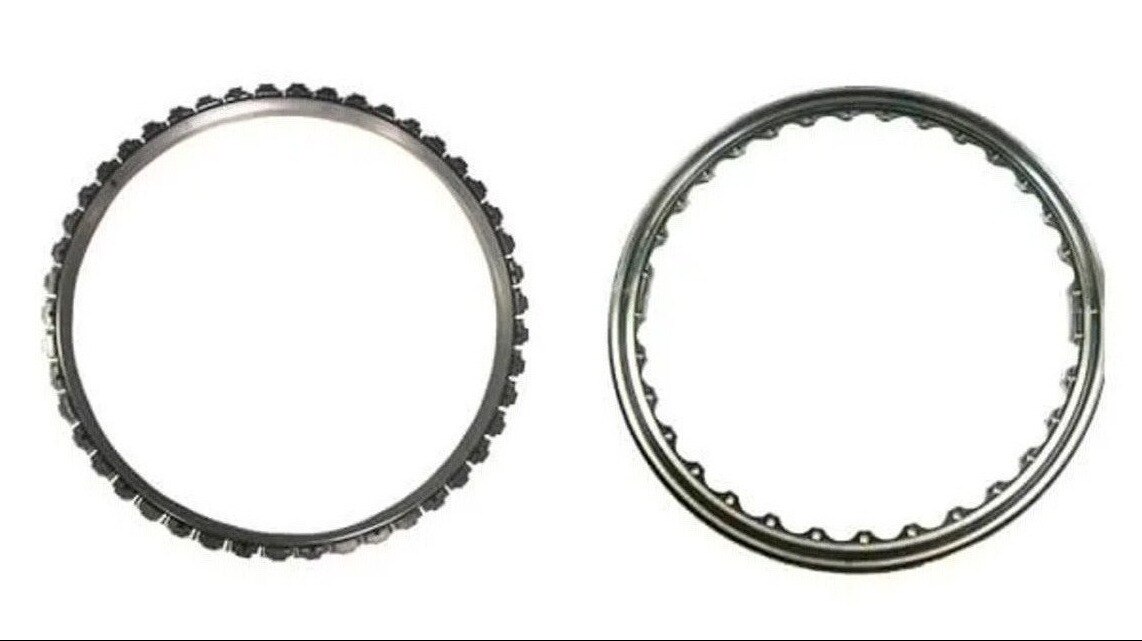
A stainless-steel blisk is not automatically a lighter, cheaper or safer substitute for a titanium rotor, nickel-alloy blisk or dovetailed blade-and-disk assembly. By comparing grade, heat-treatment condition, engine duty, failure risk, manufacturing route and inspection evidence, you can decide where stainless steel fits and what a supplier must prove before delivery.
Key takeaways
- Compare grade, temperature capability, fatigue strength, corrosion resistance, and machinability.
- Treat heat treatment and machining as one qualified blisk process.
- Choose an integral rotor when joint reduction outweighs repair complexity.
- Demand traceability, dimensional inspection, and defect-detection records before approval.
What a stainless-steel blisk is—and which grades belong in the comparison
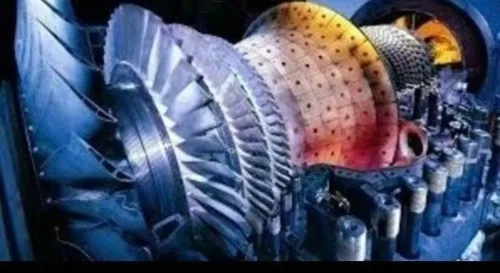
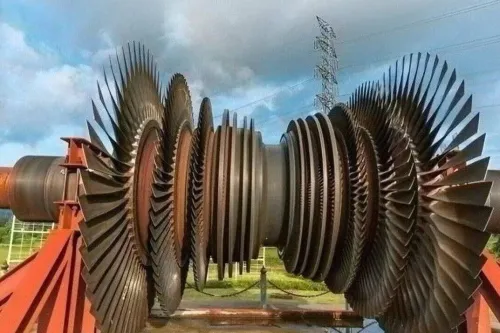
A blisk is an integrally bladed rotor: its blades and disk are machined or formed from one component, rather than attaching individual dovetailed blades to a separate disk. This removes blade-root joints but makes material selection, heat treatment and machining inseparable.
“Stainless steel” is not one specification for stainless steel aero engine blisks; the useful comparison is among precipitation-hardening martensitic grades.
| Grade | Common aging conditions | Hardness, strength and toughness | Corrosion and machining |
|---|---|---|---|
| 17-4PH | H900, H1150 | H900: about 38–44 HRC and highest strength; H1150: about 28–32 HRC with better toughness | Good general corrosion resistance; H900 increases cutting forces and tool wear, while H1150 machines more easily |
| 15-5PH | H900, H1150 | Similar strength range to 17-4PH, with condition-dependent hardness and toughness | Good corrosion resistance; overaging improves toughness and machinability but reduces strength |
| 13-8Mo | H950, H1000, H1050, H1150 | High strength and hardness when peak-aged; overaged conditions trade strength for toughness and easier machining | Strong resistance to stress-corrosion cracking; aging condition controls cutting response and distortion |
These grades have densities of approximately 7.7–7.8 g/cm³. Austenitic stainless steels are generally unsuitable for highly loaded rotating blisks because their strength and dimensional stability are inadequate.
The material certificate must identify the exact grade, chemistry, product form—such as forging, bar or powder product—and heat-treatment condition together; chemistry alone cannot establish hardness, fatigue capability or machining behavior. These details define the relevant aero engine blisk materials.
Where stainless steel fits in an aero-engine duty cycle
A stainless blisk is credible in a lower-temperature compressor stage, auxiliary turbomachinery or industrial turbomachinery—not a hot-section rotor. Aero engine parts manufacturers should use it where moisture, salt exposure and corrosion resistance matter more than minimum mass.
| Option | Density and temperature capability | Best fit |
|---|---|---|
| Aluminium alloy | About 2.7 g/cm³; lowest mass, limited temperature capability | Cool, lightly loaded compressor hardware |
| Precipitation-hardening stainless steel | About 7.7–7.8 g/cm³; moderate temperature capability, good corrosion resistance | Lower-temperature compressors and corrosive service |
| Titanium alloy | About 4.5 g/cm³; higher strength-to-weight ratio, subject to temperature and impact limits | Weight-sensitive compressor stages |
| Nickel-based superalloy | Much denser; superior high-temperature strength, creep and oxidation resistance | Hotter, highly stressed compressor or turbine hardware |
Before selecting among aero engine blisk materials, check:
- Compressor pressure ratio and outlet temperature, because rising compression heats the blade and reduces retained strength.
- Rotational speed, rotor radius and centrifugal loading, which determine disk and blade-root stress.
- Foreign-object and impact exposure, including ice, sand and runway debris.
- Start-stop fatigue, vibratory high-cycle fatigue and corrosion-assisted cracking.
- Machining access, thin-wall deflection, repair method and inspection capability.
Choose titanium when weight and compressor performance dominate within its temperature and impact limits. Choose nickel alloy when temperatures approach the range where precipitation-hardening stainless steel loses retained strength, oxidation resistance or creep capability.
Stainless steel can lower material cost and offer good machinability, fatigue resistance and repairability, but its density removes much of a blisk’s usual mass advantage. Select it when those manufacturing and corrosion benefits outweigh centrifugal weight; otherwise, titanium is usually the stronger compressor choice.
How an integral rotor compares with a conventional blade-and-disk assembly
A stainless blisk can reduce assembly mass and part count, but stainless density of 7.7–7.8 g/cm³ means it is not automatically lighter than a conventional rotor or titanium blisk.
Removing dovetails, fasteners and fretting interfaces improves balance and removes blade-root failure and joint fretting as failure modes; it also makes one damaged blade impossible to replace independently.
| Criterion | Separate blade-and-disk assembly | Integral stainless blisk |
|---|---|---|
| Mass | Higher mass from roots, retainers and joints | Fewer retention parts, but stainless remains dense |
| Part count | Disk, blades, retainers and fasteners | One machined rotor |
| Balance | Joint tolerances can accumulate | Fewer interfaces simplify balance control |
| Inspection access | Blade roots and disk features are accessible | Blade-to-hub blends are harder to inspect |
| Repair time | Replace one blade after authorization | Blend, weld or replace the complete blisk |
| Replacement cost | Usually limited to the damaged blade | Can include scrapping a serviceable rotor |
The principal damage mechanisms are:
- High-cycle fatigue from blade vibration
- Low-cycle fatigue from start-stop thermal cycles
- Foreign-object damage and stress-corrosion cracking
- Distortion and rotor imbalance
- Blade-root failure in conventional assemblies
- Cracking or impact damage at blisk blade-to-hub blends
A single damaged blisk blade may require controlled blending or approved welding, followed by profile, surface-finish, balance and fatigue-related checks. Compare repair authorization time, downtime, replacement lead time and the cost of scrapping an otherwise serviceable rotor—not just the stainless blank price.
The choice of aero engine blisk materials therefore depends on repair infrastructure as much as manufacturing efficiency.
What manufacturing and inspection evidence a stainless blisk needs
A qualified rotating part needs evidence beyond a matching blade shape. Aero engine blisk manufacturers must control the blank’s metallurgy, datum structure, machining history, dimensional results and non-destructive testing.
| Route | Grain flow and defects | Residual stress and ultrasonic inspection |
|---|---|---|
| Forged | Follows the forging flow; inspect inclusions and segregation | Usually inspectable; stress depends on forging and heat treatment |
| Rolled | Directional flow; rolling defects and anisotropy require control | Inspectable through suitable orientations; residual stress needs verification |
| Powder metallurgy | Uniform chemistry is possible, but pores, inclusions and lack-of-fusion defects matter | Ultrasonic response depends on density and geometry |
| Bar-machined | Grain flow follows the bar; transverse properties, segregation and inclusions can limit fatigue life | Often inspectable, but bar residual stress can distort the rotor |
Rough machining, solution treatment, aging and finish machining require a qualified sequence on representative geometry. Removing stock before treatment reduces distortion; aging an already-machined blank can move blade profiles and hubs, while aggressive finishing can add work hardening and tensile residual stress. Retain the exact heat-treatment batch and machining program.
Request this evidence:
- Material certificate tied to the raw-material heat number and product form
- Heat-treatment charts, furnace identification and batch records
- Five-axis machining program, fixture and datum records
- Blade thickness, profile, spacing, blend-radius, hub-runout and surface-finish measurements
- Penetrant or eddy-current results, plus ultrasonic inspection where geometry permits
- Final balance result identifying residual unbalance and balancing correction
CMM or optical scanning measures geometry; penetrant and eddy current find surface-breaking flaws; ultrasonic testing addresses volumetric flaws. One method cannot replace the others. Put numerical limits in the purchase specification: minimum wall thickness, Ra roughness, hub runout TIR, balance grade or residual unbalance, and allowable indication size, location and quantity.
How to qualify a supplier for new and reverse-engineered blisks
A supplier passes the first screen only when it can show control of the complete rotor process, not just a convincing CAD model. Ask aero engine blisk manufacturers for records that connect the approved configuration to material, machining, inspection and release.
1. Verify the supplier’s experience with new and reverse engineered blisks. Request representative five-axis machining records, datum schemes, blade-profile reports, hub runout, balance results, non-destructive inspection reports and repair substantiation.
2. For reverse engineered blisks, require the measurement reference frame, raw scan data, reconstructed design intent, blade-to-blade comparison, treatment of worn or blended regions, recovered material and heat-treatment requirements, tolerance assumptions and configuration-control records.
3. Reject a single eroded service-return blisk as the design master. Scanning can copy repairs, local material removal, erosion and unintended blade-to-blade variation; controlled design data or a statistically established population of unworn parts is safer.
4. Ask who owns material procurement, heat treatment, CNC machining, balance, non-destructive inspection and repair substantiation. Subcontracting is acceptable when one accountable supplier controls the purchase orders, heat numbers, process approvals, inspection data and final disposition.
5. Check that the supplier preserves the approved configuration after changes. Require revision-controlled drawings or models, inspection-program revisions, nonconformance records and traceability from raw-material heat through final release.
BVPL Turbine Parts can be relevant when you need precision CNC manufacture or reverse-engineered aero-engine components, but choose on documented process capability, traceability, inspection results and proven configuration control—not on geometric similarity alone.
Frequently asked questions
What is a stainless-steel blisk?
A stainless-steel blisk is an integrally bladed rotor made from stainless steel, with the blades and disk formed as one component instead of using separate blade roots and a disk.
Where does stainless steel fit in an aero-engine duty cycle?
Stainless steel fits applications where its temperature capability, corrosion resistance, strength, fatigue performance, and machinability match the rotor’s local operating conditions. Confirm the material against the actual temperature, stress, speed, and environment.
How does a blisk compare with a conventional blade-and-disk assembly?
A blisk removes blade-root joints and associated interfaces, but repairs, inspection access, machining, and damage replacement become more complex because the blades and disk are integral.
What manufacturing evidence should you request for a stainless-steel blisk?
Request material traceability, heat-treatment records, machining records, dimensional inspection results, surface-finish data, and documented non-destructive inspection results tied to the component serial number.
How do you qualify a supplier for reverse-engineered blisks?
Check whether the supplier can control drawing or scan-data revision, preserve material and heat-treatment traceability, validate critical dimensions, document inspection methods, and produce a first-article or qualification package.