
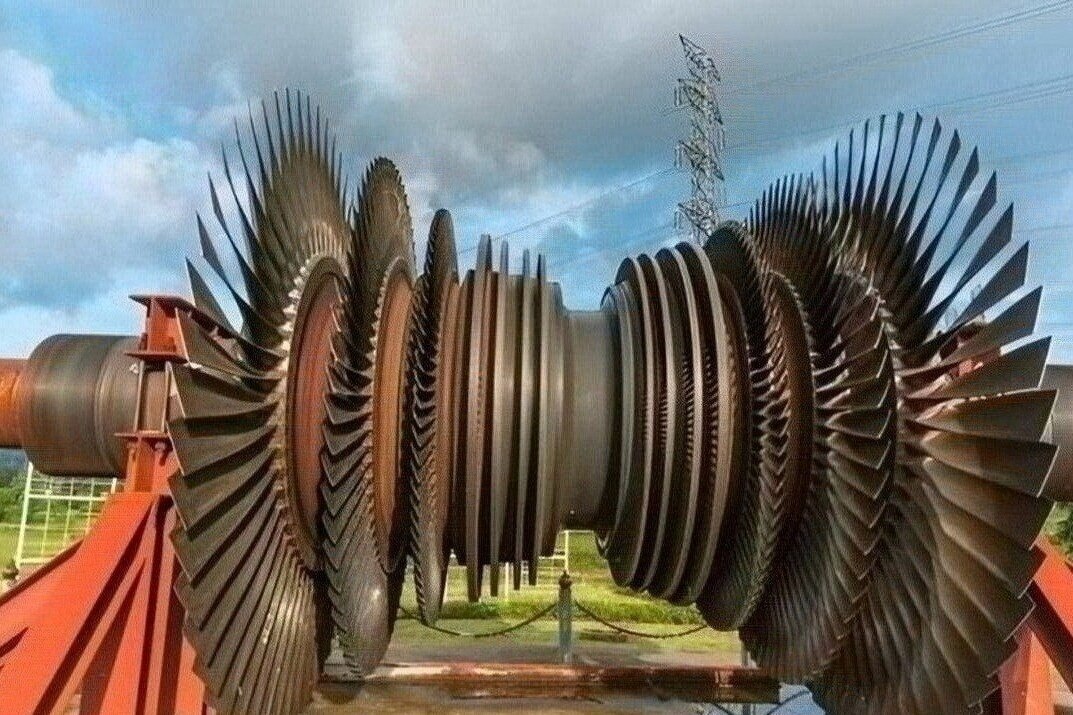
Choosing a supplier for a Nimonic turbine blade requires more than matching an alloy name to an engine stage. You need to distinguish rotating blades from stationary vanes, match the material and manufacturing route to the duty, and verify that the supplier can document every critical process from material lot to final inspection.
Key takeaways
- Match Nimonic 115 to temperature, stress, coating, and stage requirements.
- Provide drawings, material specifications, quantities, tolerances, and inspection requirements for quotation.
- Verify heat treatment, dimensional inspection, traceability, and qualification records before approval.
- Compare Bengaluru manufacturers by process control, documentation, and experience with turbine airfoils.
How HPT and IPT blades and vanes work inside a gas turbine
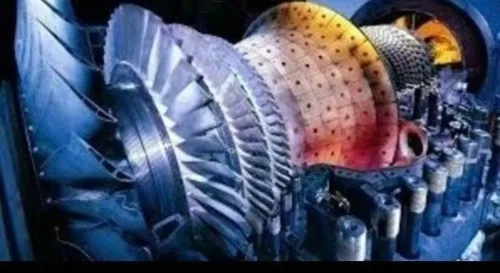
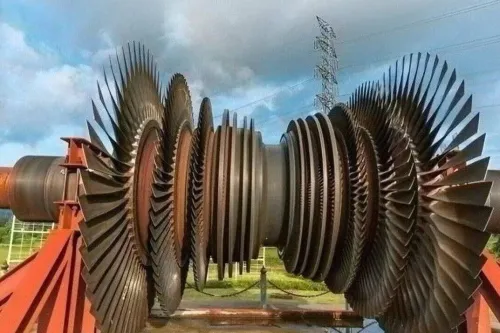
High-pressure turbine blades and vanes take energy from combustor gas immediately after combustion, while intermediate-pressure stages continue that expansion farther downstream. Blades rotate from disks or spools and extract shaft power; vanes remain stationary as nozzle-guide components that turn and accelerate gas into the next blade row.
| Component | Main job | Operating conditions |
|---|---|---|
| HPT vane | Directs and accelerates gas into the first rotating stages | Highest gas-path temperature, steep pressure gradients, thermal fatigue, oxidation and hot corrosion; no blade centrifugal load |
| HPT blade | Expands hot gas and extracts power in the first turbine stages | Extreme temperature, rotational speed, centrifugal stress, vibration and thermal gradients; cooling passages, film holes, tip geometry and coatings are integral |
| IPT vane | Re-directs gas between high- and intermediate-pressure blade rows | Lower temperature than HPT, but continued pressure loading, oxidation, erosion and thermal cycling |
| IPT blade | Continues expansion and balances aerodynamic loading with shaft-power extraction | Lower, yet severe, temperature; substantial centrifugal and bending loads, vibration, erosion and platform distress |
High-pressure turbine blade uses therefore centre on the first stages after combustion, where gas temperature and cooling demand peak. A supplier experienced only in rotating blade roots may not understand stationary HPT vane distress, especially thermal fatigue and pressure-gradient loading.
Intermediate-pressure turbine blade uses cover later expansion stages, where larger airfoils can trade some thermal severity for increased bending and vibration exposure. Nimonic or another wrought nickel alloy can suit this region, but stage temperature, stress, dwell time, coating and required life—not “IP turbine” alone—must determine the grade.
When Nimonic 115 fits the stage—and when it does not
Choose Nimonic 115 when a wrought or forged airfoil needs high creep and stress-rupture strength at temperatures beyond titanium’s practical range, but does not require a directionally solidified or single-crystal casting. Its nickel-chromium-cobalt matrix, with substantial titanium and aluminium, forms gamma-prime strengthening that supports demanding hot-section service.
| Material | Why you would choose it | When it loses |
|---|---|---|
| Titanium | Low density reduces disk and rotor loads | Reject it when sustained gas-path temperature causes rapid strength loss or oxidation damage |
| Conventional Inconel grade | Easier procurement and machining for moderate-temperature service | Reject it when creep, dwell, or stress-rupture life exceeds that grade’s capability |
| Nimonic 115 | Strong wrought or forged airfoil option for severe temperature and centrifugal loading | Reject it when the design requires a cast DS or SC grain structure |
| Another nickel superalloy | A better match may exist for coating, fatigue, corrosion, or casting requirements | Reject Nimonic 115 only after comparing the actual life and manufacturing requirements |
Nimonic turbine blade applications do not automatically mean first-stage HPT service. Modern HPT blades often use DS or SC alloys with internal cooling passages and a grain structure that Nimonic 115 cannot reproduce; an IPT blade with lower gas temperature but high bending, vibration, or erosion loads may be a stronger fit.
Specify Nimonic 115 by exact product form, material standard, heat-treatment condition, melt route, and inspection requirements. “Nimonic turbine blade” is not enough for an aerospace purchase order, and an industrial certificate does not automatically satisfy an aero-engine drawing.
What to provide before asking a manufacturer for a quotation
A supplier cannot confirm Nimonic 115 manufacturability from the alloy name alone. Send the engine model, stage and part number, drawing revision, exact product form, governing material standard, and the acceptance basis for the component.
Provide these details before requesting a quotation:
- Engine: aero-engine or industrial turbine, manufacturer, model, HPT or IPT stage, rotational speed, and whether the item is a rotating blade or stationary vane.
- Design: airfoil coordinates, platform and root geometry, tolerances, attachment type, wall thickness, fillet radii, tip clearance, and machining datum scheme.
- Operating duty: gas temperature and pressure, centrifugal speed and stress, vibration or resonance limits, start-stop cycles, dwell time, oxidation, and hot-corrosion environment.
- Cooling: internal passage layout, cooling-air pressure and temperature, film-cooling hole count and angles, trailing-edge configuration, and required surface or thermal-barrier coating.
- Life: target operating hours, cycles, creep and fatigue limits, inspection intervals, allowable repairs, and retirement criteria.
- Compliance: approved melt or remelt route, forging or casting route, heat-treatment condition, nondestructive tests, coating specification, first-article requirements, and complete material-lot traceability.
| Application basis | Information that changes the quotation | Why it matters |
|---|---|---|
| Aero-engine | Engine owner’s drawing, approved sources, and specification | A commercial certificate may not satisfy aerospace acceptance |
| Industrial turbine | OEM specification, service temperature, and repair standard | Interchangeability depends on the approved configuration |
| Modern HPT | Grain structure and cooling design | A directionally solidified or single-crystal casting may be required instead of wrought Nimonic 115 |
Without these inputs, a quotation is only a machining estimate, not confirmation for Nimonic turbine blade applications.
How a Nimonic turbine blade is made and qualified
A qualified blade is not simply a five-axis-machined airfoil. Typical high pressure turbine blade uses place it immediately after combustion, where centrifugal stress, vibration, thermal gradients, oxidation, and hot corrosion act together. Cooling passages, film-cooling holes, tip geometry, and coatings must match the approved drawing and process route.
Five-axis part | Qualified blade Material | Nickel alloy identified by exact grade, product form, standard, heat number, and approved melt source | Material identity, chemistry, heat treatment, and certificates match the drawing and purchase order Production | Airfoil and root meet nominal CAD dimensions | Forging, casting, machining, hole-making, finishing, and coating follow controlled work instructions Special processes | Heat treatment or coating performed by an available shop | Approved procedures, qualified operators, calibrated equipment, and recorded cycle parameters Inspection | Final coordinate-measuring-machine report | Dimensional, surface, internal, coating, and process-specific acceptance evidence Traceability | Part serial number | Serial number links to material heat, operators, machines, inspection results, concessions, and repair history
The route may include forging or investment casting, CNC machining, electrical-discharge machining for cooling holes, heat treatment, and bond-coat or thermal-barrier-coating application. Each operation needs configuration control; an undocumented substitution can invalidate the part.
Before acceptance, request evidence for:
- Fluorescent penetrant inspection and, where applicable, radiography or computed tomography for castings
- Ultrasonic inspection for forgings, airfoil scanning, root-profile gauging, roughness, and coating thickness
- First Article Inspection to AS9102, nonconformance disposition, calibration records, and repair limits
- Approved special-process sources and complete records linking the finished serial number to the material heat
AS9100 supports the quality system; it does not qualify a supplier for a specific Nimonic blade.
How to compare gas turbine blade and vane manufacturers in Bengaluru
Distance from your Bengaluru plant proves nothing about capability. For gas turbine blade and vane manufacturers nimonic turbine blade applications, compare documented process evidence against the exact drawing, not a website claim.
| Evidence to compare | What it must show | Warning sign |
|---|---|---|
| Material control | Nimonic 115 grade, product form, heat-treatment condition, applicable standard, melt route, and heat-lot traceability | “Nimonic” appears without a specification |
| Manufacturing route | Qualified forging, casting, or machining route for the airfoil, root, platform, or vane | Experience is limited to unrelated precision parts |
| Special processes | Approved heat treatment, vacuum melting or remelting where specified, coating, welding, and non-destructive inspection | A general subcontractor performs critical processes without approval records |
| Quality records | First Article Inspection, calibrated equipment, configuration control, nonconformance disposition, and complete material genealogy | AS9100 is offered as the only qualification |
For Nimonic 115 turbine blade applications in Bengaluru, request a sample certificate package with the heat number, furnace chart, inspection results, and drawing revision. An industrial certificate does not automatically satisfy an aero-engine owner; the owner’s drawing and approved-supplier list control acceptance.
Check vane experience separately. HPT nozzle-guide vanes face thermal fatigue, oxidation, hot corrosion, and pressure gradients, while rotating blades also carry centrifugal load; intermediate pressure turbine blade uses demand a different balance of temperature, speed, and fatigue evidence.
BVPL Turbine Parts belongs on your shortlist only after it can map its approved processes and records to your specific aero-engine or industrial component.
Related items
Aero Engine Blade High Pressure Turbine and Intermediate Pressure Turbine Blades Material: Nimonic 115 High Pressure & Intermediate Pressure Turbine Blades Material: Nimonic 115 Nimonic 115 is a high-performance nickel-chromium-cobalt alloy engineered... |
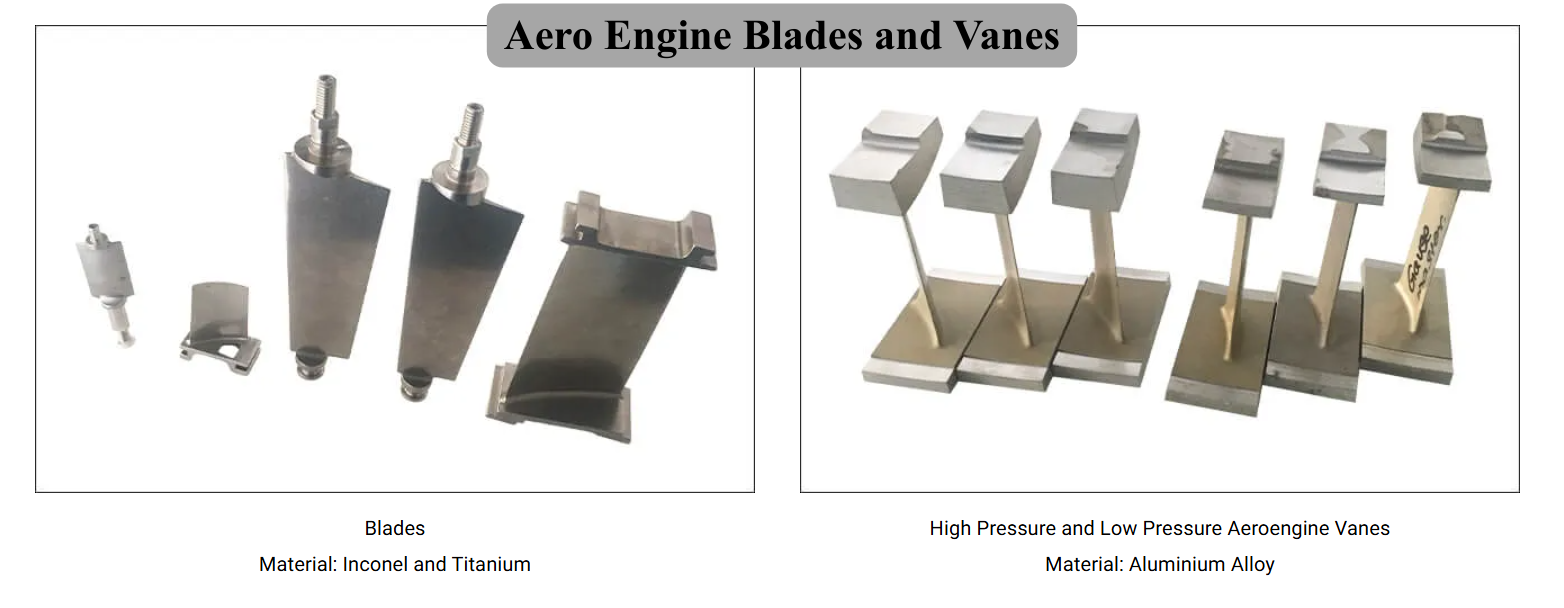 | Precision Components Manufacturer BVPL manufactures precision aero engine blades and vanes used in compressor and turbine stages of gas turbine engines. View product → |
Frequently asked questions
How do high-pressure and intermediate-pressure turbine blades and vanes work?
High-pressure blades and vanes handle combustor gas first: stationary vanes turn and accelerate it, while rotating blades extract shaft power. Intermediate-pressure rows continue expansion farther downstream at different temperature, pressure, speed, and stress conditions.
When does Nimonic 115 fit a turbine stage?
Nimonic 115 fits when its verified high-temperature strength, creep resistance, oxidation resistance, and corrosion performance meet the stage design conditions. Select another alloy when temperature, coating, stress, joining, machinability, or qualification requirements exceed the material specification.
What should you provide before requesting a Nimonic turbine blade quotation?
Send the latest drawing or model, alloy and condition, heat-treatment requirements, quantity, tolerances, surface finish, coating details, inspection plan, material certificates, traceability rules, delivery schedule, and applicable acceptance standard.
How is a Nimonic turbine blade made and qualified?
The manufacturer verifies material, machines or forms the airfoil and root, performs specified heat treatment, inspects dimensions and surfaces, and records traceability. Qualification can include metallurgical review, hardness, non-destructive testing, coating checks, and dimensional reports defined by the purchase specification.
How can you compare gas turbine blade and vane manufacturers in Bengaluru?
Compare their control of nickel-alloy machining, fixturing, heat-treatment coordination, inspection equipment, non-destructive testing, traceability, documentation, and ability to meet your drawing and delivery requirements.
Related service
Aero Engine Blades and Vanes Blades Material: Inconel and Titanium Blades Material: Inconel and Titanium |