
A Nimonic 115 blade is not interchangeable merely because the alloy name, overall length, or root envelope appears to match. You will be able to distinguish HPT and IPT requirements, decide whether a damaged blade is repairable, and evaluate a Bengaluru supplier’s design data, manufacturing controls, inspection evidence, and release documentation.
Key takeaways
- Identify the HPT or IPT module before requesting a blade quotation.
- Choose repair when inspection proves the airfoil and attachment remain serviceable.
- Request engine, module, blade-part and configuration details for fit assessment.
- Verify material certificates, dimensional reports, coatings and traceability before installation.
Where Nimonic 115 HPT and IPT blades work—and why the duty matters
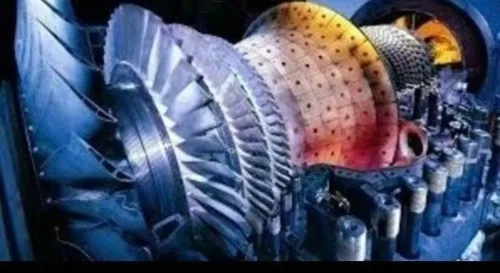
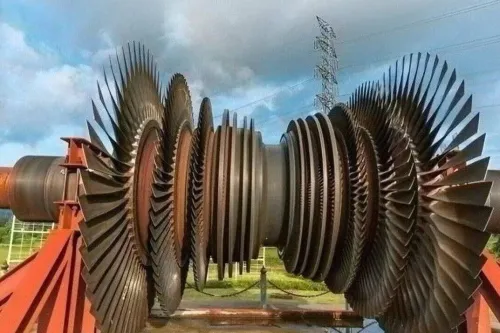
Identify the turbine section before requesting a Nimonic 115 blade. HPT blades sit immediately downstream of the combustor, where gas-path temperature, oxidation, creep and thermal-fatigue exposure peak. IPT blades sit in the intermediate-pressure turbine module of a three-spool engine and face a different pressure, speed, cooling and mechanical-loading duty.
A two-spool engine may have no IP turbine at all. The phrase intermediate pressure turbine blades therefore does not identify a sourceable part; provide the engine model, module, stage, blade part number and drawing revision.
For a high pressure turbine blade replacement, control the features that govern heat transfer, load and rotor balance:
- Match the cooling design, passage geometry, hole location, diameter and discharge angle; verify creep resistance, oxidation and hot-corrosion protection, thermal-fatigue performance, coating system and coating build.
- Match airfoil coordinates, platform geometry, shroud and tip-clearance limits, root attachment surfaces, mass and centre of gravity.
- Trace the failure mechanism: creep and elongation, oxidation, hot corrosion, thermal-fatigue cracks, foreign-object damage, tip wear, platform distress, root fretting, or blocked and damaged cooling holes.
External dimensions cannot establish interchangeability. Two blades with the same length, chord and root envelope can produce different metal temperatures, clearances, loads or rotor balance when their cooling holes, coatings, coordinates or centre of gravity differ. Request controlled design data, not an alloy name alone.
How to decide between blade repair and replacement
Repair a blade only when inspection evidence keeps every feature within the approved repair limits; otherwise, choose replacement. The engine manual—not a generic workshop checklist—controls reject limits for cracks, creep, tip loss, platform damage, root distress, and cooling damage.
1. Review the engine manual, part drawing and revision, applicable service bulletins, and approved repair limits. Record the blade’s part number, serial number, stage, and service history before inspection.
2. Record borescope findings, including crack indications, oxidation, foreign-object impact, tip wear, platform damage, blocked cooling holes, and root distress. Remove and clean the blade under the approved process; aggressive cleaning can conceal evidence or damage coatings.
3. Perform dimensional inspection with a CMM. Check airfoil sections, twist, chord, platform contact, root serrations or fir-tree load surfaces, tip geometry, and permitted blend limits. Inspect root contact pattern, edge damage, fretting, and surface finish because an acceptable airfoil can conceal a dangerous attachment defect.
4. Use fluorescent penetrant inspection for relevant surface-breaking cracks. Use radiography or computed tomography for internal features when the design or inspection plan requires it. Check cooling-hole location, diameter, discharge angle, blockage, and flow with an approved method; external visual inspection cannot verify internal passages or metering area.
5. Request metallurgical examination, hardness checks, or sectioning when material condition, creep damage, or heat treatment is in doubt. A repaired serviceable blade meets documented limits after approved work; a new high pressure turbine blade replacement does not inherit the same evidence.
Reject arbitrary blending: changing airfoil load distribution or root geometry can invalidate the approved repair.
What to include in a Bengaluru manufacturer’s fit-assessment request
Send a controlled-data pack before asking a Bengaluru supplier to assess fit, manufacturability, or interchangeability. “Nimonic 115 blade” alone cannot define a high pressure turbine blade replacement or intermediate pressure turbine blades.
1. Identify the engine model, module, stage, engine serial number, blade part number, drawing number and revision, rotational orientation, left- or right-hand geometry, quantity, service history, required life or repair status, and controlled drawing or three-dimensional model.
2. Add airfoil-section dimensions, root dimensions and attachment form, platform and shroud geometry, tip-clearance requirement, coating system, cooling-hole layout, hole diameters and angles, internal passage specification, mass and centre-of-gravity limits, balance requirement, inspection plan, and required release documentation.
3. State the material definition: applicable Nimonic 115 standard, product form, chemistry limits, heat treatment, grain structure, casting or forging condition, and coating specification. Alloy name alone does not control strength or interchangeability.
| Option | Main capability | Limitation to check |
|---|---|---|
| Forging | Dense near-net blade or root | Cannot assume cast passages are reproduced |
| Precision investment casting | Thin walls, fillets, shrouds and internal passages | Requires tooling and casting controls |
| Finish machining, EDM or laser drilling | Accurate surfaces and cooling holes | Needs qualified hole-flow and angle inspection |
| Five-axis CNC | Airfoil and root finishing | Machining capacity alone may not reproduce cast passages or thin walls |
Ask for evidence that the proposed aftermarket aero engine parts manufacturers nimonic 115 blades in bengaluru can control these features, not merely machine the alloy. A nimonic 115 blade supplier in bengaluru should confirm the process route, dimensional inspection, coating, traceability, and release basis before quoting.
How to qualify a Nimonic 115 blade supplier beyond the alloy name
An OEM replacement follows the design authority’s controlled data. An approved aftermarket part has a recognised approval basis; a repaired serviceable blade returns to service under an approved repair scheme, not as a new blade.
A reverse-engineered or one-off replacement needs explicit acceptance before installation, even when its dimensions and Nimonic 115 chemistry match the removed part.
| Option | Installation consequence | Evidence to establish |
|---|---|---|
| OEM replacement | Install against the OEM part and release documentation | Part number, revision, serial and release certificate |
| Approved aftermarket part | Install only within its approved applicability | FAA Parts Manufacturer Approval, approved design data, EASA production or release arrangement, or Indian DGCA approval and release documents |
| Repaired serviceable blade | Reuse within stated repair limits and life controls | Approved repair record, inspection results and serviceable release |
| Reverse-engineered part | Do not treat as interchangeable without accepted approval | Design approval, conformity evidence and operator or authority acceptance |
| One-off replacement | Requires a specific engineering and airworthiness decision | Controlled drawings, manufacturing records and authorised release basis |
For a nimonic 115 blade supplier in Bengaluru, demand heat-lot traceability from raw material through forging or casting, heat treatment, machining, EDM or laser drilling, coating, inspection, serialisation and final release. Identify every subcontractor, including vacuum melting or remelting, heat treatment, coating and NDT; a final CNC inspection report cannot validate an uncontrolled upstream process.
Request the material certificate, heat-treatment record, CMM report, fluorescent penetrant and other NDT results, coating certificate, batch records, certificate of conformity and required release certificate. BVPL Turbine Parts is one Bengaluru source to assess against this evidence, not proof that material capability alone establishes approval.
The same test applies to any search for aftermarket aero engine parts manufacturers nimonic 115 blades in bengaluru.
Related service
Aero Engine Blade High Pressure Turbine and Intermediate Pressure Turbine Blades Material: Nimonic 115 High Pressure & Intermediate Pressure Turbine Blades Material: Nimonic 115 Nimonic 115 is a high-performance nickel-chromium-cobalt alloy engineered... |
What to verify before accepting and installing the replacement set
Accept a high pressure turbine blade replacement only after comparing each supplied blade with the approved drawing, repair manual, or controlled design data. Check material condition, heat treatment, grain structure, root attachment, platform contact, airfoil profile and twist, shroud geometry, tip clearance, surface finish, mass, and centre of gravity.
Intermediate pressure turbine blades require their own data; dimensional similarity does not establish interchangeability.
| Coating system | Functional checks | Main acceptance risks |
|---|---|---|
| Diffusion aluminide | Verify coating thickness, dimensions, roughness, and hole condition | Oxidation protection loss or blocked cooling holes |
| MCrAlY | Confirm system, thickness, adhesion, and surface finish | Changed airfoil dimensions and hot-corrosion exposure |
| Thermal-barrier coating | Verify bond coat, ceramic thickness, and hole condition | Altered clearances, roughness, or cooling performance |
Confirm cooling-passage continuity and cooling-hole position, diameter, discharge condition, and flow using the approved method; external visual inspection cannot prove internal passage integrity. Treat stripping and recoating as qualified processes because they can change substrate dimensions.
Confirm whether balancing covers individual blades, matched sets, or the complete rotor. Obtain the specified balance grade, weighing resolution, and material-removal limits before installation.
- Reconcile serial numbers, batch records, NDT reports, and dimensional reports.
- Confirm no unauthorised blends or repairs; inspect root and platform contact.
- Obtain the required release paperwork under the operator’s approved procedures, including FAA 14 CFR Part 43 or EASA Part 145 controls when applicable.
Frequently asked questions
Where do Nimonic 115 HPT and IPT blades work?
HPT blades operate immediately downstream of the combustor under severe temperature, oxidation, creep and thermal-fatigue exposure. IPT blades operate in the intermediate-pressure turbine module, where pressure, speed, cooling and mechanical loads differ.
When should you repair a Nimonic 115 blade instead of replacing it?
Choose repair when inspection confirms that the airfoil, platform, shroud and attachment remain within approved limits and the damage is repairable. Replace the blade when cracking, distortion, material loss or attachment damage exceeds those limits.
What should a Bengaluru manufacturer receive for a blade fit assessment?
Send the engine and module model, HPT or IPT location, blade part number, drawing or revision, serial and batch details, quantity, service history, dimensional data and photographs of damage.
How do you qualify a Nimonic 115 blade supplier beyond the alloy name?
Check the supplier’s control of part-number configuration, heat-treatment records, material certificates, machining capability, coating process, inspection equipment, traceability and conformity documentation.
What must you verify before installing replacement blades?
Match the part number and configuration, review material and heat-treatment records, confirm airfoil and attachment dimensions, inspect coatings and cooling passages, and complete balance, clearance and installation checks required by the engine maintenance data.