
A damaged blade or vane cannot be approved from appearance or a generic material certificate alone. You will be able to classify the fault, match the correct replacement, test the supplier’s evidence, and move the component from quarantine to release without confusing an aftermarket part with an approved interchangeable part.
Key takeaways
- Quarantine cracked, bowed, twisted, or materially separated blades and vanes.
- Use inspection evidence and the engine manual’s limits before approving repair.
- Match replacements by part number, configuration, revision, and service history.
- Verify a Bengaluru supplier’s approval scope and part-specific inspection records.
Classify the fault before deciding whether the part is repairable
Quarantine a blade or vane immediately when inspection finds a crack indication, liberated material, permanent airfoil bowing or twist, a blocked cooling hole, excessive tip rub, or platform separation. Do not blend these findings before engineering review; removing evidence can turn a contained defect into an in-service failure.
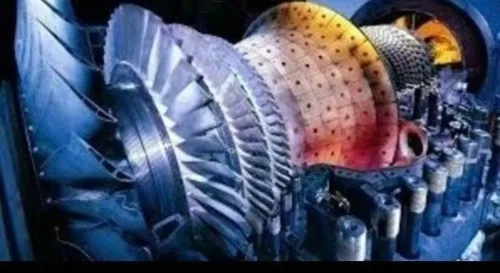
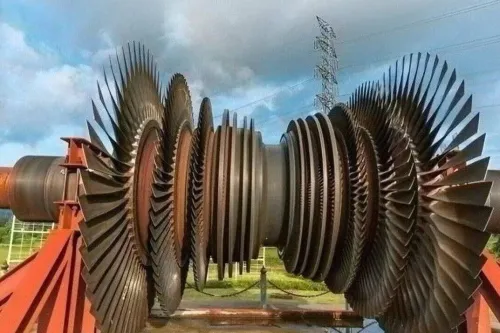
Compressor damage is driven mainly by foreign-object damage, leading-edge dents, erosion, corrosion, and clearance changes. A dent or tip rub can alter airflow, while liberated material can damage downstream stages. Turbine damage adds oxidation, hot-corrosion pitting, thermal distress, coating loss, thermal-fatigue cracking, creep, and cooling-hole distress. Appearance alone cannot separate creep from thermal fatigue.
| Finding | Compressor interpretation | Turbine interpretation |
|---|---|---|
| Impact, dent, erosion | Assess blend depth, edge radius, profile, and clearance | Check impact against coating, cooling passages, and crack-prone edges |
| Corrosion or pitting | Measure metal loss and surface cracking | Treat hot-corrosion pitting and oxidation as possible life-limiting damage |
| Rub, bowing, twist | Check rotor clearance and permanent deformation | Check creep, thermal distortion, platform movement, and stage alignment |
| Coating or cooling defect | Check erosion and foreign-object exposure | Quarantine coating loss, blocked holes, enlarged holes, or misplaced holes |
Use the part’s engine maintenance manual, component repair manual, or approved engineering data to classify repair, replacement, or scrapping. For a search for after market aero engine parts manufacturers blade and vane faults in bengaluru, the useful evidence is fault diagnosis and disposition logic, not CNC capacity alone.
- Quarantine for any crack indication, liberated material, platform separation, permanent bowing or twist, excessive tip rub, or blocked cooling hole.
- Quarantine repeated distress, severe material loss, or distortion until dimensional, NDT, and metallurgical review is complete.
Use inspection evidence and manual limits to set the disposition
A disposition is defensible only when every finding is compared with the applicable engine maintenance manual, component maintenance manual, overhaul manual, repair scheme, or approved engineering data. A visual pass and a generic blend-depth limit cannot establish serviceability.
1. Record the removal condition, engine position, symptoms, part number, serial or batch, and coating state. Create a damage map and attach borescope images showing foreign-object damage, erosion, rubs, pitting, distortion, or liberated material.
2. Clean the part before fluorescent or visible penetrant inspection where suitable. Request the procedure revision, inspector qualification, acceptance standard, mapped indications, photographs, and equipment calibration records; residual penetrant, rough surfaces, coatings, or poor development can hide or create misleading indications.
3. Use eddy-current testing for suitable conductive defects and ultrasonic testing for appropriate volumetric defects, accounting for alloy, geometry, coating, defect orientation, and access. Check airfoil profile, wall thickness, dimensions, tip clearance, platform condition, cooling-hole geometry, and attachment features against the controlling limit.
4. Repair or recondition only when damage remains within the approved repair scheme and heat treatment, alloy condition, coating adhesion, and geometry remain acceptable. A crack indication, excessive material loss, creep, permanent bow or twist, repeated distress, blocked or distorted cooling holes, or out-of-limit platform condition supports replacement or quarantine.
5. Send the part for metallurgical review when oxidation, hot corrosion, thermal fatigue, creep, or heat exposure could have changed its condition. Scrap it when approved recovery cannot restore the required evidence, dimensions, material state, or traceability; aeroengine component fault recovery is not complete until the disposition is documented and authorised.
Match the replacement by configuration, not by appearance or alloy name
A direct replacement matches the approved configuration, not merely the outline. For an aero engine blade vane replacement in Bengaluru, record the following before accepting a quotation:
- Confirm the engine model, module, compressor or turbine stage, part number, dash number, revision status, and intended engine position.
- Match left or right orientation, airfoil direction, platform geometry, root or attachment configuration, and every cooling-hole location, diameter, and angle.
- Require serial or batch traceability linking the part to material, heat treatment, coating, inspection, and release records.
- Verify that titanium, aluminium alloy, Inconel, or stainless steel matches the approved alloy, heat-treatment condition, temperature exposure, oxidation environment, stress level, and engine position. A familiar material name proves nothing by itself.
- Classify the part as a controlled direct replacement only when the supplier provides the approved drawing or repair data, configuration status, controlled process route, and applicable release authority.
- Treat a scan-derived or reverse-engineered part as a separate engineering proposal. Request drawing control, configuration control, alloy verification, coating compatibility, cooling-performance evidence, engineering approval, and a first-article or qualification package.
A scan recovers geometry; it does not establish grain structure, fatigue life, coating adhesion, or cooling performance. Likewise, a matching silhouette or alloy name does not establish interchangeability. If any identifier, orientation feature, cooling pattern, or revision record conflicts, quarantine the part until the design authority resolves the mismatch.
Choose a Bengaluru supplier by approval scope and part-specific evidence
Approval scope must match the exact engine part number, not merely the supplier’s Bengaluru address or machining equipment. Treat an aftermarket aeroengine vane manufacturer differently from a repair station, maintenance organisation, or special-process subcontractor because each may have different privileges and release authority.
| Supplier type | What to verify | Release limitation |
|---|---|---|
| Component manufacturer | Approved design or manufacturing scope, capability list, and part-number coverage | May release only work within its approved production authority |
| Repair station or maintenance organisation | Repair approval, authorised maintenance scope, and qualified signatory | May release repaired parts, not automatically newly manufactured parts |
| Special-process subcontractor | NADCAP or equivalent approval for the named process | Cannot release the complete blade or vane unless separately authorised |
Request a current, part-specific first-article or qualification package containing:
- Controlled manufacturing or repair process specification
- Material certificate and heat-treatment record
- Coating record, dimensional report, and NDT result
- Nonconformance disposition and serialised traceability
- Calibration status for inspection equipment
- Personnel qualification records
- The release document accepted for the intended operation in India, such as CA Form 1, FAA 8130-3, or EASA Form 1 where applicable
NADCAP accreditation applies to a named process—heat treatment, chemical processing, or NDT—not automatically to complete vane manufacture or repair. Ask BVPL Turbine Parts the same part-number, process-route, approval, and release questions; CNC capability or ISO 9001 certification alone does not prove interchangeability or approval.
Related products
 | Precision Components Manufacturer Aero Engine Blade View product → |
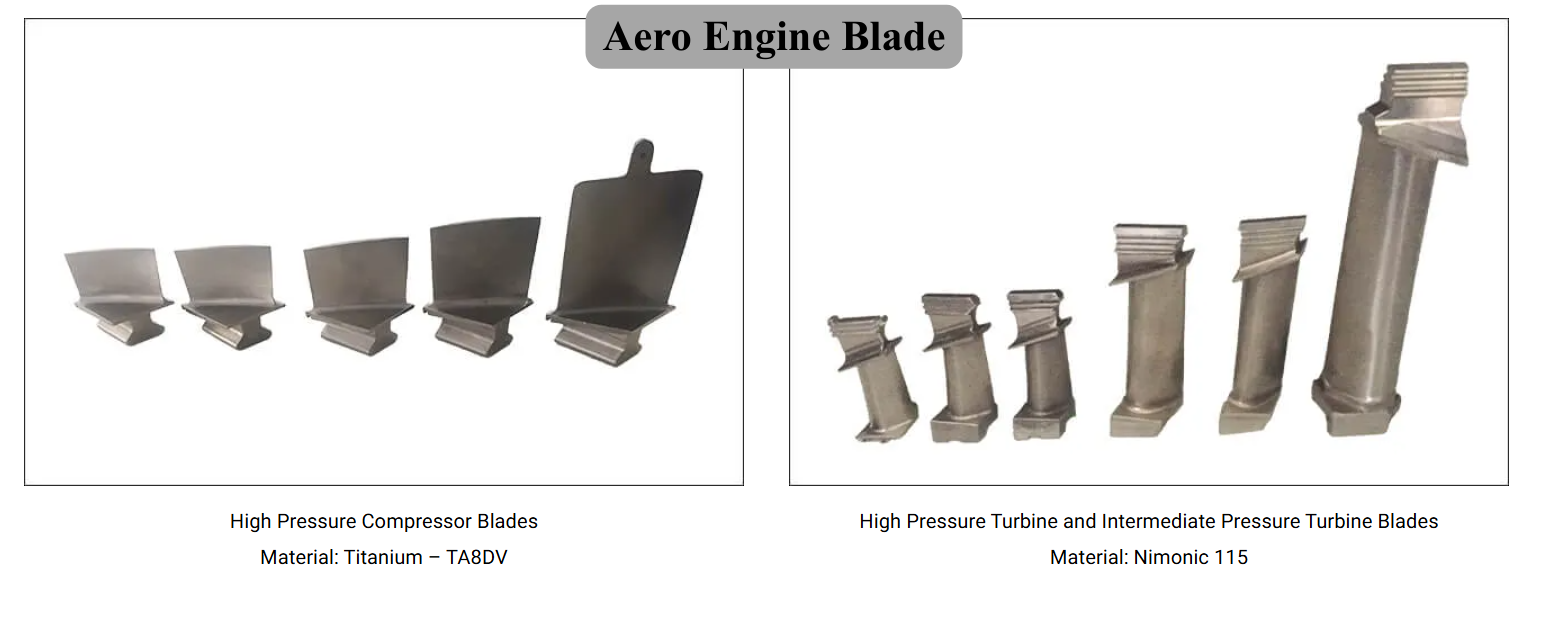
 | Precision Components Manufacturer BVPL manufactures precision aero engine blades and vanes used in compressor and turbine stages of gas turbine engines. View product → |
Control the recovery workflow through installation and release to service
Do not install a removed blade or vane until its identity, failure history, engineering disposition, inspection evidence, and release authority agree. Quarantine it immediately, attach the removal tag, and record engine serial number, module, stage, circumferential position, operating hours, and observed symptoms.
- Create a damage map with photographs and borescope evidence. Record liberated material, repeated distress, tip rub, platform damage, coating loss, oxidation, hot-corrosion pitting, crack indications, creep, distortion, and cooling-hole condition.
- Complete failure analysis before choosing the remedy. Compare fluorescent penetrant, eddy-current or ultrasonic results, dimensional data, metallurgical findings, and operating history with the engine maintenance manual, component maintenance manual, overhaul manual, repair scheme, or approved engineering data.
- Select only an approved blend, reclamation, or replacement route. A low-cost blend is a poor choice when material loss exceeds the part-specific limit, cracks remain, creep has changed the airfoil, cooling holes are out of limit, or the same distress has recurred.
- Verify the incoming part’s part number, dash number, revision, engine position, orientation, serial or batch traceability, material certificate, heat-treatment and coating records, NDT report, and dimensional report. Inspect the coating, cooling holes, airfoil, wall thickness, root, platform, and attachment features.
- Install the accepted part, then verify rotor or module balance, clearances, fit, torque, locking features, and required engine or module checks. Close every nonconformance before release.
Finish the configuration record with inspection sign-off, serial and batch traceability, repair history, and the authorised release-to-service document. No part enters service unless its identity, engineering basis, inspection evidence, installation condition, and release authority all align.
Frequently asked questions
When should you quarantine a faulty aero-engine blade or vane?
Quarantine it after finding a crack indication, liberated material, permanent airfoil bowing or twist, blocked cooling hole, excessive tip rub, or platform separation. Do not blend the defect before engineering review.
How do you decide whether a blade or vane is repairable?
Compare the inspection evidence with the applicable engine manual, component repair manual, and approved dimensional limits. Those records determine whether you repair, scrap, or replace the part.
How should you match an aero-engine blade or vane replacement?
Match the part number, configuration, revision, dimensions, material condition, coating, cooling-hole pattern, and applicable service bulletin status. Do not select by appearance or alloy name alone.
What should you check when choosing an aftermarket aero-engine parts manufacturer in Bengaluru?
Check approval scope, traceability, inspection reports, dimensional evidence, material records, special-process controls, and documentation supporting release to service.
Related services
Reverse Engineered Aero Engine Blades and Blisks Reverse Engineered Blades by BVPL Material : Aluminium, Stainless Steel and Titanium Reverse Engineered Blades by BVPL Material : Aluminium, Stainless Steel and Titanium |
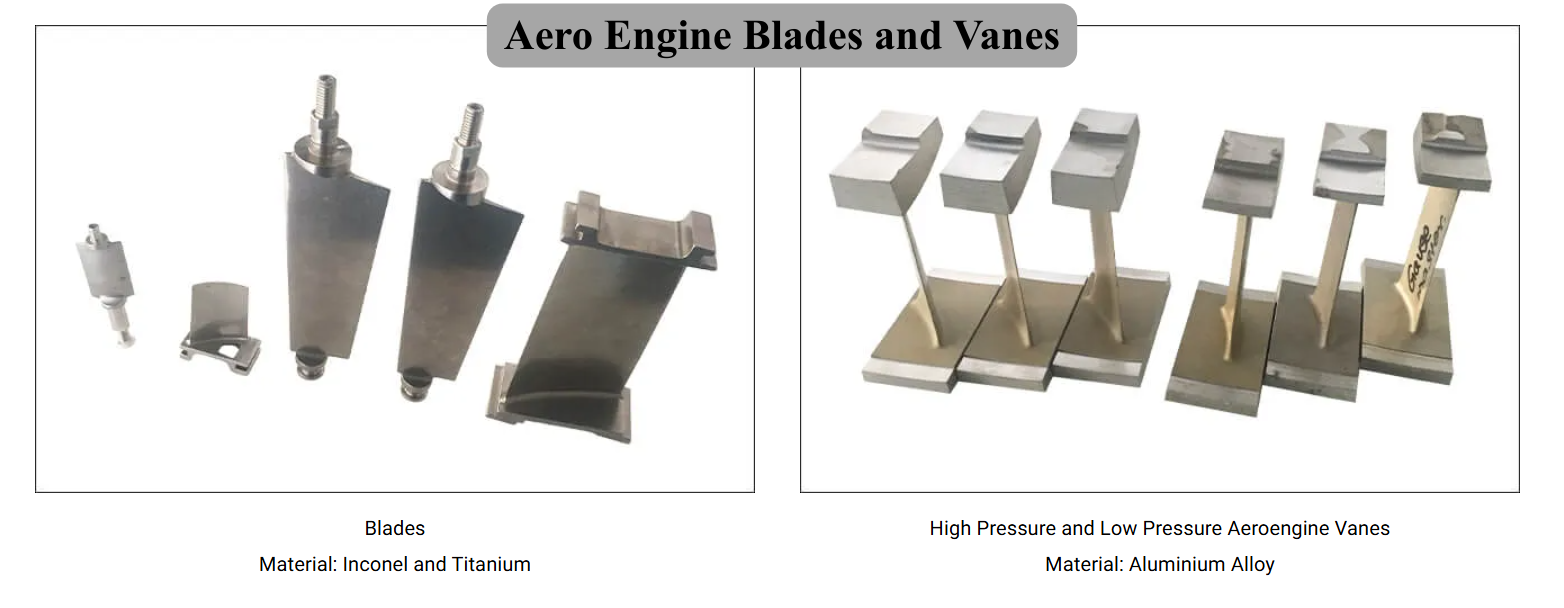
Aero Engine Blades and Vanes Blades Material: Inconel and Titanium Blades Material: Inconel and Titanium |
Aero Engine Blades and Vanes High Pressure and Low Pressure Aeroengine Vanes Material: Aluminium Alloy High Pressure and Low Pressure Aeroengine Vanes Material: Aluminium Alloy |