
Choosing Nimonic 115 for a turbine blade requires more than matching a nickel-alloy name to a temperature range. You need to compare its gamma-prime strengthening, creep and oxidation behaviour, manufacturing route, stage duty, inspection evidence and supplier controls against the alternatives before approving a blade design or source.
Key takeaways
- Choose Nimonic 115 when forged or wrought creep strength suits the design.
- Match HPT or IP use to temperature, stress, oxidation, and cooling demands.
- Compare suppliers by process control, traceability, inspection records, and qualification evidence.
- Inspect dimensions, surface condition, material identity, and non-destructive test results before acceptance.
How Nimonic 115 compares with competing turbine-blade alloys
Nimonic 115 is attractive when a forged or wrought blade needs strong creep resistance near 900–1,000 °C without accepting the cost and qualification burden of a cast or single-crystal route. Its nickel matrix contains substantial gamma-prime strengthening from aluminium and titanium; chromium supports oxidation resistance, while cobalt helps maintain high-temperature strength.
At roughly 8.4 g/cm³, with a melting range near 1,280–1,340 °C, it offers a practical balance of creep strength, fatigue tolerance, grain-flow benefits and manufacturability. Those figures do not define allowable blade temperature: stress, exposure time, cooling, coating and oxidation determine it.
| Alloy | Advantage over Nimonic 115 | Better fit |
|---|---|---|
| Nimonic 90 | Lower-cost wrought option with good ductility and fatigue performance, but lower creep strength | Cooler stages or lower-stress blades |
| Nimonic 105 | Stronger wrought creep performance at elevated temperature | High-temperature forged blades where its processing and qualification cost is justified |
| Rene 80 | Cast gamma-prime alloy with higher creep capability and complex-airfoil potential | Heavily stressed blades needing cast geometry |
| Inconel 738 | Cast strength, oxidation resistance and established cooling-passage capability | Hotter cast blades with intricate internal cooling |
| Inconel 939 | Strong oxidation and corrosion resistance, plus useful cast repair characteristics | Aggressive gas environments or repair-sensitive cast components |
| Single-crystal alloys | Remove transverse grain boundaries and deliver the best creep life | The hottest HPT locations and long-life designs |
For nimonic 115 turbine blades compared gas turbine blade manufacturers, the key question is route, not alloy name. A forged Nimonic 115 blade can offer better impact tolerance and cost control, but DS and single-crystal alloys win when creep life at peak metal temperature governs the design.
Where Nimonic 115 fits in HPT and IP turbine stages
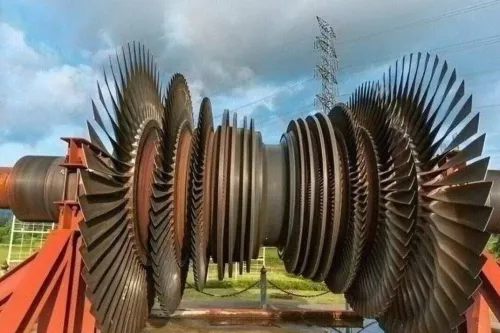
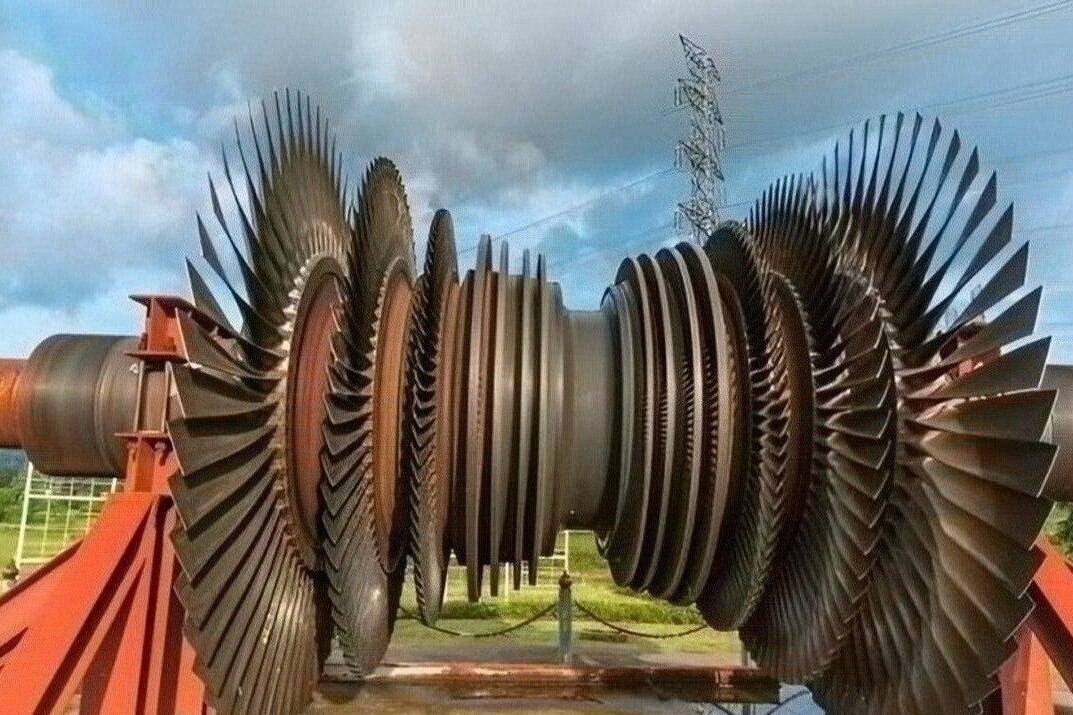
Do not label a part “Nimonic 115 IP” until you identify the engine architecture. A two-spool engine has HP and LP turbines only; a three-spool engine adds an IP turbine. Record the stage location, rotational speed, attachment design and blade-metal temperature profile before choosing the alloy.
| Stage | Selection test | Material direction |
|---|---|---|
| HP turbine | Highest creep, oxidation, thermo-mechanical fatigue and attachment demands; cooling and coating control the metal temperature | Nimonic 115 high pressure turbine blades fit when a wrought structure meets the component life target. DS or single-crystal alloys fit hotter, more highly stressed airfoils because they remove transverse grain boundaries. |
| IP turbine | Lower temperature and stress than the HP stage, but confirm exposure time, platform temperature and root loading rather than assuming a lower duty | Nimonic 115 can fit when its creep and oxidation capability provides useful margin without the cost of a DS or single-crystal route. A lower-duty wrought or cast alloy may be more economical. |
| Different stage or system | The calculated metal temperature, stress spectrum or cooling requirement exceeds the alloy and coating qualification | Select a different wrought or cast alloy, DS or single-crystal nickel alloy, or a ceramic thermal-barrier system after component-level life assessment. |
Published descriptions place Nimonic 115’s useful high-temperature range near 900–1,000 °C, but that is not a permissible blade-metal limit. Stress, time at temperature, cooling holes, oxidation, coating condition and grain structure determine life.
Require the design authority to compare stress-rupture or creep data, thermo-mechanical fatigue, root and platform durability, coating compatibility and manufacturing route. Room-temperature tensile strength or a chemistry match alone cannot justify substitution.
How the manufacturing route changes blade performance and cost
The route sets the trade between grain control, cooling complexity and qualification cost. A forged Nimonic 115 blade retains wrought grains and favourable grain flow through the root and airfoil, but it cannot match the creep capability of DS or single-crystal structures, which remove transverse grain boundaries from the airfoil.
| Route | Grain structure and defect tolerance | Machining and cooling effect | Cost and qualification |
|---|---|---|---|
| Wrought | Uniform worked grains; no casting shrinkage, but forging laps or inclusions remain possible | More finish machining; drilled, broached or EDM passages are simpler and less complex | Lower tooling burden; requires forging, heat-treatment, grain-flow and mechanical-property evidence |
| Precision forged | Grain flow can follow the load path and gives useful impact tolerance | Controlled preform and die filling limit excess stock; internal passages constrain design | Usually economical for repeatable geometry; qualification covers dies, forging reductions and heat treatment |
| Investment cast | Grain size and orientation vary; shrinkage, ceramic-core damage, porosity and recrystallisation require control | Net-shape airfoils and intricate serpentine passages reduce machining | Higher process-control burden; radiography, core inspection, microstructure and creep or stress-rupture evidence add effort |
| Directionally solidified | Longitudinal grains reduce transverse boundaries and improve creep life | Cast cooling passages are practical; repairs and machining remain tightly controlled | Higher tooling and inspection cost; DS verification and process qualification are essential |
| Single crystal | No grain boundaries in the airfoil, maximising hot-section creep capability | Complex cast passages are possible, but thin walls and defects demand strict control | Highest qualification burden and scrap sensitivity; orientation, stray grains and casting defects must be proven acceptable |
Treat these as different products, not interchangeable routes. Require melt and heat-lot traceability, specified solution and aging treatments, positive material identification, dimensional results, surface-crack inspection, microstructure review and tensile, creep or stress-rupture data where specified. A CNC capability certificate alone proves none of this.
What to inspect in a finished Nimonic 115 blade
Accept a Nimonic 115 blade only when its identity, heat-treatment condition, geometry and inspection history connect to the exact supplied part. A CNC capability certificate is not enough.
Require this acceptance dossier:
- Melt number, heat number, product form, forging or casting route, and complete heat-treatment records. The purchase order must state the material specification, solution treatment, cooling method and aging cycle; record furnace charts and actual heat-lot mechanical results.
- Positive material identification, plus tensile and stress-rupture or creep results when the design specification calls for them. Require grain-flow, grain-size or microstructure evidence appropriate to the manufacturing route.
- CMM or optical inspection reports for airfoil profile, twist, chord, thickness, platform position, root geometry, attachment features, cooling holes and datum relationships. Check the report against the drawing’s tolerances, not a supplier’s generic inspection plan.
- Visual and magnified examination for cracks, laps, dents, tool marks, burns, smeared metal, recast layers and damaged leading or trailing edges. Record surface roughness where the drawing controls it.
- Fluorescent penetrant inspection of airfoil, fillets, platform and root; add radiography or computed tomography for specified internal defects, and eddy-current inspection where the approved procedure covers relevant near-surface flaws.
| Evidence to request | What it proves | Acceptance concern |
|---|---|---|
| Process records | Traceability from melt to finished blade | Missing heat or furnace linkage |
| Material tests | Strength and microstructure of the supplied lot | Generic certificate only |
| NDT reports | Cracks and internal discontinuities were examined | Unapproved method or operator |
| Coating records | Thickness, masking and substrate compatibility | Coating on fatigue-critical edges |
| Repair records | Qualified cleaning, filler, thermal cycle and restoration | Unqualified welding or heat-affected cracking |
Reject any repair or coating condition that lacks an alloy-specific qualification, dimensional reinspection and post-process NDT.
How to compare Nimonic turbine blade manufacturers in Bengaluru
A Bengaluru address proves nothing about blade qualification. Ask whether the supplier controls, or formally manages qualified subcontractors for, the Nimonic 115 melt, forging or casting, heat treatment, coating and special processes. A machining certificate shows cutting capability, not control of the finished blade system.
| Supplier type | What it controls | Evidence to request | Warning sign |
|---|---|---|---|
| Qualified blade manufacturer | Material route, heat treatment, inspections and approved special processes | Melt and heat-lot traceability, process qualifications, material tests, microstructure records and non-destructive inspection reports | Cannot identify the forging, casting or heat-treatment source |
| CNC finishing supplier | Customer-supplied forgings or castings and selected machining operations | Drawing revision, inspection plan, machining records and proof of remaining stock after heat treatment | Presents dimensional inspection as complete blade qualification |
| Coordinated production source | In-house work plus named, controlled subcontractors | Purchase specifications, supplier approvals, coating records and full traceability to the blade serial number | “Compliant” certificate with no process ownership |
Check the manufacturing route separately. A forged Nimonic 115 blade needs evidence of preform control, die filling, grain flow and finish machining; an investment-cast blade needs controls for shrinkage, ceramic-core defects and grain variation. Do not treat the routes as interchangeable.
Ask these questions before comparing quotations:
- Is roughing completed before final aging, and what stock remains afterward?
- How are work hardening, tool wear, edge damage and smeared material controlled?
- Who deposits and strips the coating, and how are thickness and masking verified?
- Does AS9100 certification sit alongside Nimonic 115-specific process and inspection evidence?
For example, when assessing BVPL Turbine Parts, use those questions to separate its controlled blade-manufacturing scope from any outsourced operation. AS9100 alone does not qualify the alloy, design or special process.
Related service
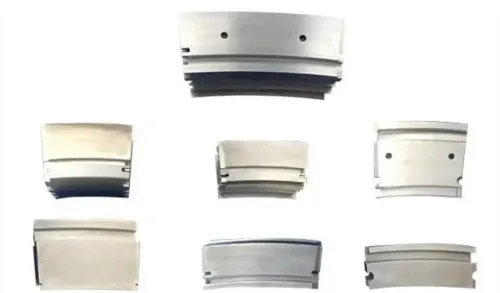
Aero Engine Blade High Pressure Turbine and Intermediate Pressure Turbine Blades Material: Nimonic 115 High Pressure & Intermediate Pressure Turbine Blades Material: Nimonic 115 Nimonic 115 is a high-performance nickel-chromium-cobalt alloy engineered... |
Frequently asked questions
How does Nimonic 115 compare with competing turbine-blade alloys?
Nimonic 115 suits forged or wrought blades requiring creep resistance near 900–1,000 °C. Compare it with competing nickel alloys by gamma-prime strengthening, oxidation resistance, manufacturing route, and qualification requirements.
Where does Nimonic 115 fit in HPT and IP turbine stages?
Use Nimonic 115 for HPT or IP blade designs only after checking local metal temperature, centrifugal stress, creep life, oxidation exposure, cooling strategy, and the approved material specification.
How does the manufacturing route change blade performance and cost?
Forging or wrought processing can avoid the cost and qualification burden of cast or single-crystal production, while grain flow, heat treatment, machining allowances, and inspection still affect blade life and price.
What should you inspect in a finished Nimonic 115 blade?
Check the material certificate and heat or batch traceability, critical dimensions, airfoil profile, platform and fir-tree geometry, surface defects, heat-treatment records, and required non-destructive test results.
How should you compare Nimonic turbine blade manufacturers in Bengaluru?
Ask each manufacturer for evidence of Nimonic 115 process control, approved drawings, traceability, calibration, inspection capability, non-conformance handling, and experience producing the required blade geometry and quantities.