
Titanium and nickel alloys are not interchangeable across a gas turbine: density favors titanium in cooler compressor stages, while creep strength and oxidation resistance favor nickel alloys in hot turbine stages. By the end, you will be able to identify a precise alloy and product form, match it to a blade location, and write a specification that covers temperature, stress, coating, manufacturing route, and inspection.
Key takeaways
- Name the exact alloy, heat treatment, product form, coating, and manufacturing route.
- Use titanium for cooler compressor sections and nickel alloys for hotter turbine sections.
- Choose materials against temperature, rotational speed, stress, oxidation, and required service life.
- Request traceability, dimensional reports, NDT results, and heat-treatment records before approval.
Why “Inconel” Is Not a Complete Blade Specification
“Inconel blade” is not a purchase specification. Procurement must name the exact alloy, product form, heat-treatment condition, manufacturing route, and coating system; otherwise two parts carrying the same label can have different creep, fatigue, and oxidation performance.
The aero engine blade material details must also state whether the part is wrought, forged, equiaxed-cast, directionally solidified, or single-crystal.
Wrought Inconel 718 gains strength mainly from γ″ and γ′ precipitates and is widely used for disks, shafts, cases, and structural hot-section parts. It is not interchangeable with cast airfoil alloys designed for sustained turbine temperatures.
| Material or form | What it identifies | What procurement must add |
|---|---|---|
| Inconel 718 | Wrought, precipitation-hardened alloy | Product form and heat treatment |
| IN-738, IN-939, René 80 | Cast airfoil alloys | Equiaxed or directionally solidified structure, casting direction, grain limits |
| CMSX-4 | Single-crystal nickel alloy | Crystal orientation, inspection, coating, and approved repair condition |
| Ti-6Al-4V | Separate titanium reference grade | Certified chemistry, tensile properties, heat treatment, density, and approved metal-temperature envelope |
A complete set of inconel titanium blade specifications therefore records grain requirements, casting direction, repair condition, and the qualified bond coat, ceramic thermal-barrier coating, thickness, roughness, and bond-coat condition. A coating does not make an unsuitable substrate suitable. Require certified values for every proposed alloy rather than accepting “Inconel” or “titanium” as the material designation.
Where Titanium and Nickel Alloys Belong in the Engine
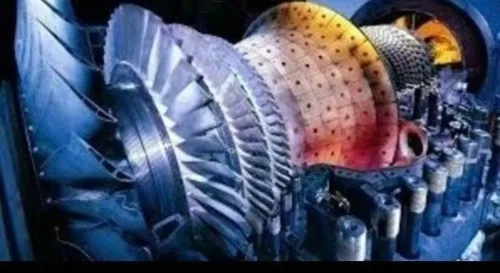
Engine location sets the material choice: use titanium alloys such as Ti-6Al-4V in the fan and cooler compressor stages, and nickel-base alloys in the hotter turbine gas path. Ti-6Al-4V weighs about 4.43 g/cm³, versus roughly 8.2–8.5 g/cm³ for common nickel-base superalloys, reducing rotating mass and centrifugal load.
That advantage shrinks when a titanium blade needs extra thickness for stiffness, erosion allowance, rub tolerance, or containment duty. Titanium strength and creep capability fall as metal temperature rises, while compressor airflow brings titanium-fire and elevated-temperature oxidation risks.
Specify the allowable metal-temperature envelope, overspeed condition, and containment duty; “lightweight titanium blade” is not an adequate design description.
Turbine blades face sustained heat, thermal cycling, oxidation, and hot corrosion. Nickel-base alloys provide stronger creep-rupture and hot-fatigue performance at these temperatures, plus better hot-corrosion resistance when the coating system and operating environment are suitable.
A turbine blade alloy comparison in Bengaluru is meaningful only when it uses the same temperature history, stress cycle, coating, and manufacturing route; room-temperature density or tensile data can reverse the real ranking.
Do not treat all turbine hardware as one material category:
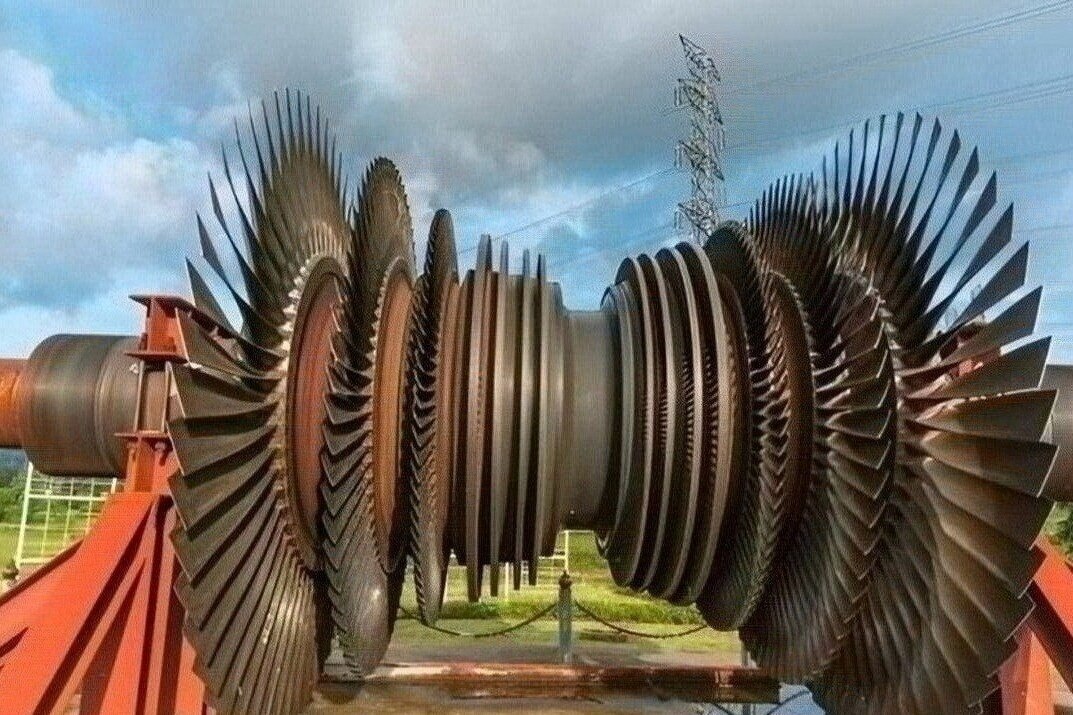
- Rotating compressor blades and blisks favour titanium in cooler stages; disks require separate strength and fatigue assessment.
- Turbine blades and stationary vanes usually require cast nickel alloys for hot-gas exposure.
- Shrouds, nozzles, and diaphragms need selection based on temperature, sealing, pressure, and structural duty.
These are the essential aero-engine blade material details.
How to Select a Grade From Temperature, Speed and Service Life
Start with the blade’s engine location and maximum metal temperature, then select the alloy against its real load history. A turbine blade alloy comparison in Bengaluru is meaningful only when every candidate faces the same temperature, stress cycle, coating and manufacturing route.
Record these inputs before requesting material data:
- Compressor or turbine location, pressure ratio and rotational speed
- Centrifugal stress, thermal-cycle count and required service life
- Oxidation or hot-corrosion exposure, foreign-object risk and expected rub events
- Overspeed condition and containment duty
Hot-section selection prioritizes creep-rupture life and oxidation resistance at operating temperature over room-temperature tensile strength. Compare rupture curves, fatigue data and oxidation results at the actual metal temperature and stress history, not at room temperature. That rule belongs in inconel titanium blade specifications.
| Route | Grain structure | Appropriate use and trade-off |
|---|---|---|
| Conventional cast | Equiaxed grains | Lower casting and repair demands; use where creep duty is moderate |
| Directionally solidified | Reduced transverse grain boundaries | Higher creep capability; demands stricter casting, inspection, repair and cost controls |
| Single crystal | No grain boundaries crossing the primary stress direction | Highest creep capability; highest casting complexity, inspection burden and cost |
Screen titanium out if the proposed temperature exceeds its approved engine limit, or if titanium-fire, hot corrosion, rub damage or containment requirements exceed the qualification basis. Ti-6Al-4V belongs only where those limits are demonstrated. Final acceptance must cite the engine specification, approved coating and repair condition, never a generic alloy datasheet.
Manufacturing and Inspection Details That Control Blade Life
Put the manufacturing route and acceptance limits on the drawing and purchase order, not in an informal supplier note. Titanium aero engine blade material details must state Ti-6Al-4V or the exact grade, forging or bar/plate form, heat treatment, alpha-case removal requirement or maximum remaining layer, surface-removal allowance, and the method used to verify surface integrity.
For nickel blades, inconel titanium blade specifications must control cutter geometry, coolant delivery, tool runout, cutting parameters, final blend, edge radius, and residual-stress limits. Low thermal conductivity, work hardening, and abrasive carbides make stainless-steel settings a poor baseline; excess heat can cause smearing, rapid tool wear, and tensile residual stress.
Cooling holes belong in the airfoil definition. State the laser, EDM, or abrasive-waterjet process, hole position, diameter, taper, discharge shape, breakout limit, recast-layer and heat-affected-zone limits, deburring method, and chemical-cleaning process.
- Specify the nickel substrate, bond coat, ceramic thermal-barrier coating, thickness, surface roughness, and bond-coat condition as one qualified system. A coating change alters airfoil temperature, stress, and cooling assumptions.
Match inspection to the defect sought:
| Inspection method | Finds or verifies | Critical limitation |
|---|---|---|
| Fluorescent penetrant | Open-surface cracks | Cannot find fully subsurface flaws |
| Radiography or computed tomography | Internal voids and inclusions | Does not replace surface inspection |
| Metallography | Alpha-case, recast layer, structure | Requires a representative section |
| Dimensional and cooling-flow checks | Profile, hole position, passage restriction | Cannot prove crack freedom |
Magnetic-particle inspection is not a default for non-ferromagnetic titanium or nickel-base alloys.
What to Request From a Gas Turbine Blade Manufacturer
1. Ask each supplier for the material standard, exact alloy designation, chemistry limits, and product form: bar, forging, plate, investment-cast, directionally solidified, or single-crystal. Obtain the heat-treatment chart, grain structure, coating system, approved repair state, and traceability from melt or casting batch to finished blade.
2. Require a manufacturing and inspection dossier containing dimensional inspection, airfoil-profile results, cooling-hole position and flow data, surface-finish readings, fluorescent-penetrant results, radiography or computed-tomography reports where applicable, and metallographic evidence. Request a signed statement defining alpha-case limits for titanium and recast-layer control for drilled or machined nickel blades.
3. Compare results at the engine owner’s drawing, metal-temperature history, stress cycle, coating specification, and life requirement—not by alloy name. This is the practical basis for inconel and titanium blade details gas turbine blade manufacturers should provide. For a turbine blade alloy comparison in Bengaluru, use the same evidence from every bidder.
BVPL Turbine Parts can serve as a manufacturing contact for precision aero-engine and gas-turbine components, but you still must qualify its proposed material and process against the engine owner’s requirements.
Comparison table template:
Part | Alloy and form | Temperature/stress duty | Process and coating | Inspection evidence | Life/repair status Compressor blades | | | | | Turbine blades | | | | | Vanes | | | | | Blisks | | | | | Shrouds | | | | | Other stationary parts | | | | |
Related services
Aero Engine Blades and Vanes Blades Material: Inconel and Titanium Blades Material: Inconel and Titanium |
High Pressure Compressor Blades Material: Titanium – TA8DV With decades of experience and a legacy of excellence, we take pride in our role as a trusted partner for governments, defense organizations, and... View service → |
Frequently asked questions
Why is “Inconel” not a complete gas turbine blade specification?
Inconel is a family name, not a complete purchase description. Specify the exact alloy, product form, heat-treatment condition, manufacturing route, coating system, and inspection requirements.
Where do titanium and nickel alloys belong in a gas turbine engine?
Titanium alloys suit cooler compressor sections because they combine low density with useful strength. Nickel-based alloys suit hotter turbine sections because they retain strength and resist oxidation at elevated temperature.
How should you select a blade alloy?
Compare the alloy against operating temperature, rotational speed, centrifugal and vibratory stress, oxidation exposure, cooling conditions, repair needs, and target service life.
What records should you request from a gas turbine blade manufacturer?
Request material certificates, heat-treatment records, batch traceability, dimensional inspection results, surface-finish data, coating records, and applicable non-destructive testing reports.
Related services
Aero Engine Blade High Pressure Turbine and Intermediate Pressure Turbine Blades Material: Nimonic 115 High Pressure & Intermediate Pressure Turbine Blades Material: Nimonic 115 Nimonic 115 is a high-performance nickel-chromium-cobalt alloy engineered... |
Aero Engine Blade High Pressure Compressor Blades Material: Titanium – TA8DV High Pressure Compressor Blades Material: Titanium – TA8DV |
Industrial Gas Turbine Shrouds Industrial Gas Turbine Shrouds Examples of GE Gas Turbine Shrouds for Frames 5, 6, 7 and 9. We regularly manufacture these for the European, USA and Middle Eastern markets. View service → |
Reverse Engineered Aero Engine Blades and Blisks Reverse Engineered Blades by BVPL Material : Aluminium, Stainless Steel and Titanium Reverse Engineered Blades by BVPL Material : Aluminium, Stainless Steel and Titanium |