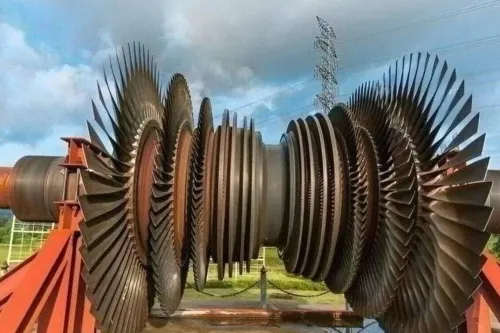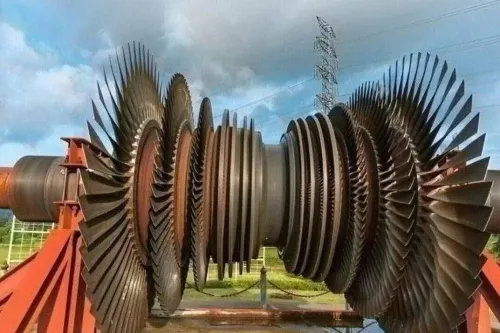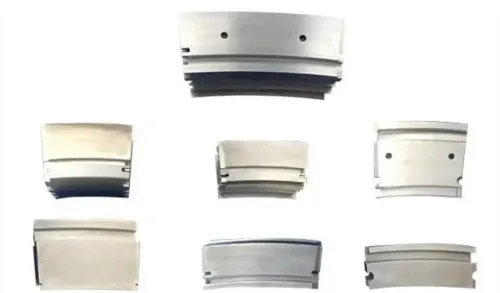

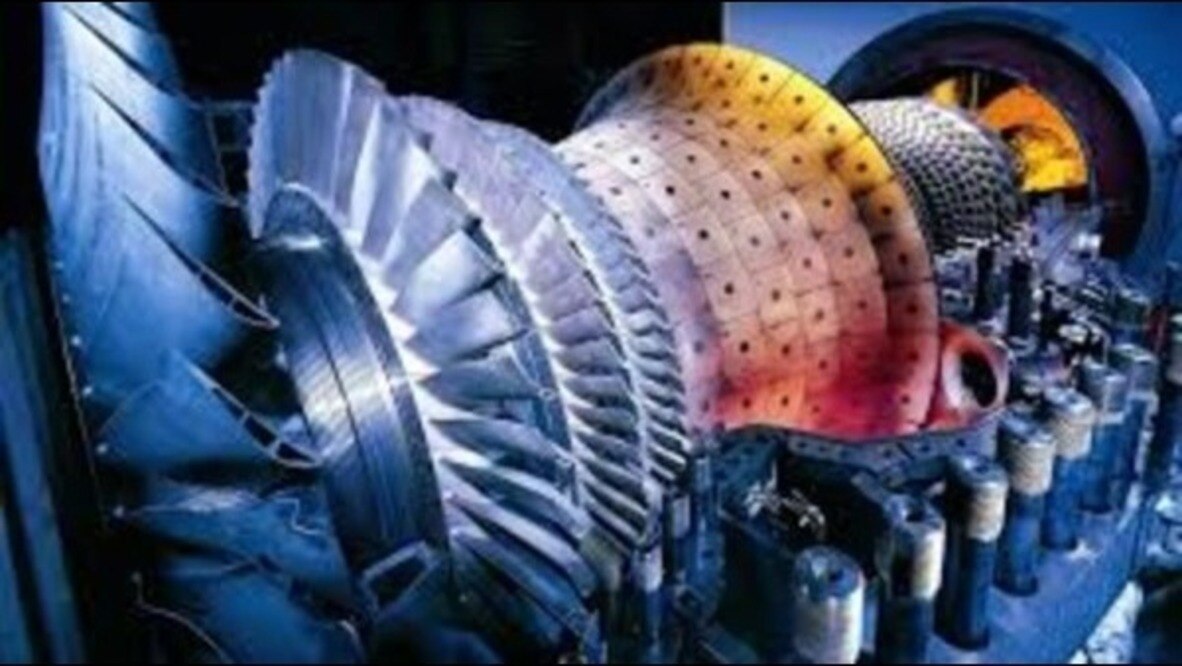
A high-pressure compressor blade cannot be selected by alloy name or outside dimensions alone. You will be able to define the correct stage and configuration, compare aftermarket evidence with OEM requirements, decide whether a blade can be repaired or must be replaced, and audit a Bengaluru supplier before placing an order.
Key takeaways
- Identify the engine, stage, part number and approved configuration before requesting a quote.
- Specify blade geometry, material condition, coatings, tolerances and performance-critical features.
- Request configuration, material, inspection and traceability records with the quotation.
- Use approved limits to choose replacement, repair or a balanced assembly.
Define the compressor application before requesting a quotation
A quotation request is incomplete if it says only “high-pressure compressor blade.” The correct part depends on the machine, stage and approved configuration; a dimensionally similar blade can alter airflow, efficiency, rotor loading or clearances. Define the application before asking for price or lead time.
1. Identify the end use: industrial gas turbine, aero engine, or both. Name the OEM, engine family, model, frame, serial-number effectivity and operating site. An aftermarket gas turbine manufacturer should not treat an aero-engine compressor blade in Bengaluru as interchangeable with an industrial part.
2. Specify the compressor location: inlet guide vane, stage 1, stage 2 or a later high-pressure stage. State whether you need a rotating blade, stationary vane, replacement set or another assembly.
3. Provide the OEM part number, component drawing number, drawing revision and configuration code. Include the rotor build or module designation because one engine family can contain several stage and serial-number configurations.
4. State the governing technical basis. API 616 addresses industrial gas-turbine package procurement, but it does not replace the engine OEM drawing, repair limits or site performance guarantee. For aviation parts, identify approved design data and the approval route; FAA Parts Manufacturer Approval under 14 CFR 21.303 is not implied by similar material or tolerances.
5. Include the intended performance basis: corrected speed, corrected mass flow, pressure ratio and efficiency. Require the quotation to reference ISO 3977-2 conditions, the correction method and test uncertainty when performance acceptance applies.
Ask the supplier to confirm these identifiers before it prices an alternative. “Fits the outside dimensions” is not an engineering approval.
Specify the geometry, material condition and performance-critical features
An outside diameter cannot establish interchangeability. For each blade, state the engine or turbine model, serial-number effectivity, compressor stage, drawing revision and rotor configuration; a stage 1 compressor blade from one build can fit physically yet mis-match another.
| Feature | Specify | Prevents |
|---|---|---|
| Airfoil | Airfoil height and chord, profile coordinates, stagger angle, leading-edge radius and throat area | Flow-capacity loss, stage mismatch and reduced surge margin |
| Root and platform | Dovetail root geometry, flank angles, retention features, platform dimensions, shroud details and clocking | Poor seating, platform leakage, rubs and rotor stress |
| Tip and mass | Tip clearance, tip treatment, blade mass, centre of gravity and allowable spread within a set | Efficiency loss, vibration and rotor-dynamic changes |
| Material condition | Approved alloy, product form, heat-treatment condition, hardness and coating or surface-treatment status | Strength loss, corrosion damage and unapproved material substitution |
| Rotor control | Residual unbalance by plane, correction method, rotational speed and coupling condition | Excess bearing load and high-cycle vibration |
Specify the airfoil with drawing coordinates or a controlled inspection template, not only maximum height and chord. A blade that meets envelope dimensions but changes throat area or stagger can alter stage loading.
Control repairs with the stage-specific blend envelope. Removing material changes section thickness, stress concentration, mass and centre of gravity; require post-blend dimensional inspection and the prescribed balance or vibratory assessment. For rotor assemblies, cite the applicable ISO 21940-11 balance grade only with the rotor’s specified speed and allowable residual unbalance.
Demand records that prove configuration, material and inspection status
Require a release package for every aftermarket compressor blade or blade set, not a certificate of conformity alone. The package must identify the engine model, serial-number effectivity, compressor stage, drawing revision, blade serial or lot, and approved configuration supplied.
- Material certificate naming the alloy, product form, specification, heat number and material condition.
- Heat number and batch traceability linking the raw material to the finished blade, purchase order and manufacturing records.
- Heat-treatment charts showing furnace identification, cycle dates, temperatures, soak times and quench or cooling conditions.
- Dimensional inspection report listing airfoil profile, height, chord, platform, root or dovetail features, shroud details, clocking and any balance-related measurements against drawing limits.
- Liquid penetrant testing ASTM E1417/E1417M records identifying the procedure, inspector qualification, equipment, penetrant system, date, indications and final disposition.
- Reports for other required non-destructive tests, such as eddy-current, radiographic or ultrasonic inspection, with acceptance criteria and results.
- Special-process records for coatings, shot peening, grinding, blending, welding or other controlled operations, including approved procedure and operator or facility identification.
- Repair history showing material removed, blend location, remaining section measurements and approval against the stage-specific repair data.
- Final inspection, balance or vibratory assessment records when the purchase specification requires them.
- Signed release or conformity statement that cites the exact drawing, revision, purchase specification and acceptance status.
Liquid penetrant testing detects surface-breaking discontinuities; it does not prove the absence of internal defects. Require the supplier to record indication acceptance against the approved drawing, repair manual or procurement specification, rather than using “passed” without objective limits.
Choose replacement, repair or balanced assembly using approved limits
Choose repair only when approved repair data keeps the damage and resulting geometry inside limits. A cheaper blade can become an expensive failure if altered mass, profile or stress changes stage matching, surge margin or rotor dynamics.
| Option | What it means | When it applies |
|---|---|---|
| Repair existing blade | Perform foreign-object damage inspection, check root fretting, and apply blending only within the stage-specific blade blending repair limits. | Use when remaining thickness, profile, radius, mass and indications meet the repair manual or approved drawing. |
| Individual replacement | Install one blade with the specified airfoil, stagger, platform, root, material condition and mass or centre-of-gravity limits. | Use when the replacement is performance-interchangeable, not merely dimensionally interchangeable, and the rotor build permits single-blade replacement. |
| Matched set | Supply blades matched for mass, centre of gravity, airfoil geometry and stage performance. | Use when several blades are being replaced, stage matching is sensitive, or individual variation could increase vibration or reduce surge margin. |
| Balanced rotor set | Supply the rotor assembly with defined correction planes, coupling condition, speed and allowable residual unbalance. | Specify this when rotor-level balance cannot be restored reliably after blade changes or when the engine requirement calls for an assembled rotor. |
State residual unbalance by plane and correction method, not simply “dynamically balanced.” ISO 21940-11 supplies the framework for balance grades; the rotor or engine requirement must set the applicable grade and limit. After repair or replacement, require dimensional inspection and any specified balance or vibratory assessment.
Audit a Bengaluru supplier before releasing a purchase order
Release the purchase order only after the supplier proves that its controlled process matches your turbine model, stage, drawing revision and end-use approval route. An AS9100 certificate alone does not prove technical interchangeability or part approval.
1. Send the supplier the released compressor drawing, material condition, repair limits and acceptance criteria. Ask it to identify the production route, tooling, inspection points and records it will retain for each heat, batch or serial number.
2. Audit material and heat-treatment traceability. Match the raw-material mill certificate, heat number, furnace chart, hardness results and final material condition to the proposed part. A certificate of conformity without these records is not enough for a rotating, high-energy component.
3. Verify inspection equipment calibration by reviewing current certificates for CMMs, micrometers, hardness testers and NDT instruments. For eddy-current testing, inspect the probe frequency, reference standard, calibration checks, geometry and lift-off controls; “eddy-current tested” alone proves little.
4. Review special-process qualification for shot peening, coatings or diffusion treatments. Confirm masking, coverage, coating thickness, residual-stress controls and post-process dimensional inspection, because these treatments can alter fatigue behaviour and fit.
5. Tie the release package to the actual contract. Industrial service may require API 616 gas turbine package requirements plus the engine OEM’s drawing and repair limits; aerospace service needs its approved design data and airworthiness records. Do not combine those systems.
BVPL Turbine Parts is one Bengaluru turbine component supplier a buyer should assess against this evidence, not against its product catalogue. Record audit findings, witness a first-article inspection and close every discrepancy before issuing the purchase order.
Related service
Aero Engine Blade High Pressure Compressor Blades Material: Titanium – TA8DV High Pressure Compressor Blades Material: Titanium – TA8DV |
Frequently asked questions
What information should you provide before requesting a high-pressure compressor quotation?
Provide the engine or turbine model, compressor stage, part number, serial or configuration reference, quantity, application, required delivery date and approved documentation requirements.
Which technical details must a quotation specify?
Specify geometry, dimensions, tolerances, material grade and condition, heat treatment, coatings, surface finish, balance requirements and performance-critical features such as airfoil profile and tip clearance.
Which records should you request from an aftermarket compressor supplier?
Request configuration records, material certificates, heat-treatment records, inspection reports, non-destructive testing results, dimensional reports, traceability data and release documentation.
How do you choose between compressor replacement, repair and a balanced assembly?
Compare the damage against approved dimensional and repair limits, then select replacement, repair or a balanced assembly based on remaining life, rotor balance, inspection results and configuration control.
How should you audit a Bengaluru compressor component supplier?
Review the supplier’s process controls, calibration records, inspection capability, traceability system, quality approvals, subcontractor controls, sample documentation and capacity before releasing a purchase order.