
Aero engine blade recovery is a controlled route from damage inspection to dimensional restoration, surface treatment, balance verification and authorised release; it is not simply welding a worn airfoil. By the end, you can distinguish recovery from replacement, decide when a blade or vane must be rejected, and compare Bengaluru suppliers using process evidence rather than a generic repair claim.
Key takeaways
- Reject recovery when damage exceeds approved repair limits.
- Demand inspection records, dimensional maps and release documentation.
- Match blade geometry, material and position before ordering replacements.
- Verify approved repair data and special-process controls.
What Aero Engine Blade Recovery Includes—and When It Is the Wrong Choice
Aero engine blade recovery is a controlled return-to-service process: inspection, damage mapping, approved repair or authorised reverse engineering, dimensional restoration, surface treatment, balancing, and release documentation. It is more than welding a visible mark. The final package must show what was found, what changed, which limits applied, and why the component remains serviceable.
Recovery differs from a local repair, which addresses one defect without necessarily restoring the complete component history or geometry. A replacement blade is an already manufactured part; manufacture of a new replacement aero engine part creates a new component from approved design and production data.
A recovered blade instead needs its repair record, inspection results, serviceability or remaining-life disposition, and authorised release documentation.
Recovery can suit these findings when approved repair allowance remains:
- Tip wear, leading-edge dents, trailing-edge erosion, platform fretting, foreign-object damage, corrosion, oxidation, distortion, or blocked cooling holes.
- Damage that leaves the root, shroud, airfoil and cooling system within drawing and life limits after restoration.
Reject the component when it has critical-zone cracking, burned areas, excessive material loss, unacceptable creep, damaged root or shroud geometry, an exceeded life limit, or lost traceability. A small-looking defect can cross a repair boundary if it lies in a highly stressed zone.
For a buyer comparing gas turbine blade and vane manufacturers for aero engine blade recovery in Bengaluru, the key question is remaining repair allowance—not visible defect size alone. Ask for the approved repair data and the evidence package before comparing price or lead time.
The Inspection and Measurement Sequence That Establishes Repairability
Repairability is established in sequence, because a clean-looking airfoil can still hide a cracked root, blocked cooling passage, or unacceptable creep.
1. Begin with visual inspection. Record dents, erosion, oxidation, burned areas, corrosion, fretting, coating loss, distortion, blocked holes, and damage at the root, platform, shroud, or tip.
2. Use borescope inspection when installed access prevents direct viewing of internal surfaces, cooling passages, blade roots, or vane carriers.
3. Apply fluorescent penetrant inspection for surface-connected discontinuities on clean, nonporous areas. Use ASTM E1417/E1417M for the general practice. Penetrant inspection does not prove subsurface integrity.
4. Add eddy-current testing for the zones and frequencies specified by the approved repair scheme. Use radiography when that scheme requires examination for internal voids, inclusions, or other subsurface indications.
5. Measure the component against its drawing, repair manual, or approved data. Capture airfoil section coordinates, chord, camber, twist, stack position, root and fir-tree or dovetail geometry, platform dimensions, shroud or tip dimensions, cooling-hole location, and balance-related mass or moment data.
6. For rotating blades, confirm profile, tip clearance allowance, platform geometry, root attachment, cooling passages, and balance disposition. Root damage needs the affected datum and acceptance limit, not a generic “within tolerance” statement.
7. For stationary vanes, check vane-segment fit, platform sealing, shroud or carrier interfaces, and nozzle-throat geometry. This is central to aero engine vane recovery because poor fit can disturb sealing and gas-path area.
8. Request metallurgical examination when alloy condition, oxidation, creep, coating diffusion, or microstructure is in doubt. ASTM E1444/E1444M magnetic-particle testing is not a universal substitute: it applies to ferromagnetic materials, not most nickel-alloy turbine components.
How to Match a Recovered or Replacement Part to the Engine Position
For aero engine blade replacement in Bengaluru, start with identity, not appearance. Record the engine model, stage, component part number, serial or batch history, configuration, and applicable revision of the component maintenance manual or repair manual. A generic “replacement aero engine part” description cannot establish position or interchangeability.
A replacement part needs approved production or design-origin documentation; a recovered part needs its repair record, inspection results, serviceability or remaining-life disposition, and authorised release documentation.
Confirm each of these before installation:
- Left- or right-hand orientation and airfoil stack position
- Root attachment, including fir-tree or dovetail dimensions
- Platform, shroud, carrier-interface and segment arrangement
- Material grade, coating system and approved stripping or recoating route
- Cooling-hole pattern, location and condition
- Drawing revision or component part-number revision
| Part type | Position and serviceability controls | Evidence to obtain |
|---|---|---|
| Rotating blade | Airfoil profile, tip clearance, platform geometry, root dimensions, balance-related characteristics and cooling passages | Approved origin records for a replacement; repair, inspection, remaining-life and release records for a recovered blade |
| Stationary vane | Vane-segment fit, platform sealing, shroud or carrier interfaces and nozzle-throat geometry | Approved origin records for a replacement; repair, inspection, serviceability and authorised release records for a recovered vane |
Approved Repair Data, Materials and Special Processes Matter More Than a Repair-Shop Claim
Approved repair data determines whether recovery is authorised; a repair station’s general certification does not automatically authorise an unapproved blade-repair process. FAA guidance distinguishes approved data from acceptable data, so ask the supplier to identify the exact repair manual, engineering order, drawing, or authority-approved process governing the job.
| Approved data | Acceptable data |
|---|---|
| Defines the authorised repair and limits | Supports technical decisions but does not itself approve the repair |
| Must govern the released component | May support inspection, analysis, or substantiation |
| Identified by document number and revision | Identified as supporting evidence |
Your quotation should state:
- Maximum blend or material removal, permitted weld or braze locations, filler alloy, and heat treatment
- Dimensional restoration method, coating system, approved stripping sequence, and cooling-hole restoration
- NDT stages, inspection methods, and final dimensional, metallurgical, and acceptance limits
Do not treat a directionally solidified or single-crystal blade as an ordinary equiaxed casting. Unsuitable weld heat or subsequent heat treatment can cause recrystallisation and stray-grain formation, creating properties the original design does not permit.
Chemical stripping, abrasive blasting, and localised coating removal can alter substrate dimensions, cooling-hole geometry, surface condition, or the diffusion zone. Require the approved removal and recoating sequence, not merely “strip and coat.”
Name every processing location for welding, heat treatment, coating, and NDT when work is subcontracted. BVPL Turbine Parts belongs on your comparison list only if it identifies its process route, in-house and subcontracted operations, and traceability through the complete recovery package for replacement aero engine parts.
Related items
High Pressure Compressor Blades Material: Titanium – TA8DV With decades of experience and a legacy of excellence, we take pride in our role as a trusted partner for governments, defense organizations, and... View service → |
 | Precision Components Manufacturer BVPL manufactures precision aero engine blades and vanes used in compressor and turbine stages of gas turbine engines. View product → |
How to Compare Bengaluru Manufacturers and Build a Complete Purchase Specification
Compare gas turbine blade and vane manufacturers on documented control, not on a broad claim of aero engine blade recovery in Bengaluru. Request these records for every lot:
- Material certificate and heat or batch number
- Incoming inspection report and damage map
- Dimensional report, NDT results and metallurgical findings where applicable
- Repair history, coating-removal and recoating records, and process traceability
- Balance data, final inspection report, and the certificate of conformity or release document required by the programme owner or authority
Require the quotation to name the component identity, repair allowance, approved data, filler alloy, heat treatment, coating sequence, cooling-hole work, acceptance criteria and each subcontractor. “Blade repair” alone leaves the highest-risk decisions undefined. Confirm that the route uses aero-engine approved data, not an industrial-gas-turbine specification transferred without authorisation.
| Option | Evidence to compare | Choose it when |
|---|---|---|
| Recovery | Repair limits, inspection results, process records and remaining-life disposition | The documented process preserves serviceability and lead time |
| New replacement | Production or design-origin records, configuration and part-number control | The blade exceeds repair limits or has critical damage |
| Reject recovery | Missing traceability, unresolved cracking, or incomplete records | The component cannot support an airworthiness decision |
FAA Form 8130-3, EASA Form 1 and equivalent national release documents prove airworthiness release; they do not replace repair data, material traceability or inspection records. Confirm the exact release standard after identifying the engine programme. Specify replacement aero engine parts by engine model, part number, configuration and manual revision.
Frequently asked questions
What does aero engine blade recovery include?
It includes inspection, damage mapping, approved repair or authorised reverse engineering, dimensional restoration, surface treatment, balancing and release documentation.
How do you establish whether an aero engine blade is repairable?
Inspect and measure the blade in sequence, record damage location and depth, compare findings with approved limits, then document the repair decision.
How do you match a recovered or replacement blade to an engine position?
Check the part number, revision, material, geometry, airfoil dimensions, platform features, root configuration and the engine position’s fit and balance requirements.
What should you verify with a Bengaluru blade or vane manufacturer?
Ask for applicable repair data, material traceability, special-process controls, inspection results, dimensional records, balancing evidence and release documentation.
Related services
Reverse Engineered Aero Engine Blades and Blisks Reverse Engineered Blades by BVPL Material : Aluminium, Stainless Steel and Titanium Reverse Engineered Blades by BVPL Material : Aluminium, Stainless Steel and Titanium |
Steam TurSteam turbine components manufacturerbine Blades We are a leading steam turbine components manufacturer dedicated to engineering high quality, performance-driven steam turbine components, including... View service → |
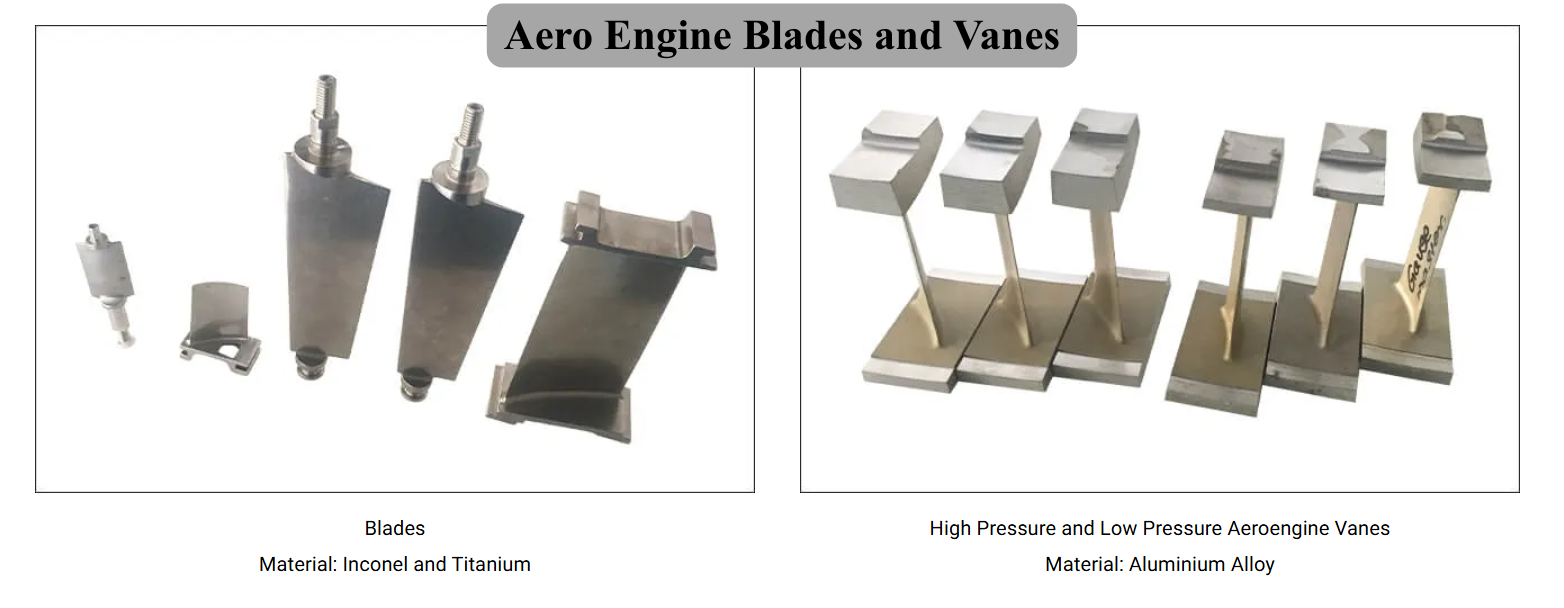
Aero Engine Blades and Vanes Blades Material: Inconel and Titanium Blades Material: Inconel and Titanium |