
Leading-edge erosion, tip rubs, foreign-object damage and hidden cracks can turn a serviceable-looking aero-engine blade into a safety and performance risk. You will be able to identify the damage, choose between recovery and replacement, verify the incoming component, and assemble the records needed for an accepted installation.
Key takeaways
- Classify erosion, foreign-object damage and tip rubs before selecting a repair.
- Compare every measurement with the engine manual and approved repair limits.
- Choose blending, welding, coating or replacement based on damage depth and location.
- Require traceability documents and receiving inspection before installing replacement blades or vanes.
Identify the Damage Before Choosing a Repair
Visible damage does not determine the repair. Leading-edge erosion points to gas-path abrasion; dents, nicks and foreign-object damage indicate sand, debris or ingested hardware. Tip rubs indicate reduced clearance, casing distortion, vibration or misalignment.
| Damage | What it indicates |
|---|---|
| Leading or trailing edge wear | Material loss that changes airfoil geometry and stress concentration |
| Corrosion, oxidation or coating loss | Hot-section attack, temperature exposure or failed environmental protection |
| Platform damage | Disturbed gas-path sealing, loading or attachment support |
| Root fretting | Relative movement at the attachment, with possible fatigue damage |
| Suspected crack | A potential rejection condition until approved NDT proves otherwise |
Rotating blades carry rotor mass, so their repair must preserve balance, tip clearance and attachment integrity. Stationary vanes control gas-path geometry, cooling and downstream loading; treating vane recovery as blade machining can alter engine performance.
Repeated damage requires a root-cause check: inspect inlet filtration, foreign-object ingestion, temperature excursions, vibration, rub clearance and alignment. Surface loss alone does not prove repairability; subsurface cracking, creep, stress-rupture effects or attachment damage can require rejection.
This distinction matters when comparing gas turbine blade and vane manufacturers worn aero engine blade problems uk searches, and when planning replacement aero engine blades maintenance.
Inspect the Part Against Approved Limits
Before authorising work, preserve the blade or vane’s part number, serial or batch number, stage, engine position and orientation. Replacement aero engine blades maintenance becomes unsafe when a component loses its identity or is assessed without its installation history.
Clean the part, inspect it under magnification, and photograph every damaged area before removing evidence through blending or coating work. Select NDT for the suspected defect and material:
| Method | Detects | Use |
|---|---|---|
| Fluorescent penetrant inspection | Open-to-surface cracks | Clean, suitable surfaces |
| Eddy-current testing | Suitable near-surface discontinuities | Conductive materials and accessible areas |
| Radiography or computed tomography | Approved internal features or defects | Where the governing data requires internal examination |
Measure airfoil profile, chord, thickness, twist, platform dimensions, root geometry, tip or shroud features, cooling-hole condition and remaining section. Use dimensional checks and profile measurement; NDT cannot replace approved dimensional limits.
Compare every result with the engine manufacturer’s component maintenance manual, engine manual, service bulletin or repair drawing. Do not invent a universal wear limit.
Reject the component when:
- A crack lies in a critical area.
- Material loss exceeds the repair allowance.
- Tip clearance is excessive or distortion changes the gas path.
- Attachment integrity is uncertain.
- Life records are missing.
- Damage falls outside approved repair limits.
A visually minor defect still requires rejection when the approved data cannot establish safe disposition.
Choose Blending, Welding, Coating or Full Replacement
Choose recovery only when approved data defines the repair. Blending must remove the complete defect while preserving the specified radius, orientation, depth and minimum remaining section; a sharp cosmetic notch can become a fatigue-initiation site. Use welding, laser cladding or brazing only with qualified alloy, heat input, heat-affected-zone, residual-stress, heat-treatment and inspection controls.
| Option | Apply it when | Main control |
|---|---|---|
| Blending | Damage is within the approved allowance | Verify blend geometry and remaining section |
| Welding, laser cladding or brazing | Lost material requires qualified restoration | Confirm process parameters, heat treatment and NDT |
| Recoating | Oxidation or coating loss is repairable | Control stripping, masking, preparation, thickness and bond checks |
| Full replacement | Limits, life or attachment integrity are unacceptable | Match the approved part and traceability evidence |
Treat cooling holes, film-cooling lands and internal passages as functional geometry: blockage, enlargement or misdirection can invalidate recovery. For vanes, restore airfoil profile, throat area, pitch, stagger, platform, shroud or seal features and cooling performance—not merely visible erosion. Aero engine vane recovery UK work therefore needs acceptance documentation.
Choose worn aero engine blade replacement UK when root or attachment damage, repeated repairs, consumed section, exceeded limits or incomplete life history removes the repair option. Cost the inspection, stripping, coating, heat treatment and rework risk before assuming repair is cheaper.
Verify That a Replacement Blade or Vane Is Truly Interchangeable
An identical-looking airfoil is not proof of interchangeability. For worn aero engine blade replacement uk, compare the evidence, approval risk and delivery route:
| Option | Evidence and interchangeability | Lead time and approval risk |
|---|---|---|
| OEM replacement | Current part number, drawing revision, life status and design-authority release; highest fit confidence | Longest if factory supply is constrained; lowest configuration risk |
| Approved aftermarket replacement | Approved design data, conformity, testing and traceability; interchangeable only for listed applications | Often shorter; confirm approval scope |
| Repaired serviceable component | Repair records, inspections, remaining life and authorised release; same part-number applicability required | Potentially fastest; history and repair-limit risk |
| Reverse-engineered part | Dimensional reconstruction without assured design authority; not automatically interchangeable | Variable; highest approval risk |
Check the exact part-number applicability, modification and service-bulletin status, airfoil profile, root geometry, platform dimensions, shroud or tip features, material condition, coating system and balance requirement. Confirm whether the component installs individually or as a matched set: rotor balance, aerodynamic matching, stage clearance and the maintenance manual can require controlled selection.
Do not reverse-engineer a part lacking reliable dimensions, material identity, coating data, life history or approved design-authority information. TA8DV titanium is not automatically suitable for another engine, stage or temperature regime. For replacement aero engine blades maintenance, request:
- Certificate of conformity, material and heat-treatment records
- Dimensional report, NDT and coating records
- Serialised history and the required release certificate
Control UK Procurement, Traceability and Receiving Inspection
1. Send a complete identity and condition pack before requesting a quotation. Include the engine and module type, blade or vane part number, revision, serial or batch number, stage, position, left/right or platform orientation, service history, damage photographs, inspection reports, and the applicable engine maintenance manual or repair scheme.
For worn aero-engine blade problems, UK buyers comparing gas-turbine blade and vane manufacturers need this information to prevent an apparently similar part being assigned to the wrong location.
2. Ask the supplier to identify the available route: one-off replacement, production batch, repaired serviceable part, or recovery work. Confirm tooling, engineering review, inspection effort, approved repair data and lead time; for worn aero-engine blade replacement UK requirements, ask whether life, material, coating and dimensional records accompany the part.
3. Treat UK location as geography, not approval. Confirm the applicable airworthiness system, approved data, maintenance-organisation privileges and release document, including UK CAA Form 1 where applicable. Check export-control classification and end-user restrictions for defence work or controlled destinations. BVPL Turbine Parts belongs in the comparison only after it answers these evidence and capability questions.
4. On receipt, verify packaging, preservation, part number and revision, serial or batch identity, orientation, surface condition, coating, dimensional report, NDT results and release paperwork before installation. Keep each removed part in sealed, labelled packaging with its stage and position; mixing positions can invalidate the assessment.
Related items
High Pressure Compressor Blades Material: Titanium – TA8DV With decades of experience and a legacy of excellence, we take pride in our role as a trusted partner for governments, defense organizations, and... View service → |
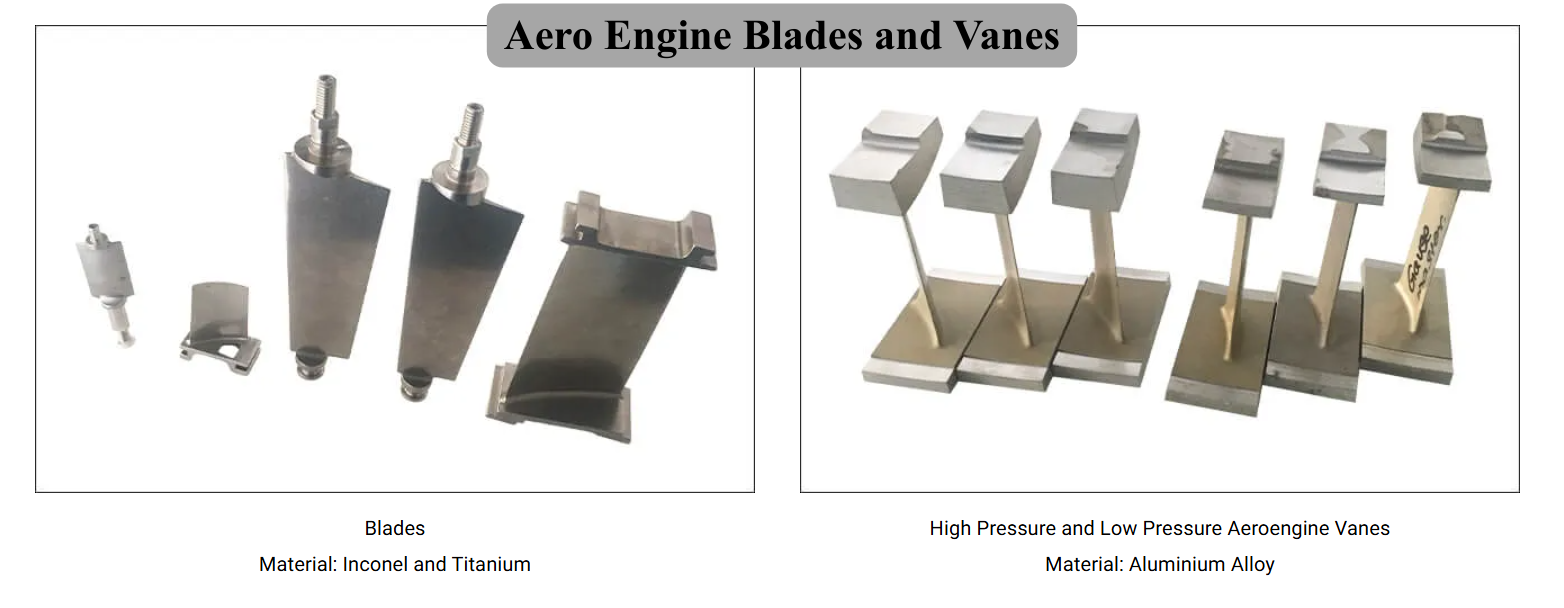 | Precision Components Manufacturer BVPL manufactures precision aero engine blades and vanes used in compressor and turbine stages of gas turbine engines. View product → |
Close the Maintenance Loop After Installation
Record the removed component before installation closes the job. Capture its damage map, inspection results, accumulated cycles or hours, repair history, replacement identity and installation position; this evidence makes replacement aero engine blades maintenance useful after the immediate fault is gone.
Set the next inspection interval from the engine maintenance manual. Trend these warning signals instead of waiting for visible failure:
- Leading-edge material loss
- Tip clearance
- Vibration
- Exhaust-gas temperature
- Filter findings
- Foreign-object damage
After repeated wear, recheck inlet filtration, ingestion sources, casing condition, rotor balance, alignment, cooling performance and operating temperature. A new blade will not prevent recurrence if the casing rub or contaminated inlet remains.
Compare the whole recovery effort with replacement, not the quoted part price.
| Option | Include in the decision | Practical result |
|---|---|---|
| Recovery | Stripping, NDT, dimensional restoration, heat treatment, coating, tooling, engineering approval and rework risk | Retains a valuable serialised component |
| Replacement | Part availability, traceability, life records and release documentation | Reduces uncertainty when limits or records are exhausted |
For aero engine vane recovery uk work, accept final disposition through the applicable airworthiness and engine maintenance system. Visual similarity and dimensional fit alone are not approval.
Frequently asked questions
How do you identify damage on a worn aero-engine blade?
Separate leading-edge erosion, dents, nicks, foreign-object damage and tip rubs, then investigate the likely cause before choosing a repair.
What must you check before repairing a turbine blade or vane?
Inspect dimensions, cracks, material condition and coating against the engine manual, approved repair scheme and specified limits.
When should you choose blending, welding, coating or full replacement?
Use the approved repair route that matches the damage type, depth, location and remaining material; replace the part when recovery limits are exceeded.
How can you verify that a replacement blade or vane is interchangeable?
Match the part number, modification status, material, coating, dimensional limits, serial or batch records and approved configuration before installation.
What UK procurement records should accompany replacement aero-engine blades?
Request the purchase specification, certificate of conformity, material and heat-treatment records, inspection results, traceability details and any required UK regulatory documentation.
Related service
Reverse Engineered Aero Engine Blades and Blisks Reverse Engineered Blades by BVPL Material : Aluminium, Stainless Steel and Titanium Reverse Engineered Blades by BVPL Material : Aluminium, Stainless Steel and Titanium |