
A titanium compressor blade is not made by cutting an aerodynamic shape from anonymous stock and checking a few dimensions. The manufacturing route links the engine stage, alloy condition, forging history, datum scheme, multi-axis machining, surface treatment and evidence of conformity; by the end, you will know how to review that route and challenge a weak production record.
Key takeaways
- Use titanium in cooler compressor stages, not the hottest rear stages.
- Check TA8DV certification, chemistry, heat treatment and ultrasonic inspection before machining.
- Use five-axis CNC machining to control airfoil geometry and blade-root features.
- Require dimensional reports, surface inspection and traceability for every finished blade.
Why the compressor stage determines whether titanium is suitable
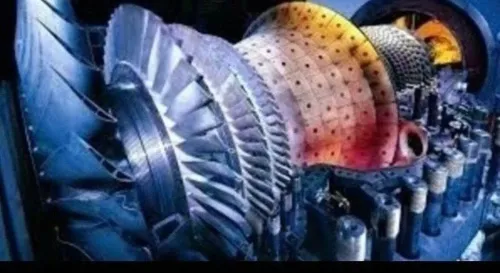
Titanium suits fan, booster and cooler front or intermediate compressor stages because its low density and high strength-to-weight ratio reduce rotating mass. It becomes a poorer choice toward the rear of a high-pressure compressor, where rising air temperature and stress expose titanium’s oxidation, creep-resistance and temperature limits; nickel-based superalloys then offer greater margin.
Compressor blades progressively pressurise air, whereas turbine blades face combustion gas. Turbine designs therefore use different alloys, cooling passages, coatings and process controls.
| Stage | Titanium case | Main concern |
|---|---|---|
| Fan or booster | Low density reduces rotor mass | Confirm temperature and vibratory loads |
| Front or intermediate compressor | Strong strength-to-weight ratio | Confirm alloy, heat treatment and oxidation limit |
| Rear high-pressure compressor | Nickel alloy often offers better capability | Confirm creep, stress and design-authority limits |
| Turbine | Not interchangeable with compressor material | Combustion gas demands cooling, coatings and different controls |
A specification called a titanium high-pressure compressor blade is incomplete without the engine stage, operating temperature, stress environment, alloy designation and design-authority specification. Confirm each before approving material. For titanium compressor blade manufacturing UK buyers should also identify whether the part is standalone or integral.
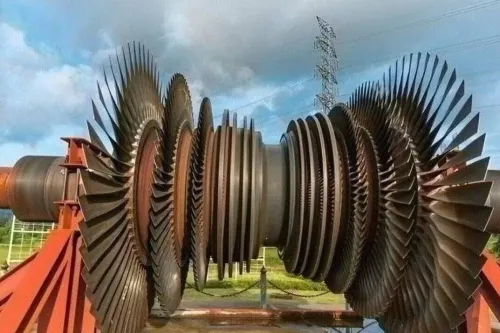
A standalone blade has a separately formed root and platform, with attachment and vibratory requirements. A blisk has integral blades, narrower passages and harder access for blending, tooling and inspection. Those differences change the high pressure compressor blade manufacturing process and the gas turbine blade and vane manufacturers titanium blade process alike.
How manufacturers qualify TA8DV stock before machining
TA8DV is a designation, not an interchangeable purchasing name for Ti-6Al-4V. For titanium ta8dv compressor blade production uk, the purchase order must name the governing national, customer or company material standard, complete chemical limits, heat-treatment condition, mechanical-property requirements and beta-transus range.
1. Select the starting form against the drawing and route: bar, billet, near-net-shape closed-die forging or a specified preformed blank. A forging reduces machining allowance and scrap and can provide more favourable grain flow than machining a complete blade from billet.
2. At receipt, match the heat or lot number marked on the bar, billet or forging to the mill certificate. Check chemistry, tensile results, hardness where specified, dimensions, material condition, ultrasonic or other supplied inspection records, and every authorised deviation.
3. Review the forging history, not just the alloy name. Die design, the alpha-beta forging window, die temperature, reduction and cooling rate control alpha morphology and prior-beta grain structure; those features affect tensile behaviour and fatigue performance. The same nominal chemistry does not prove the same service capability.
4. Complete the specified heat treatment and straightening within documented temperature, force and tooling limits. Record each operation, retain heat and lot identity through cutting, and release stock to CNC only when the drawing, certificate and inspection records reconcile.
That evidence is the foundation of a high pressure compressor blade manufacturing process: machining cannot correct an unidentified heat, unsuitable condition or damaged grain structure.
How a five-axis machine turns the blank into an airfoil
A five-axis machine converts a qualified titanium blank into an airfoil by preserving one datum system from model review through final inspection. That consistency is the backbone of the high pressure compressor blade manufacturing process and any aero engine blade CNC machining UK route.
1. Review the drawing or model revision, material condition, machining allowances, inspection points and special-process notes. Establish datums and locate the root, platform, stacking axis, chord, twist, leading edge, trailing edge and tip.
2. Secure the blank with rigid workholding, then machine root and attachment features before platform operations. This creates stable interfaces for airfoil roughing, rest machining and finishing on five-axis or specialised blade equipment.
3. Rough away bulk material while orienting the cutter to the changing airfoil curvature. Use controlled paths around the thin leading and trailing edges to prevent thinning, cutter marks, gouges, pull-out and burrs; rest machining removes material left in narrow or shadowed regions.
4. Apply qualified titanium cutting data, sharp positive-rake tooling and coolant delivered directly to the cut. Titanium’s low thermal conductivity traps heat at the tool-workpiece interface; chemical reactivity promotes galling and built-up edge, while work hardening accelerates wear. Check tool life and monitor chatter.
5. Control spring-back and distortion through the machining sequence and measured supports. Straighten only with defined force, temperature and tooling limits, then reinspect dimensions and surfaces; informal correction can create residual stress or edge damage.
How manufacturers protect the airfoil and prove its condition
A burr at the trailing edge can reduce fatigue life even when the blade looks polished. Deburr the leading edge, trailing edge, root fillets and platform transitions by removing material only where permitted; preserve the specified edge radius and reject any gouge, pull-out or local thinning.
Finish and clean the airfoil to the drawing’s roughness limit. Apply chemical treatment or shot peening only when the approved process calls for it. Control peening intensity, coverage, media condition and masking: excessive treatment can roughen titanium, damage thin edges, alter profile accuracy or introduce harmful residual stress.
Fluorescent penetrant inspection reveals open-to-surface cracks, laps and folds after controlled cleaning, penetrant dwell and developer application. It cannot find a defect sealed below the surface. Select ultrasonic testing for suitable subsurface risks, eddy-current testing for near-surface flaws, and radiography for relevant volumetric indications.
Use a CMM and blade software to compare spanwise profile sections, twist, chord, leading and trailing edges, root and platform geometry. Check surface roughness, mass, centre of gravity or balance where specified. A clean-looking blade can still fail on material identity, heat-treatment history or unverified NDT.
- Heat and material certificates
- Heat-treatment records
- NDT results
- Dimensional and roughness reports
- Nonconformance disposition
This evidence defines a credible gas turbine blade and vane manufacturers titanium blade process; searching for aero engine blade CNC machining UK is not proof of acceptance.
How to judge a UK manufacturer’s blade production route
Accept EN 9100 as evidence of an aerospace quality-management system, not technical qualification of a particular blade. A buyer researching aero engine parts manufacturers for titanium compressor blade manufacturing UK or aero engine blade CNC machining UK needs product and process evidence.
1. Request the controlled process flow from model review through release, the first-article report, drawing revision control, and the design-authority approval basis. Confirm the supplier’s stage, temperature limit, TA8DV governing standard, starting form, datum strategy, edge controls and final acceptance criteria.
2. Match every bar, billet or forging to its heat and lot number. Require forging records, heat-treatment charts, mechanical results, authorised deviations and complete traceability through machining and release.
3. Check qualified special-process evidence, tool-life limits, measurement-system controls and inspection capability. Ask for CMM and blade-profile capacity, plus records for straightening, chemical treatment, non-destructive testing and shot peening.
4. If the programme requires it, verify separate NADCAP approval for heat treatment, chemical processing, NDT or peening. NADCAP supports supply-chain qualification; it does not replace design-authority approval or product acceptance.
5. Review nonconformance history and closed records, not only a certificate. This is how BVPL Turbine Parts can be assessed on evidence attached to its titanium TA8DV compressor blade production UK route rather than a catalogue claim.
A low quote is not economical when poor grain history, scrap, rework or incomplete records delay release. Compare lead time and cost only after the evidence proves control.
Related services
High Pressure Compressor Blades Material: Titanium – TA8DV With decades of experience and a legacy of excellence, we take pride in our role as a trusted partner for governments, defense organizations, and... View service → |
Aero Engine Blade High Pressure Compressor Blades Material: Titanium – TA8DV High Pressure Compressor Blades Material: Titanium – TA8DV |
Frequently asked questions
Why is titanium suitable for some compressor stages but not others?
Titanium reduces rotating mass in fan, booster and cooler front or intermediate stages. Rear high-pressure compressor stages face higher temperatures and stress, where titanium’s oxidation and creep limits reduce its margin compared with nickel-based superalloys.
How do manufacturers qualify TA8DV stock before machining?
They check the material certificate, heat number, chemistry, heat-treatment condition, mechanical properties and ultrasonic inspection results before releasing the stock for machining.
What happens during five-axis machining of a titanium compressor blade?
The machine removes material from a qualified blank while controlling the blade root, platform, leading edge, trailing edge, twist, thickness distribution and airfoil profile.
How do manufacturers prove a finished titanium compressor blade is in condition?
They use dimensional inspection, airfoil-profile checks, surface inspection and manufacturing records that link the finished blade to its material heat and machining route.
How should you judge a UK titanium compressor blade manufacturer’s production route?
Ask how the manufacturer controls TA8DV traceability, titanium machining, airfoil measurement, edge protection, inspection records and nonconformance handling.
Related services
Aero Engine Blades and Vanes Blades Material: Inconel and Titanium Blades Material: Inconel and Titanium |
Aero Engine Blade High Pressure Turbine and Intermediate Pressure Turbine Blades Material: Nimonic 115 High Pressure & Intermediate Pressure Turbine Blades Material: Nimonic 115 Nimonic 115 is a high-performance nickel-chromium-cobalt alloy engineered... |