
An aftermarket manufacturer can make or supply a blade for a specific engine only when the part, configuration, production route and approval evidence all match your installation. By the end, you will know which identification details to send, how suppliers prove interchangeability, and when a new blade, repaired blade or OEM part is the safer choice.
Key takeaways
- Match the engine model, dash number, blade part number and serial-number effectivity.
- Send stage, position, orientation, revision and build-standard details with your enquiry.
- Compare compressor and turbine blades by temperature, load, coating and material requirements.
- Check the release certificate, traceability, inspection records and approved design basis.
Can an aftermarket manufacturer make a blade for my exact engine?
An aftermarket supplier cannot confirm a blade’s fitment from the engine family alone. Match the exact engine model and dash number, engine-build standard, module or stage, blade part number, revision or modification status, left- or right-hand orientation, forward or aft position where applicable, and serial-number effectivity.
A listing that says a blade fits a CFM56, Trent or another engine family is only a starting point. After market aero engine parts manufacturers must confirm that their design data covers your variant and installation, not merely a similar engine.
Ask the supplier to identify the proposed item as one of these:
- Exact replacement
- Approved alternative
- Reverse-engineered part
- Repaired removed blade
These categories carry different eligibility, production and documentation requirements. Also specify whether you need a fan or compressor airfoil, turbine rotor blade, stator vane, variable stator vane or guide vane. A supplier that machines compressor hardware is not automatically equipped or approved to produce a cast, directionally solidified or single-crystal turbine blade.
For applications requiring a firm fitment decision, require the written response to name:
- Applicable part number and revision
- Engine and serial-number effectivity
- Module, stage and installation position
- Release basis and approval limitations
If the answer names only the engine family, you do not yet have confirmation that the blade fits.
What information should you send with a blade enquiry?
Send identification before asking for price or lead time. A supplier cannot validate a physically similar blade without the installed configuration and its records.
1. Identify the hardware: engine manufacturer, model and dash number, engine serial number, module, stage and blade position, exact component part number, drawing number and revision, modification standard, and left- or right-hand orientation. Include any serial-number effectivity shown in the engine or component records.
2. Define the requirement: quantity, new, serviceable or repaired status, required delivery date, material specification, coating specification, cooling or internal-passage requirements, life-limit status, and accumulated cycles or hours. Attach available serial, batch and heat-treatment records, plus the technical drawing, illustrated parts catalogue extract, engineering order or approved repair data.
3. State the installation and acceptance basis: civil aircraft, military platform, test engine, industrial gas turbine or steam-turbine application.
Specify the release certificate and traceability package your receiving organisation requires; for replacement aero engine blades in the UK, name the destination authority and confirm whether acceptance must come from the UK CAA, EASA, FAA or a defence authority.
Missing data can turn a quotation for a dimensionally similar blade into an unusable part. Ask the supplier to confirm the exact part number, revision, effectivity and release basis in writing before you compare cost or lead time.
How do compressor and turbine blade requirements differ?
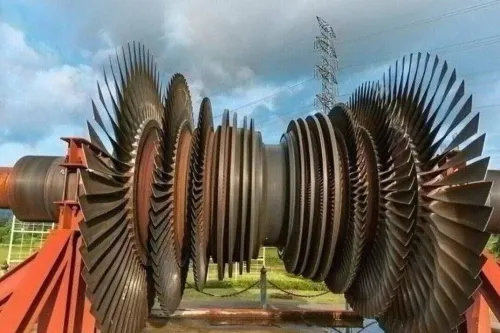
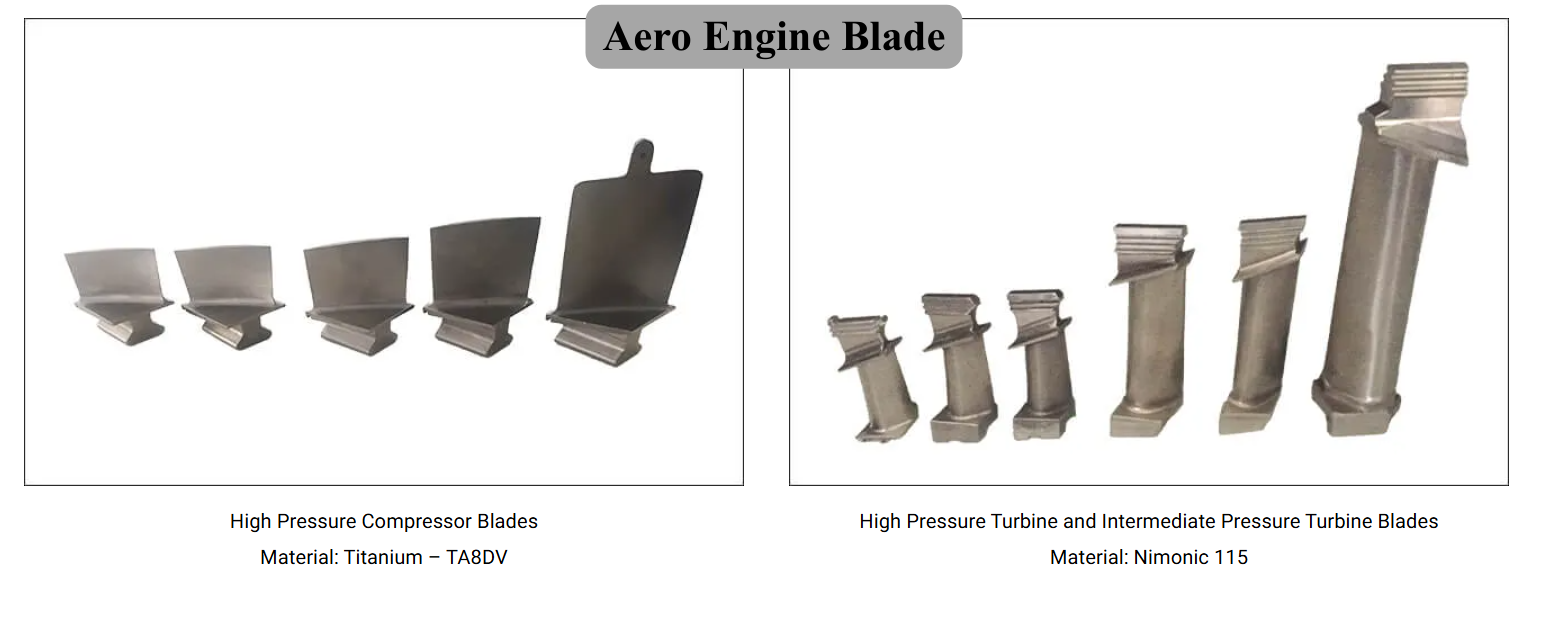
The blade position dictates the manufacturing and inspection challenge. Fan and compressor blades work in cooler, high-speed airflow, so aerodynamic profile, vibration, fatigue, impact resistance, mass and balance control dominate.
| Blade type | Manufacturing focus | Main specification risks |
|---|---|---|
| Fan or compressor | Forging followed by five-axis machining, with controlled alloy, forging condition and heat treatment | Titanium grade, drawing limits, airfoil profile, fatigue, impact damage, mass and balance |
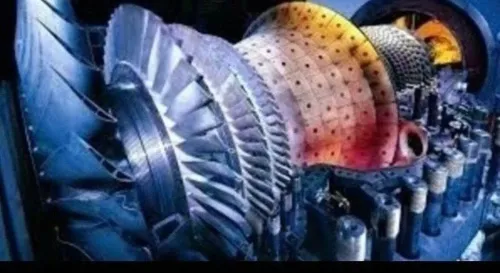
| Turbine rotor | Precision investment casting, or approved directional-solidification or single-crystal casting | Nickel-based superalloy chemistry, grain structure, ceramic-core quality, solution and ageing treatments, cooling passages, wall thickness, tip geometry, platform or shroud dimensions, and environmental or thermal-barrier coatings |
Titanium alloys can suit defined high-pressure compressor positions, but titanium is not interchangeable with Inconel or another nickel alloy. The approved drawing and manufacturing route control the choice.
Five-axis machining a similar external turbine airfoil proves neither the internal cooling architecture nor the metallurgical condition. For aero engine blade applications UK procurement, ask which controlled design data defines the part and its process.
Acceptance evidence can include:
- Dimensional inspection and mass-property or balance results
- Fluorescent penetrant inspection
- Radiography or computed tomography for castings
- Ultrasonic inspection where specified
- Metallographic or process-control records
- Coating-thickness checks
The exact inspection plan must come from the approved design and production data, not a generic aerospace package. A supplier that machines compressor hardware is not automatically equipped to produce a cast, directionally solidified or single-crystal turbine blade.
What proves that an aftermarket blade is suitable and approved?
The proof is a traceable chain from the delivered blade to its approved design and production definition, not a supplier’s claim that it is “OEM-equivalent.” Request the controlled drawing and revision, material certificate, heat-treatment record, manufacturing route, dimensional inspection report, non-destructive testing results, coating record, batch or heat traceability, balance or mass-property results, and life-management history.
For a repaired blade, require the approved repair data, repair record and remaining-life assessment. A repaired blade is not a new replacement because its final dimensions meet a drawing.
Confirm whether the blade is life-limited. Obtain its approved life, cycles remaining, and complete transfer records.
| Evidence | What it proves | What it does not prove |
|---|---|---|
| FAA Parts Manufacturer Approval | Design and production approval for the specific replacement or modification article; verify the exact part number, eligibility, limitations and instructions in FAA records | That every engine or aircraft can accept the blade |
| UK CAA Form 1 or equivalent authorised release certificate | Release and conformity status | Installation eligibility without design approval, configuration checks and authority recognition |
| Repair records | Compliance with approved repair data and stated remaining life | That the blade is a new replacement |
A search for “aftermarket aero engine blade supplier uk” identifies location, not approval. UK, EASA, FAA, OEM, defence and customer approvals are separate questions, and UK manufacture alone does not make a blade flight-approved. Ask which authority accepts the design data, production approval and release document for your aircraft or engine.
Should you buy a new aftermarket blade, an OEM part or a repaired blade?
| Option | Eligibility and records | Lead time and installation risk |
|---|---|---|
| OEM new blade | Usually the clearest configuration history, effectivity and release evidence. Confirm the exact part number, revision and installation eligibility. | Availability can be poor for an older engine, and price can be high. Fitment risk is lowest when the OEM records match your configuration. |
| Approved aftermarket new blade | Suitable only when the manufacturer holds the design data, production approval, tooling, process controls and release capability for that article. Eligibility can be narrower than the OEM part. | Price or availability may improve, but first-article validation can extend delivery. A physically identical blade without accepted approval data remains unusable. |
| Repaired or serviceable blade | Depends on inspection findings, approved repair limits, coating condition, remaining life and complete service history. Require life-management records, not dimensions alone. | It can arrive sooner and cost less, but unknown history creates the highest installation risk. |
Ask an aftermarket aero engine blade supplier uk to quote the same basis as every alternative: exact part number and revision, installation eligibility, material and process definition, inspection plan, release certificate, traceability, life status, delivery date and warranty.
For replacement aero engine blades uk, include the engine serial number, stage, position, quantity, required authority and records with your enquiry. That prevents a physically similar quotation from becoming an unusable part.
BVPL Turbine Parts can be considered for an after market aero engine parts manufacturers blade for applications enquiry, but verify its capability against your blade position and approval requirement rather than assuming general turbine-part capability proves fitment.
Related items
 | Precision Components Manufacturer Aero Engine Blade View product → |
Reverse Engineered Aero Engine Blades and Blisks Reverse Engineered Blades by BVPL Material : Aluminium, Stainless Steel and Titanium Reverse Engineered Blades by BVPL Material : Aluminium, Stainless Steel and Titanium |
Frequently asked questions
Can an aftermarket manufacturer make a blade for my exact engine?
Yes, if the manufacturer can match the exact engine model and dash number, build standard, module or stage, blade part number, revision, orientation, position and serial-number effectivity. An engine family name alone does not confirm fitment.
What information should you send with a blade enquiry?
Send the engine model and dash number, blade part number, revision or modification status, module or stage, left- or right-hand orientation, forward or aft position, engine serial number and any available photographs, drawings or inspection findings.
How do compressor and turbine blade requirements differ?
Compressor blades must meet aerodynamic profile, balance, vibration and rotating-load requirements. Turbine blades also face much higher gas temperatures, thermal cycling, oxidation, creep, cooling-air flow and coating requirements.
What proves that an aftermarket blade is suitable and approved?
Check the part-number and effectivity match, design or engineering approval basis, material and process records, dimensional and non-destructive inspection results, traceability and the applicable release certificate, such as a UK CAA Form 1.
Should you buy a new aftermarket blade, an OEM part or a repaired blade?
Compare the approved configuration, traceability, remaining life, inspection evidence, lead time and total cost. Choose a repaired blade only when its repair scheme and release documentation cover your exact part and operating requirements.
Related services
Reverse Engineered Aero Engine Blades and Blisks Blisks for Aero Engines Material : Stainless Steel Blisks for Aero Engines Material : Stainless Steel |
Aero Engine Blades and Vanes Blades Material: Inconel and Titanium Blades Material: Inconel and Titanium |