
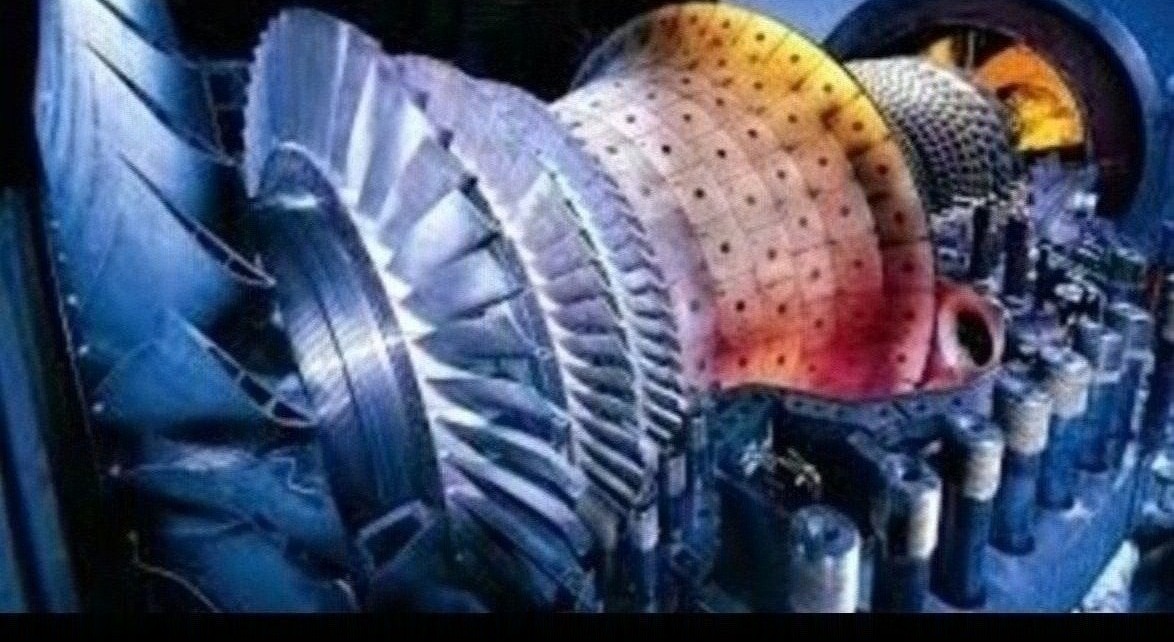
Older industrial gas turbines can remain operational long after their original procurement programmes were established. Over time, maintenance teams may encounter a practical problem: a component needs replacement, but complete manufacturing documentation is difficult to access.
This is one situation where reverse engineering may become relevant to aftermarket gas turbine manufacturers and their customers.
What Reverse Engineering Involves
Reverse engineering is not simply copying the visible shape of an existing component.
Depending on the application and available information, the process can involve understanding geometry, dimensions, material requirements, functional surfaces and other engineering characteristics before developing suitable manufacturing documentation.
The objective is to create sufficient technical definition for the component to be assessed and, where appropriate, manufactured.
When Is It Useful?
Reverse-engineering capability may be valuable when:
Original drawings are unavailable
Documentation is incomplete
A legacy component is difficult to source
Digital CAD data does not exist
An operator is assessing alternative sourcing possibilities
A physical reference component is available for evaluation
The process still requires careful engineering judgement. Not every unknown characteristic can be established from external measurements alone, and application-specific requirements must be considered.
Manufacturing Capability Must Follow Engineering Capability
Creating a model is only one part of the challenge.
If the component involves a complex turbine profile or hard-to-machine superalloy, the manufacturer also needs the equipment, tooling knowledge, machining processes and inspection capabilities required to produce it.
BVPL Turbine Parts lists reverse engineering, CAD drawings and models, precision CNC machining, forgings and castings among its services. The company also manufactures gas turbine shrouds, blades and diaphragms and works with heat-resistant alloys used in turbine applications.
For UK turbine service organisations, this combination can be relevant when investigating sourcing options for established equipment.
Before beginning a reverse-engineering project, provide the manufacturer with all available information. Even incomplete historical drawings, material records, maintenance documentation and operating context may help the engineering assessment.
Reverse engineering can provide an additional route for certain aftermarket component requirements, particularly where conventional sourcing is difficult. Its value depends on disciplined engineering, appropriate verification and a clear understanding of the component's functional requirements rather than simply reproducing its appearance.